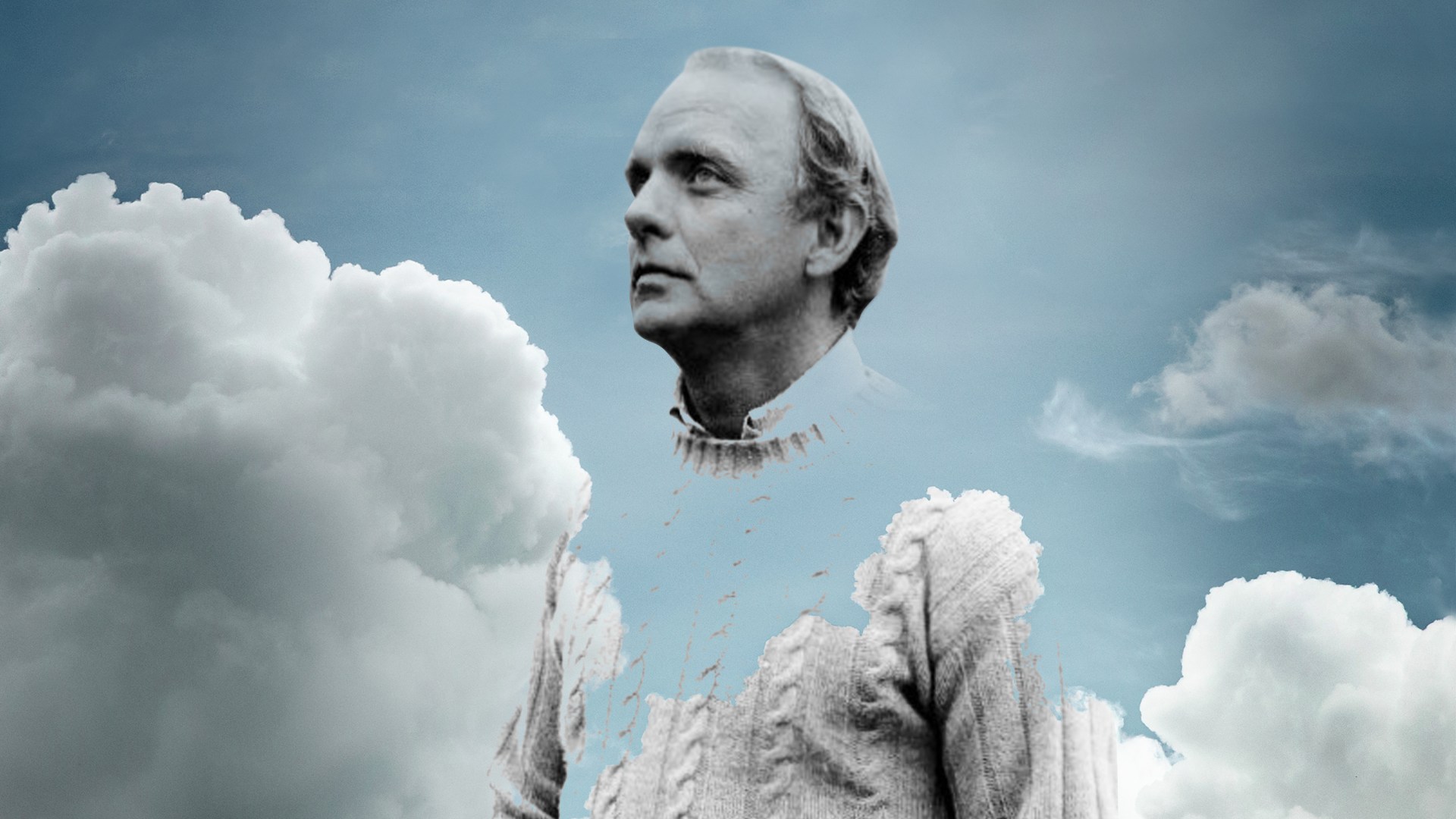
In The Alphabet of Grace, the late writer Frederick Buechner gave an account of his conversion. He was agnostic at the time but had been attending a church because he liked the preacher, George Buttrick.
Queen Elizabeth had recently been crowned, and Buttrick made a connection to those events by saying that unlike the queen, Jesus has been crowned again and again in the hearts of those who trust him. Here’s how Buechner describes it:
He said in his odd, sandy voice, the voice of an old nurse, that the coronation of Jesus took place among confession and tears and then, as God was and is my witness, great laughter, he said. … At the phrase great laughter, for reasons that I have never satisfactorily understood, the great wall of China crumbled and Atlantis rose up out of the sea, and on Madison Avenue, at 73rd Street, tears leapt from my eyes as though I had been struck across the face.
I study apologetics, especially the dynamics of faith and doubt, so Buechner’s testimony is doubly significant to me. I can hardly read that passage without tears of my own. I confess that the gospel often feels too good to be true, even as I long for it to be true with every fiber of my being.
But if I find myself with faith, it’s at least in part because I know the feeling of being claimed by “tears and great laughter” while hearing the gospel or receiving Communion. I know of no writer other than Buechner who captures what I might call the incredulity of joy—a doubt-tinged hope that insists on “whistling in the dark,” as he put it.
I was raised in a religious context that emphasized certainty, moments of decision, and the clarity of Scripture over experience. Those emphases are not so much incorrect as incomplete. There’s nothing wrong with wanting to stand on a firm foundation or trying to explore the world from a stable base.
But life is full of sharp edges to puncture our illusions of control. At least that’s what I found as I went away to college in a big city, began to wrestle with doubt, and started working in ministry. In any case, I quickly learned that the world was much bigger than I had ever imagined and that I needed a more capacious story than the one I had been given.
That’s when Buechner entered my life—during my early years of college. I never met him in person, and yet he was one of my most reliable guides as I made the transition from the fundamentalism of my youth to a more grounded and vital faith in my 20s and 30s.
My wife—who deserves the credit for inspiring me to read Buechner—first encountered his fiction in The Book of Bebb and The Christmas Tide. She then purchased all his published works and eventually wrote her graduate thesis on him.

After we learned of Buechner’s death, I asked her what it was about him that so captured her imagination.
“Growing up in fundamentalism, it was like there was this unexplored cavern of meaning,” she said. “We were taught that nothing in the world really mattered because it was all going to pass away. But here was Buechner showing me the importance of the everyday, of the way that God shows up in the midst of the mundane.”
Indeed, as she and I embarked on life together, Buechner taught us to celebrate the moments of ordinary goodness that fill married life. “There is no event so commonplace but that God is present within it, always hiddenly,” he wrote in Now and Then, “always leaving you room to recognize him or not to recognize him, but all the more fascinatingly because of that, all the more compellingly and hauntingly.”
It was this dynamic of hiddenness and recognition that felt so compelling to me, especially because it matched my experience of longing for God but struggling to feel his presence. Buechner taught me that faith is not certainty—at least not the kind of certainty that keeps you in control. Belief requires vulnerability, honesty, facing the darkness without and within.
That journey isn’t easily taken. In a world where both wonderful and terrible things happen, doubt makes a lot of sense. “There is doubt hard on the heels of every belief,” writes Buechner in Secrets in the Dark, “fear hard on the heels of every hope, and many holy things lie in ruins because the world has ruined them and we have ruined them.”
Even as he taught us to be comfortable with the darkness, he never allowed us to lose our memory of the light. He refused the hubris of despair.
In Telling the Truth, Buechner gives his account of “the gospel as fairy tale”—a story that stirs up our deepest hopes but also has “one crucial difference from all other fairy tales.” It’s true, and it “not only happened once upon a time but has kept on happening ever since and is happening still.”
By describing the gospel as a fairy tale, Buechner acknowledges our instinctive incredulity. But he also confronts us with a question: What if it happened? And happens still?
In Luke’s account of the Resurrection, we’re told twice about the disciples’ disbelief. The first time, we hear about their cynical doubt: “They did not believe the women, because their words seemed to them like nonsense” (Luke 24:11). But then an encounter with Jesus leads them to a new sort of incredulity: “They still did not believe it because of joy and amazement” (v. 41).
As I followed Buechner’s writing as a young adult, I found him preparing the way for that second form of incredulity. He was not interested in getting me to question my belief. Whatever he was trying to do, it didn’t feel like deconstruction.
If he challenged my unexamined certainties, he did so gently, by painting more beautiful pictures of the life of faith. He wrote so honestly about how it feels to be human: the loneliness, the confusion, the clumsy struggle to receive the love we are given or to give love in a way that can be received.
That was Buechner’s special ministry—saying the quiet part out loud. Giving language to the inarticulate murmurings of the heart. Speaking what we all felt rather than what we were supposed to say. Teaching us to tell the truth.
But what Buechner did better than almost anyone was holding the door ajar for grace to come bursting in, when it is least expected and least deserved.
Justin Ariel Bailey is associate professor of theology at Dordt University and author of the forthcoming book Interpreting Your World (Baker Academic, 2022). He is also an ordained minister in the Christian Reformed Church and has served as a pastor in Filipino-American, Korean-American, and Caucasian-American settings.