You’re reading the English translation of the winner of Christianity Today’s second annual essay contest for Christians who write in Chinese. Learn more about the competition and CT’s multilingual work and check out the winning essays written originally in Portuguese, French, Indonesian, and Spanish.
—
Then Joseph said to his brothers, “Come close to me.” When they had done so, he said, “I am your brother Joseph, the one you sold into Egypt!” (Gen. 45:4)
“Come close to me” is a simple statement. But it also signals an act of restoration.
Joseph, the victim, made a seemingly ordinary remark to his brothers, the perpetrators. He had experienced an accumulation of hurt from an unfortunate past and conflicting emotions. The sorrows of Joseph’s life constantly stalked him after his brothers betrayed him. Now, facing his past perpetrators from a high and prosperous position of power, he could have easily retaliated against them to alleviate his psychological and practical pain. Instead, he chose to praise God for his providence, reveal his own identity to his brothers, and show mercy to them (Gen. 45:5).
"Come close to me” is a phrase that may also have surfaced in the nightmares of a deeply wounded Joseph. As a young boy, Joseph was ignorant to the point that after God revealed a vision to him, he approached his brothers and shared it with them without reservation. Yet this only made them become jealous of him. Later, when his father, Jacob, asked him to go to his brothers, he went out obediently. However, the purpose of his brothers' “coming close” to him was to kill and sell him. Their “coming close” caused Joseph the greatest harm.
The brothers’ murderous intent toward Joseph also revealed the evil in their hearts. While imprisoned by Joseph in Egypt ( because they were accused of being spies), they reasoned to one another, “Surely we are being punished because of our brother. We saw how distressed he was when he pleaded with us for his life, but we would not listen; that’s why this distress has come on us.” (Gen. 42:21). Their imprisonment reminded them of the evil they had done to young Joseph, leading them to think their current situation was retribution from God.
Brother against brother
Like Joseph’s story of sibling conflict in the Bible, we often hear in the news about discord and strife between siblings, parents, and spouses. Families comprise relationships that are supposed to provide us with a sense of security, comfort, and freedom. But some families may bring about feelings of fear and helplessness.
The breakdown of relationships in a family is a common and unfortunate situation. Close, intimate relationships can become severely damaged from causes of conflict such as parental bias, generational and personality differences, and varying levels of ability to handle situations.
Sibling rivalry is a universal issue. Last year, an 11-year-old Japanese girl recorded 100 arguments among her three other siblings in just 10 days for a summer homework project.
In some instances, conflict arises when brothers and sisters fight over family inheritances. In other instances, sibling rivalry may arise because of cultural values like showing respect and deference toward their seniors. Take this example of two Chinese brothers involved in caring for their father, who lived with dementia: The younger brother volunteered to take on more responsibility concerning their father’s care because he felt that his older brother had low self-esteem and lacked decision-making skills. He grew increasingly frustrated as his older brother did not cooperate with his caregiving arrangements.
After going through counseling, the younger brother realized that his older sibling perceived him as disrespectful for acting as if he was in charge . Upon improving their communication styles and collaborative efforts, the brothers were able to understand each other more fully. Their conflict became an opportunity to reconcile long-standing differences.
The courage to forgive
Disputes between siblings may occur every day, and grievances may grow deeper and deeper. It is often difficult for a mediator to intervene and determine right from wrong as the roles of perpetrator and victim may be dynamic and interchangeable.
The relationship between perpetrator and victim is complex, entangled, and enduring. The perpetrator seems to wield an overabundance of power to oppress and bully the victim. However, the perpetrator’s actions of oppression and harm may stem from a heart filled with fear and cowardice. Some perpetrators may want to draw closer to their victims, but they use unhealthy ways to express themselves and thus continue to perpetuate harm.
These days, domestic abuse victims can seek support from institutions or churches to receive counseling and help for their bodies, minds, and souls. And if the perpetrators are self-aware, they can also seek guidance and assistance. These are some of the appropriate ways and means to unravel tangled relationships and move toward reconciliation within the family unit.
However, the state of each person’s heart is the crux of the matter.
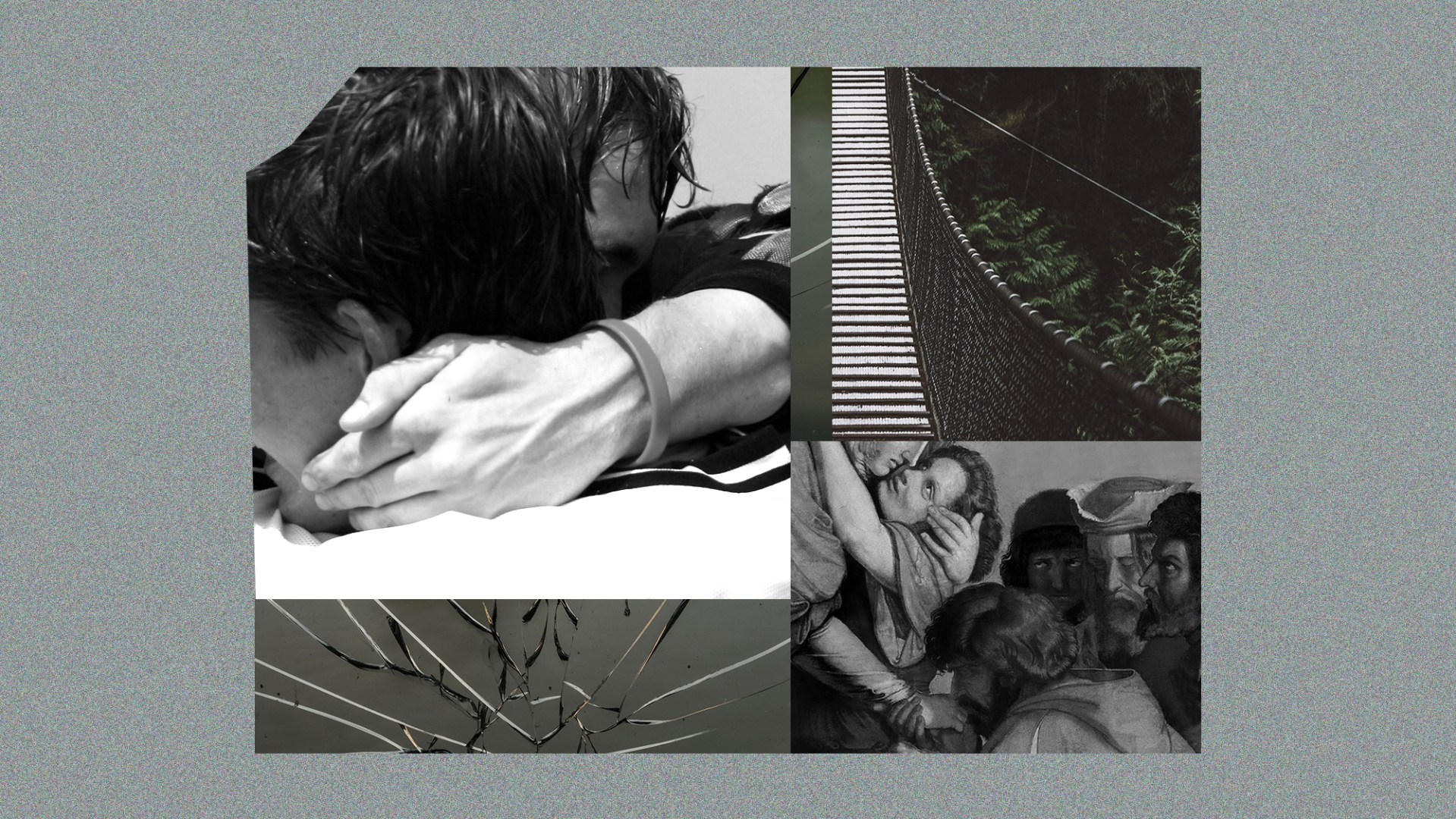
When Joseph looked back on his life and realized that his suffering at others’ hands could nevertheless reflect God's mercy and goodness (Gen. 50:20), I believe the shadow in his heart faded away and his hurt was relieved. He was able to step out of the shackles of the victimized and say, “Please come closer to me” with a fearless heart, extending an olive branch of restoration to his brothers.
When Joseph, the victim in this story, issued an unexpected gesture of reconciliation to his brothers, they became suddenly aware and convicted of their past mistakes.
Reconciliation is the beginning of repairing a broken relationship and opens the door to ending cycles of abuse within that relationship. This is not the world’s way of violence for violence but the biblical way of overcoming evil with good (Rom. 12:21).
Joe Shing Yung Tsoi has been an editor for over ten years in a Christian institution in Hong Kong. He has edited dozens of books and journals. He earned a master’s degree in Chinese language and literature from Hong Kong Baptist University and a master’s degree in Christian studies from Hong Kong Alliance Bible Seminary.
–