When investigating the origin of church-state collaboration, most Westerners look back to Constantine and the 313 Edict of Milan, which made Christianity the favored religion in the Roman Empire. But Christianity likely achieved state- approved status even earlier in Armenia, where celebrations this year will commemorate 1,700 years of faith.
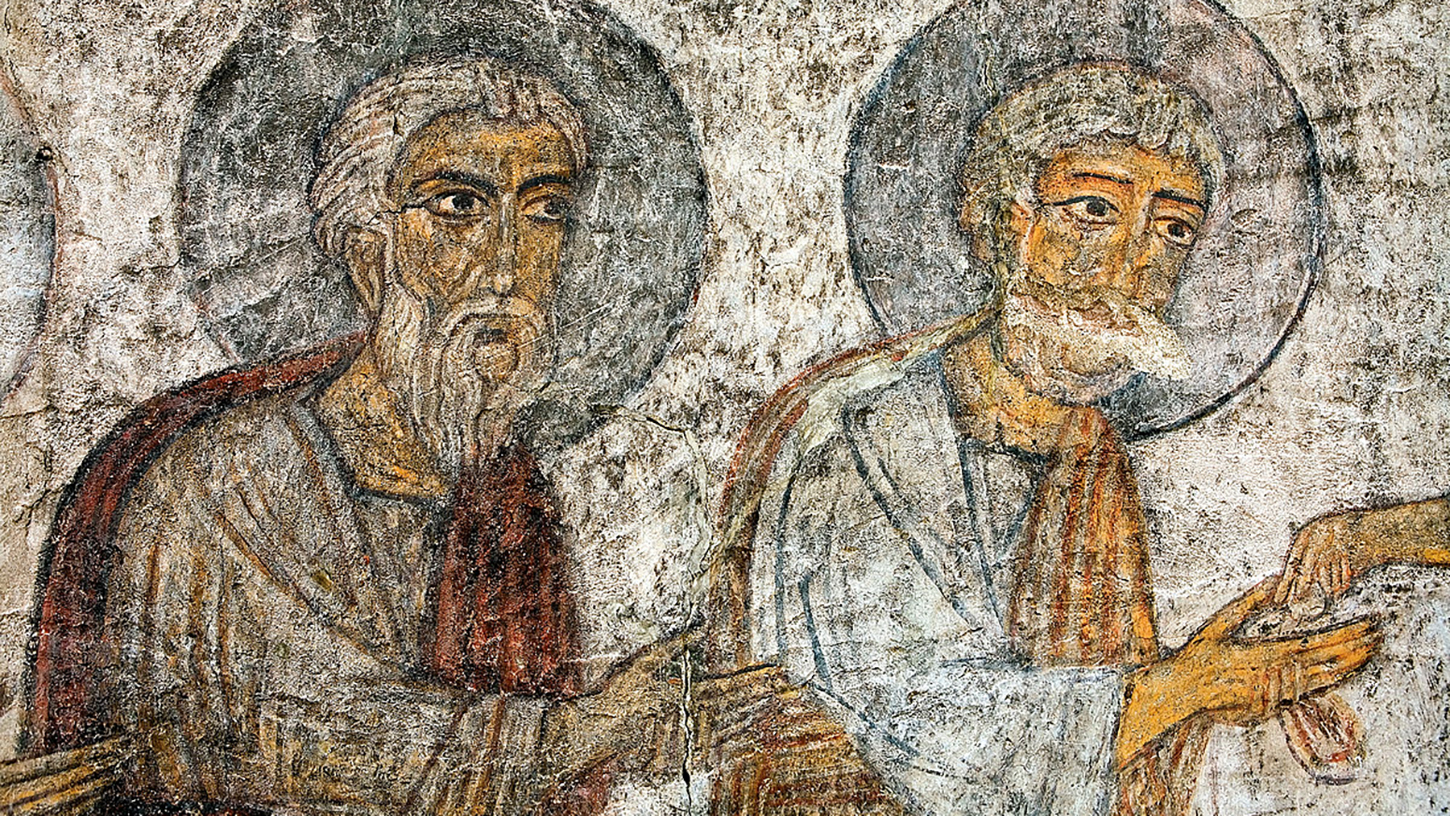
According to legend, in 301 Gregory the Illuminator (so named because he "enlightened the nation with the light of the gospel") ascended from a stone pit after 13 years of imprisonment for refusing to renounce his faith. He then cured Armenia's King Tiridates III of madness and converted him to Christianity. Gregory went on to establish the church in Armenia on the spot where he saw Christ descend in a vision. In all his efforts, Gregory built on the groundwork laid by the apostles Thaddeus and Bartholomew, who reportedly preached the Gospel in Armenia as early as the first century.
(Note: Recent scholarship suggests that most or all of Gregory's accomplishments are more accurately dated to the years between 313 and 316, meaning Rome was actually first to convert, but Armenia's sticking with 301 because the year "has always traditionally enjoyed the character of official acceptance.")
Throughout the fourth century, the church in Armenia integrated itself with local life. By the middle of the fifth century, the Armenian epic writer Yeghishe could assert that Christianity had become for the people of Armenia "as the color of the skin and not like a garment." The creation of an Armenian alphabet in 406 and subsequent translation of the Bible and other holy works greatly advanced this process. Indeed, the fifth century translation movement is commonly called the "Golden Age" of Armenian history.
The fifth century witnessed another pivotal event for the Armenian church: the 451 Council of Chalcedon. Like the 325 Council of Nicea, Chalcedon concerned itself primarily with defining the nature of Christ. Nicea had confirmed, contra Arius, that Christ was "true God of true God" and that his person encompassed both human and divine natures. Constantine, who presided over the council, thought the matter was settled, but western theologians disagreed with their eastern counterparts on how the two natures interacted.
In 449 a council of eastern bishops met in Ephesus and emphasized Christ's fundamental unity; whether or not some went so far as to endorse Monophytism, the idea that Christ's divine nature wholly subsumed his human nature, is still debated. On behalf of the westerners, who emphasized the distinction between Christ's two natures, Pope Leo I denounced the council at Ephesus as a "robber synod" and called the Council of Chalcedon. The western view prevailed at Chalcedon, but five eastern churches—Armenian, Coptic, Syrian, Ethiopian, and Indian Malabar—refused to accept the council's declarations. These "Oriental" or "non-Chalcedonian" churches separated from both the western (eventually Catholic) and eastern (eventually Orthodox) churches. Armenians took steps to reconcile with the latter in 1990.
Armenians' solid grasp of their identity and heritage sustained them through centuries of turmoil. In 451, at the Battle of Avarair, Armenains faced Persians determined to force them to convert to Zoroastrianism. The Armenians lost the battle but held on to their faith. In 484 the Persians granted them religious freedom, but Armenia remained under Persian rule until 684. Arabs controlled the region from 654 to 851.
Armenians then experienced periods of independence before being absorbed into the Muslim Ottoman Empire, which subjected them to persecution and even the twentieth century's first act of genocide. "Who now remembers the Armenians?" Turks scoffed in 1915. And just when Armenians thought their lot might finally improve, they were taken over by atheistic Russians. "We have been part of at least 30 empires," says Vrej Nersessian, the Armenian specialist at the British Library. "It is such a long history that time does not matter."
This attitude toward time, along with the corollary that continuity is more important than change, may be catching up with the Armenians. Their liturgy is essentially that of Basil (330-379) and still conducted in classical Armenian, which very few parishioners understand. The church relies on just three seminaries, in Jerusalem, Armenia, and Lebanon, to train clergy, and as a result many Armenians—including the million or so in America—have only nominal church leadership. Archbishop Vatche Hovsepian of Burbank, California, notes that for many Armenians religion is "a custom, not a conviction." Linda Maxwell, another Californian who works with Armenian youth, says many of the teens wear crosses but have no idea what the symbol represents.
A 1,700-year heritage of faith is a wonderful thing and well worthy to be celebrated. But this heritage will mean little unless the Armenian church begins looking to the future as well.
* Articles on Armenia's 1,700th anniversary have begun appearing in major newspapers, including the Guardian (U.K.) and the Los Angeles Times (from which some quotes in this story were taken). Both papers are online, but the articles are not easily accessible.
* More information on the Armenian church is also available at www.sain.org and www.canarmdiocese.org.
* For descriptions of the controversies at Nicea and Chalcedon, see issue 28: The 100 Most Important Events in Church History and issue 51: Heresy in the Early Church, both available in the CH store. Additional information is also available in issue 54: Eastern Orthodoxy.
Elesha can be reached at cheditor@ChristianityToday.com.
The online issue archive for Christian History goes as far back as Issue 51 (Heresy in the Early Church). Prior issues are available for purchase in the Christian History Store.
Copyright © 2001 by the author or Christianity Today/Christian History magazine. Click here for reprint information on Christian History.