Table of contents
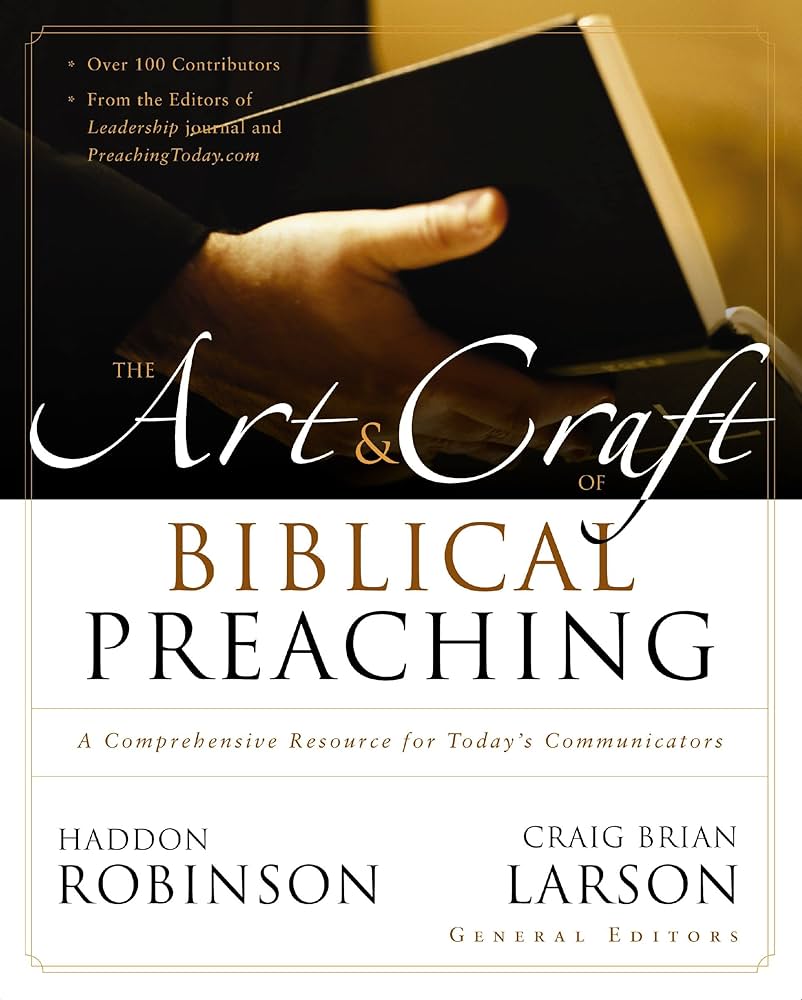
Art & Craft of Biblical Preaching
A Comprehensive Resource for Today’s Communicators
-
The High Call of Preaching
- 1 Core Convictions of Biblical Preaching
- 2 A Definition of Biblical Preaching
- 3 A Weekly Dose of Compressed Dignity
- 4 Overfed, Underchallenged
- 5 Theology of Powerful Preaching
- 6 Preaching That Raises Our Sights
- 7 Leading and Feeding: How Preaching and Leadership Intersect
- 8 John 3:16 in the Key of C
- 9 Spiritual Formation through Preaching
- 10 Preaching Life into the Church
- 11 My Theory of Homiletics
- 12 Staying on the Line
- 13 History of Preaching
-
The Spiritual Life of a Preacher
- 14 A Cup Running Over
- 15 The Patented Preacher
- 16 I Prayed for My Preaching
- 17 How Does Unction Function?
- 18 Squeaky Clean
- 19 Required Reading
- 20 Rightly Dividing the Preaching Load
- 21 Preaching Through Personal Pain
- 22 A Prophet among You
- 23 Burning Clean Fuel
- 24 Backdraft Preaching
- 25 Why I Pace Before I Preach
- 26 Preaching to Convulse the Demons
- 27 Holy Expectation
-
Considering Hearers
- 28 Preaching to Everyone in Particular
- 29 The Power of Simplicity
- 30 View from the Pew
- 31 Preaching to Ordinary People
- 32 Why Serious Preachers Use Humor
- 33 Connect Hearers through Dialogue
- 34 Self-Disclosure That Glorifies Christ
- 35 How to Be Heard
- 36 Opening the Closed American Mind
- 37 Turning an Audience into the Church
- 38 Preaching to Change the Heart
- 39 Preaching Truth, Justice, and the American Way
- 40 Preaching Morality in an Amoral Age
- 41 The Intentional Bridge Builder
- 42 Connecting with Postmoderns
- 43 Preaching Amid Pluralism
- 44 Connecting with Non-Christians
- 45 How to Translate Male Sermons to Women
- 46 He Said, She Heard
- 47 Connecting with Men
- 48 Creating a Singles-Friendly Sermon
- 49 Preaching to Preschoolers
- 50 Hispanic American Preaching
- 51 African American Preaching
- 52 Asian American Preaching
- 53 Work Wins?
- 54 One Sermon, Two Messages
- 55 The Playful Preacher
- 56 What Authority Do We Have Anymore?
-
Interpretation and Application
- 57 Why the Sermon?
- 58 Getting the Gold from the Text
- 59 Faithful First
- 60 God’s Letter of Intent
- 61 Five Bird-dogging Questions for Biblical Exposition
- 62 The Rules of the Game
- 63 Why All the Best Preachers Are–What a Concept!–Theological
- 64 Letting the Listeners Make the Discoveries
- 65 Conviction and Compassion
- 66 The Inadequacy of “Yes” Theology
- 67 What Great Coaches and Preachers Know
- 68 Preaching That Opens Ears and Hearts
- 69 Fundamentals of Genre
- 70 From B.C. to 11 a.m.
- 71 The Big Idea of Narrative Preaching
- 72 Apply Within
- 73 Application Without Moralism
- 74 Blending Bible Content and Life Application
- 75 Showing Promise
- 76 Helping Hearers Practice What We Preach
- 77 The Heresy of Application
- 78 Preaching for True Holiness
- 79 Less Joe, More Jesus
- 80 Preaching That Promotes Self-Centeredness
- 81 The Danger of Practical Preaching
- 82 Grace: A license to Wander?
- 83 The Rich Sound of Grace and Holiness
-
Structure
- 84 Set Free from the Cookie Cutter
- 85 Say and Do
- 86 Connecting Biblical Content with Contemporary Audiences
- 87 Clearly
- 88 Skills of Oral Clarity
- 89 Questions That Put Muscle on Bones
- 90 Better Big Ideas
- 91 The Power of Sequence
- 92 Outlines That Work for You, Not against You
- 93 The Tension Between Clarity and Suspense
- 94 Lifeblood of Preaching
- 95 Alliteration Downfalls
- 96 Modulating Tension
- 97 The Purpose-Driven Title
- 98 Why Should I Listen to You?
- 99 Satisfying Conclusions
-
Style
- 100 Determining Your Strengths and Weaknesses
- 101 Interesting Preaching
- 102 Crafting an Experience
- 103 Seven Habits of Highly Effective Preachers
- 104 The Sermon’s Mood
- 105 Teaching the Whole Bible
- 106 Dramatic Expository Preaching
- 107 Verse-by-Verse Sermons That Really Preach
- 108 What Makes Textual Preaching Unique?
- 109 Can Topical Preaching Be Expository?
- 110 Topical Preaching Can Be Truly Biblical
- 111 Topical Preaching on Bible Characters
- 112 Topical Preaching on Contemporary Issues
- 113 Topical Preaching on Theological Themes
- 114 Making the Most of Biblical Paradoxes
- 115 Getting the Most from the Sermon Series
- 116 The Next Big Thing
- 117 The Compelling Series
- 118 First Person Narrative Sermons
- 119 Biblical Preaching Is about Life Change, Not Sermon Style
- 120 Seven Timeless Principles for Reaching Lost People
- 121 Evangelistic Preaching in the Local Church
- 122 Felt-Needs Preaching
- 123 How to Preach Boldly in a “Whatever” Culture
- 124 Preaching with a Leader’s Heart
- 125 Critique of the New Homiletic
-
Preparation
- 142 Why I Pat the Bible on My Nightstand
- 143 Busting Out of Sermon Block
- 144 Centered
- 145 A Long, Rich Conversation with God
- 146 A Mysterious Impulse to Pray
- 147 Preparing the Messenger
- 148 The Hard Work of Illumination
- 149 Heart-to-Heart Preaching
- 150 Imagination: The Preacher’s Neglected Ally
- 151 Preaching That Magnifies God
- 152 When Is a Sermon Good Enough?
- 153 How to Build a First-Rate Library
- 154 What Makes a Sermon Deep?
- 155 Before You Preach
- 156 Inspiration Points
- 157 Simplify
- 158 Using Someone Else’s Sermon
- 159 Planning for a Richer, Deeper Sermon Series
-
Delivery
- 160 The Source of Passion
- 161 Place of Pathos in Preaching
- 162 Preaching with Intensity
- 163 No Notes, Lots of Notes, Brief Notes
- 164 In the Eye of the Hearer
- 165 No Voice, No Preach
- 166 Eliminating My Um, Um, Annoying Pulpit Mannerisms
- 167 Reading Scripture in Public
- 168 The Importance of Being Urgent
- 169 The Day I Lost My Nerve
-
Special Topics
- 170 When You Don’t Look Forward to Special Days
- 171 Preaching the Terrors
- 172 Preparing People to Suffer
- 173 Preaching Hell in a Tolerant Age
- 174 Speaking into Crisis
- 175 When the News Intrudes
- 176 Redemptive Sermons for Weddings and Funerals
- 177 The Landmark Sermon
- 178 You Had to Bring It Up
- 179 Preaching on Contemporary Issues
- 180 Preaching Sex with Compassion and Conviction
- 181 The Ever-More-Difficult Marriage Sermon
- 182 When the Sermon Goes to Work
- 183 Bridging the Marketplace Gap
- 184 Sermons on Giving That People Actually Like!
A friend of mine bought a puppy and named him Zebedee. As Zeb grew he became harder and harder to manage, so my friend went to dog obedience school. There he got a revelation.
He learned his words ("Zeb, you naughty dog, if you do that one more time I'm going to have to spank you") were simply noise to the canine mind. Dogs, he learned, communicate nonverbally. They signal dominance by being "top dog"—literally! The "alpha male" stands over the underlings of the pack, and all canines seem to understand this message.
So my friend was taught to play alpha male. He would roll Zeb on his back, hold the dog's head in both hands, and look him in the eye. Zeb got the message, and so did my friend. To communicate with Zeb you have to speak canine.
There's a principle here for all communicators: we must adjust to our audience if we hope for them to adjust to our message. We have to speak a language they understand. Missionaries call it "contextualization." And translators use "dynamic equivalence." With communication between men and women, the issue is called "genderlects."
Each of us has a dialect—a Southern drawl, a Midwestern twang—and a genderlect. According to communication scholar Deborah Tannen, genderlects account for much of the mystification between men and women. We try to communicate one thing, but when the message is filtered through the receiver's grid, it takes a new shape.
This article focuses on how to minimize communication breakdown when men speak to women.
Try a new direction
Since smooth interpersonal relations are a high value for women, they tend to be less direct than men. Women are more likely to avoid confrontation by leaving the other person as many options as possible. Thus, when a woman is hungry, a conversation might go like this:
Michelle: "Do you want to eat somewhere?"
Robyn: "Are you getting hungry?"
Michelle: "Yeah, a little."
Robyn: "Me too. Do you think we should eat?
Michelle: "Sounds good to me. Where do you want to go?"
A man might say, "I'm hungry, let's eat," but that method would feel confrontational or brusque to a woman. Indirection fosters communion.
This knowledge has saved my marriage (note the hyperbole, irony, and shock value used for effect—a male tactic). My wife uses indirection when deciding what to wear: "Should I wear the blue one or the red one?" These discussions used to frustrate me like a blackberry seed in the teeth. I thought she actually wanted my advice, and as we all know, advice is designed to solve problems. I didn't care which she wore—she looks great in both—so I would arbitrarily choose the red one. And then she would hem and haw and generate reasons against the red one!
The blackberry seed nestled deep.
I would say, "Well, OK, wear the blue one. It looks great too." Then she would object to the blue, and the seed wedged down near the gum line. Little did I realize that she was speaking "female" and I was speaking "male." I wanted to solve the problem, but she wanted me to join her in the trauma of decision making. When she argued against my choices, I thought she was belittling my advice, but actually she was inviting me into her world.
Knowing this phenomenon has revolutionized our talks. Now when she asks about the red one or the blue one, I put a look of consternation on my face and respond, "Well, I don't know. The red one has certain qualities. But the blue one has advantages, too. What do you think?" She catches on to my fumbling attempts to speak "female" and we laugh.
Other tools of indirection are qualifiers ("you've probably already thought of this"), non-specific vocabulary ("it's pretty far"), and an upward inflection of the voice so that the statement "Put it over there" sounds like a question. These tools encourage bilateral, not unilateral, decision making.
This isn't just a female phenomenon. Indirection is favored in many parts of the world. Just try starting business negotiation in Japan by saying, "OK, this is what you want, and this is what I'm prepared to give. Do you want to bargain or not?"
However, the male genderlect still dominates most public speaking in America, and women would do well to learn to communicate directly at times. With some audiences they need this arrow in their quivers. Conversely, men need to hear themselves through women's ears and realize that their directness may seem authoritarian or rude. To get the idea, compare these statements:
Male genderlect: "If you want joy, follow these three steps."
Female genderlect: "We all want joy, don't we? I know I do. How can we get it? Maybe the first thing we could do is… ."
Here's a direct statement for male readers: Preaching is more than a report of what you discovered in the study; it is also a means of establishing and nurturing relationships.
Stop speechifying
Even in interpersonal communication, men tend to make speeches. They "hold forth," displaying their expertise or calling attention to self. Communication establishes the alpha male of the pack. Men interrupt to get in their two cents worth, but women interrupt to show support for the one speaking. They finish sentences, add their own insights, and use non-verbal sounds ("oh," "hmm," "uh huh") to commune with the one speaking. What to men sounds like interrupting, to women is each person in the conversation contributing.
This approach to communication leads a woman to "match" or reflect her partner's statement:
Man: "I didn't sleep well last night."
Woman: "Oh! Me neither. That happens to me all the time."
A man may hear this as one-upsmanship. He may escalate his complaint: "My back ached all night." And the woman, attempting to create rapport may say: "I know what you mean. Mine hurts too." The conversation may cycle downward with the man taking offense where none is meant and the woman not understanding why an argument is forming.
- Can't finish right now?
Listening and feedback are usually associated with interpersonal communication, but they have implications for preaching, too. For example, I recommend that preachers incorporate dialogue into their sermons. (See the article in this volume on that topic.) Sprinkling dialogue into sermons fosters relationship. It avoids an authoritarian tone by showing respect for listeners. I include at least one section of dialogue in nearly every sermon I preach.
Plotless but not pointless
Men tend to tell stories that are funny, dramatic, and full of remarkable action ("I remember the time I fell off the cliff"). Women tend to tell stories that deal with the everyday and typical ("Last week at the doctor's office, the receptionist was rude to me").
Men's stories emphasize chronology, but women's don't. To men, women's stories seem to meander. A man's story has clear conflict and builds to a clear climax, often concluding with a moral or a punch line, or at least clear resolution. Women's stories (to men) may seem to end with a whimper, not a bang.
These differences are clearly seen in movies—"chick flicks" and "guy movies." I realize I'm in danger of stereotyping (this whole article is guilty of that!), but Hollywood producers don't care if they stereotype. They care about making money, and they seem to know what appeals to men and women. They target audiences.
Anecdotal evidence
Some researchers have found that men often use expert testimony when they want to prove a point. Women often use anecdotes.
This was illustrated for me when I watched two of my students, Ben and Jessica, teach a large lecture class. Ben came to my office the day before the lecture seeking quotations, statistics, and any help I could offer to make his presentation "meaty" (his word). I showed him a quotation from the classical rhetorician Isocrates. Even though he had never heard of Isocrates, he was impressed, and Isocrates showed up in the lecture the next day. None of the students in the class had heard of him either, but that didn't stop Ben. Anybody with a name like Isocrates must know what he was talking about!
In contrast, Jessica quoted no authorities and cited no statistics. She sat on a stool before the class and engaged her peers in dialogue, using her listeners' own experiences to illustrate principles.
Arguing from experience is inductive. It starts from particulars and moves toward a point. Induction is an effective way to argue today since pluralism and relativism have undermined our allegiance to authority. If you want to prove that "it is more blessed to give than to receive," try backing up the authoritative scriptural statement with lots of examples and stories.
Some pastors incorporate testimony into their sermons or in the church service where the sermon is preached. For example, I heard a Valentine's Day sermon on how to better love your spouse. In the middle of the sermon, the preacher played a video of an interview with a woman who had been married more than 50 years. She was now a widow and physically unable to speak to all four services, but the taped interview was quite effective. We laughed, sighed, and yearned for the same kind of marriage this woman had known. My hunch is that the women in the audience were moved even more than I was.
Perhaps the best way to present arguments for mixed audiences is by combining genderlects. Quote an authority (male genderlect), but place the quote in a human context (female genderlect) by giving some details about the person. When quoting Horatio Spafford's hymn ("When peace like a river attendeth my way"), tell the story behind the words. When quoting Augustine ("Our hearts are restless till they rest in thee"), give some details of his life and conversion. Perhaps the most effective experiences to use are your own.
Genderlects are a fact of life. We need to deal with them just like my friend learned to communicate with Zebedee. We need to hear our words the way others receive them.