Table of contents
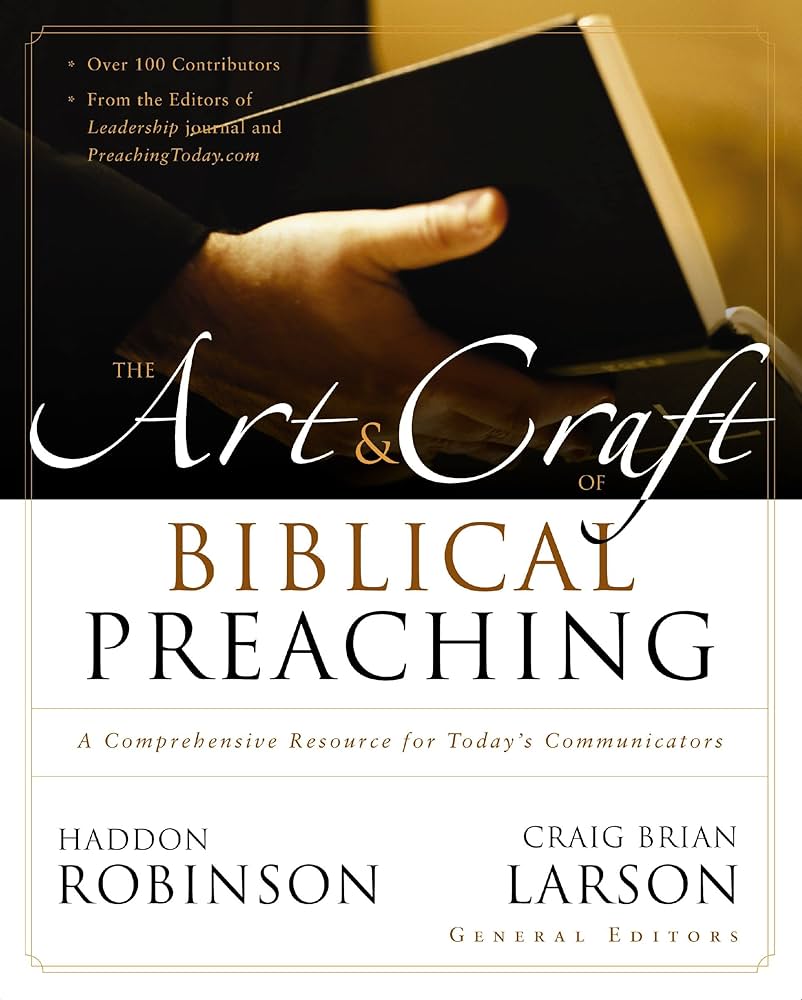
Art & Craft of Biblical Preaching
A Comprehensive Resource for Today’s Communicators
-
The High Call of Preaching
- 1 Core Convictions of Biblical Preaching
- 2 A Definition of Biblical Preaching
- 3 A Weekly Dose of Compressed Dignity
- 4 Overfed, Underchallenged
- 5 Theology of Powerful Preaching
- 6 Preaching That Raises Our Sights
- 7 Leading and Feeding: How Preaching and Leadership Intersect
- 8 John 3:16 in the Key of C
- 9 Spiritual Formation through Preaching
- 10 Preaching Life into the Church
- 11 My Theory of Homiletics
- 12 Staying on the Line
- 13 History of Preaching
-
The Spiritual Life of a Preacher
- 14 A Cup Running Over
- 15 The Patented Preacher
- 16 I Prayed for My Preaching
- 17 How Does Unction Function?
- 18 Squeaky Clean
- 19 Required Reading
- 20 Rightly Dividing the Preaching Load
- 21 Preaching Through Personal Pain
- 22 A Prophet among You
- 23 Burning Clean Fuel
- 24 Backdraft Preaching
- 25 Why I Pace Before I Preach
- 26 Preaching to Convulse the Demons
- 27 Holy Expectation
-
Considering Hearers
- 28 Preaching to Everyone in Particular
- 29 The Power of Simplicity
- 30 View from the Pew
- 31 Preaching to Ordinary People
- 32 Why Serious Preachers Use Humor
- 33 Connect Hearers through Dialogue
- 34 Self-Disclosure That Glorifies Christ
- 35 How to Be Heard
- 36 Opening the Closed American Mind
- 37 Turning an Audience into the Church
- 38 Preaching to Change the Heart
- 39 Preaching Truth, Justice, and the American Way
- 40 Preaching Morality in an Amoral Age
- 41 The Intentional Bridge Builder
- 42 Connecting with Postmoderns
- 43 Preaching Amid Pluralism
- 44 Connecting with Non-Christians
- 45 How to Translate Male Sermons to Women
- 46 He Said, She Heard
- 47 Connecting with Men
- 48 Creating a Singles-Friendly Sermon
- 49 Preaching to Preschoolers
- 50 Hispanic American Preaching
- 51 African American Preaching
- 52 Asian American Preaching
- 53 Work Wins?
- 54 One Sermon, Two Messages
- 55 The Playful Preacher
- 56 What Authority Do We Have Anymore?
-
Interpretation and Application
- 57 Why the Sermon?
- 58 Getting the Gold from the Text
- 59 Faithful First
- 60 God’s Letter of Intent
- 61 Five Bird-dogging Questions for Biblical Exposition
- 62 The Rules of the Game
- 63 Why All the Best Preachers Are–What a Concept!–Theological
- 64 Letting the Listeners Make the Discoveries
- 65 Conviction and Compassion
- 66 The Inadequacy of “Yes” Theology
- 67 What Great Coaches and Preachers Know
- 68 Preaching That Opens Ears and Hearts
- 69 Fundamentals of Genre
- 70 From B.C. to 11 a.m.
- 71 The Big Idea of Narrative Preaching
- 72 Apply Within
- 73 Application Without Moralism
- 74 Blending Bible Content and Life Application
- 75 Showing Promise
- 76 Helping Hearers Practice What We Preach
- 77 The Heresy of Application
- 78 Preaching for True Holiness
- 79 Less Joe, More Jesus
- 80 Preaching That Promotes Self-Centeredness
- 81 The Danger of Practical Preaching
- 82 Grace: A license to Wander?
- 83 The Rich Sound of Grace and Holiness
-
Structure
- 84 Set Free from the Cookie Cutter
- 85 Say and Do
- 86 Connecting Biblical Content with Contemporary Audiences
- 87 Clearly
- 88 Skills of Oral Clarity
- 89 Questions That Put Muscle on Bones
- 90 Better Big Ideas
- 91 The Power of Sequence
- 92 Outlines That Work for You, Not against You
- 93 The Tension Between Clarity and Suspense
- 94 Lifeblood of Preaching
- 95 Alliteration Downfalls
- 96 Modulating Tension
- 97 The Purpose-Driven Title
- 98 Why Should I Listen to You?
- 99 Satisfying Conclusions
-
Style
- 100 Determining Your Strengths and Weaknesses
- 101 Interesting Preaching
- 102 Crafting an Experience
- 103 Seven Habits of Highly Effective Preachers
- 104 The Sermon’s Mood
- 105 Teaching the Whole Bible
- 106 Dramatic Expository Preaching
- 107 Verse-by-Verse Sermons That Really Preach
- 108 What Makes Textual Preaching Unique?
- 109 Can Topical Preaching Be Expository?
- 110 Topical Preaching Can Be Truly Biblical
- 111 Topical Preaching on Bible Characters
- 112 Topical Preaching on Contemporary Issues
- 113 Topical Preaching on Theological Themes
- 114 Making the Most of Biblical Paradoxes
- 115 Getting the Most from the Sermon Series
- 116 The Next Big Thing
- 117 The Compelling Series
- 118 First Person Narrative Sermons
- 119 Biblical Preaching Is about Life Change, Not Sermon Style
- 120 Seven Timeless Principles for Reaching Lost People
- 121 Evangelistic Preaching in the Local Church
- 122 Felt-Needs Preaching
- 123 How to Preach Boldly in a “Whatever” Culture
- 124 Preaching with a Leader’s Heart
- 125 Critique of the New Homiletic
-
Preparation
- 142 Why I Pat the Bible on My Nightstand
- 143 Busting Out of Sermon Block
- 144 Centered
- 145 A Long, Rich Conversation with God
- 146 A Mysterious Impulse to Pray
- 147 Preparing the Messenger
- 148 The Hard Work of Illumination
- 149 Heart-to-Heart Preaching
- 150 Imagination: The Preacher’s Neglected Ally
- 151 Preaching That Magnifies God
- 152 When Is a Sermon Good Enough?
- 153 How to Build a First-Rate Library
- 154 What Makes a Sermon Deep?
- 155 Before You Preach
- 156 Inspiration Points
- 157 Simplify
- 158 Using Someone Else’s Sermon
- 159 Planning for a Richer, Deeper Sermon Series
-
Delivery
- 160 The Source of Passion
- 161 Place of Pathos in Preaching
- 162 Preaching with Intensity
- 163 No Notes, Lots of Notes, Brief Notes
- 164 In the Eye of the Hearer
- 165 No Voice, No Preach
- 166 Eliminating My Um, Um, Annoying Pulpit Mannerisms
- 167 Reading Scripture in Public
- 168 The Importance of Being Urgent
- 169 The Day I Lost My Nerve
-
Special Topics
- 170 When You Don’t Look Forward to Special Days
- 171 Preaching the Terrors
- 172 Preparing People to Suffer
- 173 Preaching Hell in a Tolerant Age
- 174 Speaking into Crisis
- 175 When the News Intrudes
- 176 Redemptive Sermons for Weddings and Funerals
- 177 The Landmark Sermon
- 178 You Had to Bring It Up
- 179 Preaching on Contemporary Issues
- 180 Preaching Sex with Compassion and Conviction
- 181 The Ever-More-Difficult Marriage Sermon
- 182 When the Sermon Goes to Work
- 183 Bridging the Marketplace Gap
- 184 Sermons on Giving That People Actually Like!
Several years ago I endured one of the worst Bible studies ever.
I wasn't in the audience.
The musicians concluded the worship service, and I stepped onto the stage alone. As I adjusted the podium and laid out my notes, I heard the familiar rustling of Bibles, pens, and notebooks.
After a brief introduction, I delved into my message. Suddenly, though my lips were moving and words were sounding forth, my neatly typed notes blurred into classical Greek. My carefully planned message had no energy. Before long I'd lost the entire congregation to purse-fishing, watch-peeking, heavy eyelids, and blue-sky daydreaming.
Though the dead of winter, I was sweating profusely. I wanted to die!
When it was over, I was so embarrassed I quickly slipped out of the building—and into depression. I didn't want to show my face at the church office the next day. I had bombed, and I feared I had raised serious questions about my teaching ability.
Finally I shared my grief with a fellow pastor. He listened empathetically and offered consolation: "That happens to all of us."
It didn't help. I had long been a believer that anything worth saying is worth saying well. I hadn't done well, and that, in my mind, was inexcusable.
Where had I gone wrong?
Getting real
The problem with that message, I've since discovered, was not that I hadn't prepared enough; rather, I had neglected preparation in a vital area.
Over the past fourteen years, I've often wondered. How can one message stir the listeners' souls while another leaves them stirring restlessly in their seats? How can I become consistently persuasive for Jesus Christ?
A strong case for any number of factors could be made: adequate preparation of both my heart and the audience's hearts by the Holy Spirit, my daily walk with the Lord, the amount of time spent in study and preparation. One additional factor, however, has made the difference for me. Lives change only when hearts have been affected, and hearts are most deeply affected when the speaker exposes his own.
In other words, what people want and need most from a communicator is authenticity. This wasn't a new revelation to me. I had read and heard much about "being real." But authenticity seemed to be a mysterious and elusive quality with a will of its own. Without it, people would offer polite comments: "I enjoyed your message." But when authenticity appeared, they would say, "God spoke to my heart this morning." I liked the effects of authenticity, but I had no idea how to express it.
Then one speaking opportunity turned out to be a watershed moment.
Heart exposure
In 1986 I spoke at a conference for young people. I had prepared for months and was delivering my message with great passion. They were listening attentively and taking notes, but their eyes and posture told me I hadn't really connected.
Then I paused for a moment and considered the importance the subject had for their lives. Suddenly I was completely overcome with emotion. Unbidden tears welled up and overflowed the banks of my eyes. It took me by surprise (I don't cry often), and for a few minutes I stood there silently, head bowed. When I regained my composure, I looked up, surprised to find many tissues and handkerchiefs drying tearful eyes.
Afterward I mused about what had happened. I'd been speaking for hours trying to affect those people, and they were moved most when I was unable to speak at all.
What touched hearts was not my tears per se but my giving people the opportunity to peer into the window of my heart. They not only heard what I thought, they experienced what I felt. Sometimes emotions are more persuasive than eloquence. And sincere emotions expressed with eloquence make for honest persuasion.
People want to know not only what I think about the subject, but also how I feel about it. That's why I now use the phrase heart exposure rather than authenticity. Authenticity seems passive; heart exposure suggests an active choice on my part to disclose. Heart exposure reminds me of my goal each time I speak: I want to reveal not only my thought and theology, but my heart and soul as well.
The power of story
I accomplish heart exposure primarily through storytelling. God gives all his leaders many stories, and he wants us to share them with the flock. Not from a heart of pride but from a genuine desire to model how one responds to the promises and mandates of God. Peter exhorts elders about "being examples to the flock," and stories allow me to do that. Whenever I stand before a group, I assume their implicit question is, How has this truth touched your heart and life, Dan? I ensure that I am answering that question when I DARE myself.
DARE preaching
To DARE means that I describe the story with sensory detail, attach specific emotions, reveal why I feel as I do, and explain what it means.
Describing the story with sensory detail
Because we experience the world through our five senses, when I tell a story I try to let my audience see, hear, smell, touch, or taste what's in the story scene. Even weak stories are greatly strengthened when I provide such details.
I employed all four DARE components at the beginning of this article. In the opening story, I described the scene, letting you hear the "rustling and bustling of people retrieving their Bibles, pens, and notebooks." These details aren't trivial. By them I transport my audience into the physical environs of the story. You don't have to use many, but a few choice details enliven your stories.
Attaching a specific emotion
In my story I said, "I wanted to die," and I was so embarrassed "I didn't even want to show my face at the church office the next day. Feelings are the common denominator of us all. I strive not only to offer relevant subject matter, but to be emotionally relevant.
It is often much easier for me to report the facts of a matter than to disclose how the matter affected my heart. But as the acronym DARE implies, all true heart exposure involves daring to take a risk. Time and again I've found that I connect with my audience's hearts to the degree that I am willing to expose my own.
- Can't finish right now?
Revealing why I feel this way
This is the most critical element for connecting with the audience emotionally. Simply saying, "I was embarrassed" wouldn't provide enough basis for my audience to share my feelings. For their hearts to be affected, they must see and identify with what caused me to feel embarrassed.
"I had bombed … and I wondered if my failure had raised serious questions about my teaching ability." I give my audience enough specific information to understand the depth of my feelings so they can experience the emotion with me.
When I'm not the subject of my stories, I still concentrate on how I feel about the people and events in the story. In effect the story becomes my own.
Explaining what it means
This final component is the "therefore," the connection, the point. Here people pick up their pens and write. I tell them how they can respond in their own way to the truth in the story.
The message of my opening story was "The problem with that message, I've since discovered, was not that I hadn't prepared enough; rather, I had neglected preparation in a vital area… . Lives change only when hearts have been affected, and hearts are most deeply affected when the speaker exposes his own."
Is this manipulation? I consider it thorough and effective preparation. I'm getting in touch with my own sincere emotions, not performing or selfishly manipulating the emotions of others. Heart exposure helps me walk among the people instead of floating out of reach above them. I show them the Christian life in action as one who experiences it with them.
The DARE components can be used with stories of different intensity and length. Sometimes they involve serious themes such as envy or anger, but many times they are on the lighter side, funny comments and awkward situations. I don't make every story one of earth-shattering impact. My goal is simply to let the stories humanize me.
Whatever my message, I usually have a story because I always have feelings about my topic. If I don't feel something about a subject, I won't speak on it! In fact, many times, by asking myself what I really feel about a portion of Scripture and why, I find the nucleus of my story.