Table of contents
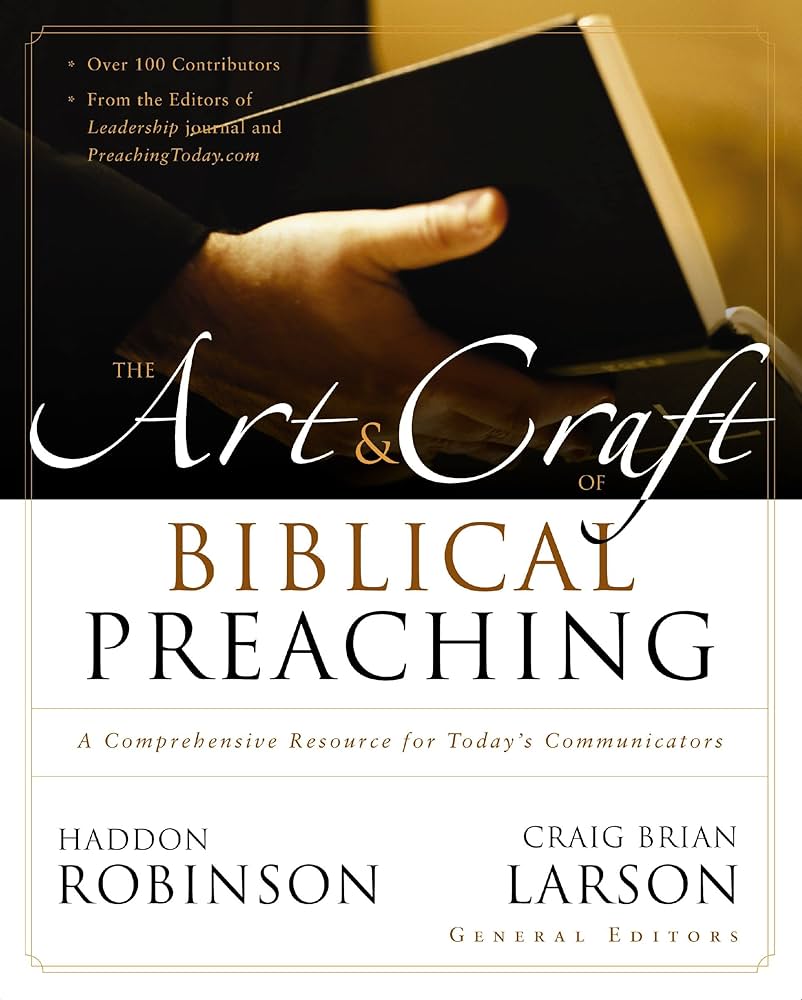
Art & Craft of Biblical Preaching
A Comprehensive Resource for Today’s Communicators
-
The High Call of Preaching
- 1 Core Convictions of Biblical Preaching
- 2 A Definition of Biblical Preaching
- 3 A Weekly Dose of Compressed Dignity
- 4 Overfed, Underchallenged
- 5 Theology of Powerful Preaching
- 6 Preaching That Raises Our Sights
- 7 Leading and Feeding: How Preaching and Leadership Intersect
- 8 John 3:16 in the Key of C
- 9 Spiritual Formation through Preaching
- 10 Preaching Life into the Church
- 11 My Theory of Homiletics
- 12 Staying on the Line
- 13 History of Preaching
-
The Spiritual Life of a Preacher
- 14 A Cup Running Over
- 15 The Patented Preacher
- 16 I Prayed for My Preaching
- 17 How Does Unction Function?
- 18 Squeaky Clean
- 19 Required Reading
- 20 Rightly Dividing the Preaching Load
- 21 Preaching Through Personal Pain
- 22 A Prophet among You
- 23 Burning Clean Fuel
- 24 Backdraft Preaching
- 25 Why I Pace Before I Preach
- 26 Preaching to Convulse the Demons
- 27 Holy Expectation
-
Considering Hearers
- 28 Preaching to Everyone in Particular
- 29 The Power of Simplicity
- 30 View from the Pew
- 31 Preaching to Ordinary People
- 32 Why Serious Preachers Use Humor
- 33 Connect Hearers through Dialogue
- 34 Self-Disclosure That Glorifies Christ
- 35 How to Be Heard
- 36 Opening the Closed American Mind
- 37 Turning an Audience into the Church
- 38 Preaching to Change the Heart
- 39 Preaching Truth, Justice, and the American Way
- 40 Preaching Morality in an Amoral Age
- 41 The Intentional Bridge Builder
- 42 Connecting with Postmoderns
- 43 Preaching Amid Pluralism
- 44 Connecting with Non-Christians
- 45 How to Translate Male Sermons to Women
- 46 He Said, She Heard
- 47 Connecting with Men
- 48 Creating a Singles-Friendly Sermon
- 49 Preaching to Preschoolers
- 50 Hispanic American Preaching
- 51 African American Preaching
- 52 Asian American Preaching
- 53 Work Wins?
- 54 One Sermon, Two Messages
- 55 The Playful Preacher
- 56 What Authority Do We Have Anymore?
-
Interpretation and Application
- 57 Why the Sermon?
- 58 Getting the Gold from the Text
- 59 Faithful First
- 60 God’s Letter of Intent
- 61 Five Bird-dogging Questions for Biblical Exposition
- 62 The Rules of the Game
- 63 Why All the Best Preachers Are–What a Concept!–Theological
- 64 Letting the Listeners Make the Discoveries
- 65 Conviction and Compassion
- 66 The Inadequacy of “Yes” Theology
- 67 What Great Coaches and Preachers Know
- 68 Preaching That Opens Ears and Hearts
- 69 Fundamentals of Genre
- 70 From B.C. to 11 a.m.
- 71 The Big Idea of Narrative Preaching
- 72 Apply Within
- 73 Application Without Moralism
- 74 Blending Bible Content and Life Application
- 75 Showing Promise
- 76 Helping Hearers Practice What We Preach
- 77 The Heresy of Application
- 78 Preaching for True Holiness
- 79 Less Joe, More Jesus
- 80 Preaching That Promotes Self-Centeredness
- 81 The Danger of Practical Preaching
- 82 Grace: A license to Wander?
- 83 The Rich Sound of Grace and Holiness
-
Structure
- 84 Set Free from the Cookie Cutter
- 85 Say and Do
- 86 Connecting Biblical Content with Contemporary Audiences
- 87 Clearly
- 88 Skills of Oral Clarity
- 89 Questions That Put Muscle on Bones
- 90 Better Big Ideas
- 91 The Power of Sequence
- 92 Outlines That Work for You, Not against You
- 93 The Tension Between Clarity and Suspense
- 94 Lifeblood of Preaching
- 95 Alliteration Downfalls
- 96 Modulating Tension
- 97 The Purpose-Driven Title
- 98 Why Should I Listen to You?
- 99 Satisfying Conclusions
-
Style
- 100 Determining Your Strengths and Weaknesses
- 101 Interesting Preaching
- 102 Crafting an Experience
- 103 Seven Habits of Highly Effective Preachers
- 104 The Sermon’s Mood
- 105 Teaching the Whole Bible
- 106 Dramatic Expository Preaching
- 107 Verse-by-Verse Sermons That Really Preach
- 108 What Makes Textual Preaching Unique?
- 109 Can Topical Preaching Be Expository?
- 110 Topical Preaching Can Be Truly Biblical
- 111 Topical Preaching on Bible Characters
- 112 Topical Preaching on Contemporary Issues
- 113 Topical Preaching on Theological Themes
- 114 Making the Most of Biblical Paradoxes
- 115 Getting the Most from the Sermon Series
- 116 The Next Big Thing
- 117 The Compelling Series
- 118 First Person Narrative Sermons
- 119 Biblical Preaching Is about Life Change, Not Sermon Style
- 120 Seven Timeless Principles for Reaching Lost People
- 121 Evangelistic Preaching in the Local Church
- 122 Felt-Needs Preaching
- 123 How to Preach Boldly in a “Whatever” Culture
- 124 Preaching with a Leader’s Heart
- 125 Critique of the New Homiletic
-
Preparation
- 142 Why I Pat the Bible on My Nightstand
- 143 Busting Out of Sermon Block
- 144 Centered
- 145 A Long, Rich Conversation with God
- 146 A Mysterious Impulse to Pray
- 147 Preparing the Messenger
- 148 The Hard Work of Illumination
- 149 Heart-to-Heart Preaching
- 150 Imagination: The Preacher’s Neglected Ally
- 151 Preaching That Magnifies God
- 152 When Is a Sermon Good Enough?
- 153 How to Build a First-Rate Library
- 154 What Makes a Sermon Deep?
- 155 Before You Preach
- 156 Inspiration Points
- 157 Simplify
- 158 Using Someone Else’s Sermon
- 159 Planning for a Richer, Deeper Sermon Series
-
Delivery
- 160 The Source of Passion
- 161 Place of Pathos in Preaching
- 162 Preaching with Intensity
- 163 No Notes, Lots of Notes, Brief Notes
- 164 In the Eye of the Hearer
- 165 No Voice, No Preach
- 166 Eliminating My Um, Um, Annoying Pulpit Mannerisms
- 167 Reading Scripture in Public
- 168 The Importance of Being Urgent
- 169 The Day I Lost My Nerve
-
Special Topics
- 170 When You Don’t Look Forward to Special Days
- 171 Preaching the Terrors
- 172 Preparing People to Suffer
- 173 Preaching Hell in a Tolerant Age
- 174 Speaking into Crisis
- 175 When the News Intrudes
- 176 Redemptive Sermons for Weddings and Funerals
- 177 The Landmark Sermon
- 178 You Had to Bring It Up
- 179 Preaching on Contemporary Issues
- 180 Preaching Sex with Compassion and Conviction
- 181 The Ever-More-Difficult Marriage Sermon
- 182 When the Sermon Goes to Work
- 183 Bridging the Marketplace Gap
- 184 Sermons on Giving That People Actually Like!
To tell stories well (biblical stories or otherwise), make sure they have a beginning, middle, and end. This is especially true of the lean stories, lasting from one to five minutes, that we normally use in sermons. Each part — beginning, middle, and end — is essential, each different in purpose.
Beginnings
The beginnings of lean stories have three fundamental purposes.
From beginning to end, a story needs movement.
1. Orient hearers. We must provide a minimum of information that sets the story in time and place. Who are the people that begin the story? Where and when is the story happening?
When hearers get insufficient information, they are distracted and often frustrated. They won't fully follow the story or appreciate the story's resolution (Ever see the first Mission Impossible movie?).
However, too much information bogs the story, diminishes interest, and frustrates hearers. Give no more information than necessary. From beginning to end, a story needs movement.
"Jesus said: 'A man was going down from Jerusalem to Jericho, when he fell into the hands of robbers. They stripped him of his clothes, beat him and went away, leaving him half dead.' "
In the two-sentence beginning of this lean story, Jesus gives the minimum information hearers need. How many children "the man" had, what his name was, what he looked like — none of that affects the point of the story, so Jesus omits it.
Audiences like to know whether a story is fact or fiction, so with true stories include specific names and dates, conveying authenticity. With imagined stories tip off hearers with a phrase like "The story is told of…" or "In a certain town, a man lived with his elderly mother. We'll call him Bill…"
2. Establish the complication. Complication (also variously called conflict, disequilibrium, tension, problem) is what makes a story a story. A mere chronicle of events is not a story: "I went to the store. I bought some eggs. I came home. I watched TV. I went to bed."
A story has plot, and a plot has dramatic tension. "Yesterday morning I went to the store, and when I walked into the fruit section I realized I had forgotten what my wife asked me to pick up for her. Uh oh, I thought. She's away from the phone all day, and tonight we're having her parents over for dinner."
We must establish the complication in the beginning of the story, because that is what gets attention and interest, and that is where the significance of the story begins.
When possible, though, we precede the complicating event with a brief description of what was happening before things got sticky. "A man was going down from Jerusalem to Jericho…" This sets up a dramatic contrast. Disequilibrium feels more jarring if listeners have had at least a brief sense of equilibrium. Stories go the full cycle: from normal circumstances to problematic, then to reversal and resolution, and then back to normal.
Be careful, though, to keep this setup brief, without telling some of the ending in the beginning and thereby letting all the tension out of the story. "Yesterday we had my wife's parents over for dinner, and my neighbor, who always has what I need, saved my neck. I went to the store in the morning, and when I walked into the fruit section…"
3. Show what motivates the key person. This adds interest and depth to a story. When hearers know why the main person in the story dearly wants to resolve the complication, it increases the tension and the sympathies of the hearer for that person. In other words, hearers care more about what happens.
"Yesterday morning I went to the store, and when I walked into the fruit section I realized I had forgotten what my wife asked me to buy for her. Uh oh, I thought. She's away from the phone all day, and tonight we're having her parents over for dinner. Now, my wife's parents have not spoken to me in four years, ever since I made a sarcastic remark about their perfectionist tendencies at a Thanksgiving dinner."
When presenting characters, remember that no one is all good or all bad, perfect in faith or doubt. Real-world ambiguity adds authenticity to the story and keeps it interesting.
"Now, my wife's parents have not spoken to me in four years, ever since I made a sarcastic remark about their perfectionist tendencies at a Thanksgiving dinner—ironically, they had forgotten to bring the apple pie."
One exception to this is when you turn the tables on what hearers expect. "A priest happened to be going down the same road, and when he saw the man, he passed by on the other side. So too, a Levite, when he came to the place and saw him, passed by on the other side. But a Samaritan, as he traveled, came where the man was; and when he saw him, he took pity on him."
Middle
The middle of a lean story has two basic purposes, which I will discuss together.
(1) Prepare for and (2) present a strong reversal. The reversal is the action, insight, decision, or event that triggers the climax. In some stories, the reversal is the climax; in others the reversal leads directly into the climaxing scene that releases the tension of the story.
"But a Samaritan, as he traveled, came where the man was; and when he saw him, he took pity on him."
As the word reversal implies, it should have an element of the unexpected. Usually, the stronger the surprise, the stronger the story. But, a reversal should not be a complete surprise or entirely incongruous with what has come before; otherwise the story seems unreal. When needed, subtle foreshadowing can make for a more satisfying reversal and climax.
To prepare for the reversal, an effective middle narrates one or more failed attempts to resolve the complication.
"A priest happened to be going down the same road, and when he saw the man, he passed by on the other side. So too, a Levite, when he came to the place and saw him, passed by on the other side."
If there are no failed attempts, the story ends with a whimper.
- Can't finish right now?
In addition, the middle prepares for the reversal by adding important information: chronicling the necessary chain of events leading to the reversal, adding necessary information about people, elaborating on the complication, introducing new people, foreshadowing the reversal. In terms of drama, the best preparation of all are elements that make the complication progressively worse.
"This dinner was so important I decided to do whatever it takes. I filled my shopping cart with salad items, fruits, meats, breads, desserts. Somehow we would be able to put a decent meal on the table with this mountain of food! But when I got to the checkout counter and reached for my wallet, my heart stopped: my pockets were empty. Had I dropped my wallet in the parking lot? Had I left it at home?"
The best stories prepare for and present the reversal and climax in a way that makes them understandable, believable, satisfying, moving. For that reason, the reversal and climax will usually be the most fully developed elements in the story. Here you often use the most dialogue, a fuller description of the setting, a prop that symbolizes an important element of the story, the most detailed chronicling of action (without going overboard and killing the pace). Fuller development conveys the message that this is the most important part of the story.
"He went to him and bandaged his wounds, pouring on oil and wine. Then he put the man on his own donkey, took him to an inn and took care of him. The next day he took out two silver coins and gave them to the innkeeper. 'Look after him,' he said, 'and when I return, I will reimburse you for any extra expense you may have.' "
Ending
The ending of a lean story has three basic purposes.
1. Present the climactic scene. The climax resolves the complication. If the reversal is not the actual climax, then the climax follows immediately on its heels and begins the end of the story.
In the Parable of the Good Samaritan, the actions of the Samaritan are both reversal and climax.
2. Show consequences of the reversal and climax. In story parlance, this is called the denouement. Briefly show that the reversal and climax did result in a return to equilibrium. In addition, although the story has come full circle, show how people or circumstances have changed.
"That family dinner was a fiasco. Who would have thought it would end up with my father-in-law and me becoming great friends. Hardly a week goes by that he and I aren't on the phone about something."
3. Give a sense of closure. Make sure no loose ends hang from the story that leave people wondering. They will feel the story isn't over. But be careful not to touch the airplane down on the runway and then take off and land a few more times. Everything in the ending should be brief. The story has been told, the tension resolved, the consequences shown. End the story with one strong sentence that has a feeling of finality, and then bridge back into the flow of the sermon in one or two sentences.
"Which of these three do you think was a neighbor to the man who fell into the hands of robbers?" The expert in the law replied, "The one who had mercy on him." Jesus told him, "Go and do likewise."
Effective storytellers select from myriad available details which to include in a story and which to omit. Understanding the unique roles of the beginning, middle, and end will help you purposefully select the data that make for life-changing stories.
Handy Checklist Does the beginning of my story
Does the middle of the story
Does the end of the story
To respond to the editor, click here.
Craig Brian Larson is editor of PreachingToday.com and Preaching Today audio, as well as pastor of Lake Shore Church in Chicago. He is co-author of Preaching That Connects (Zondervan, 1994).