Table of contents
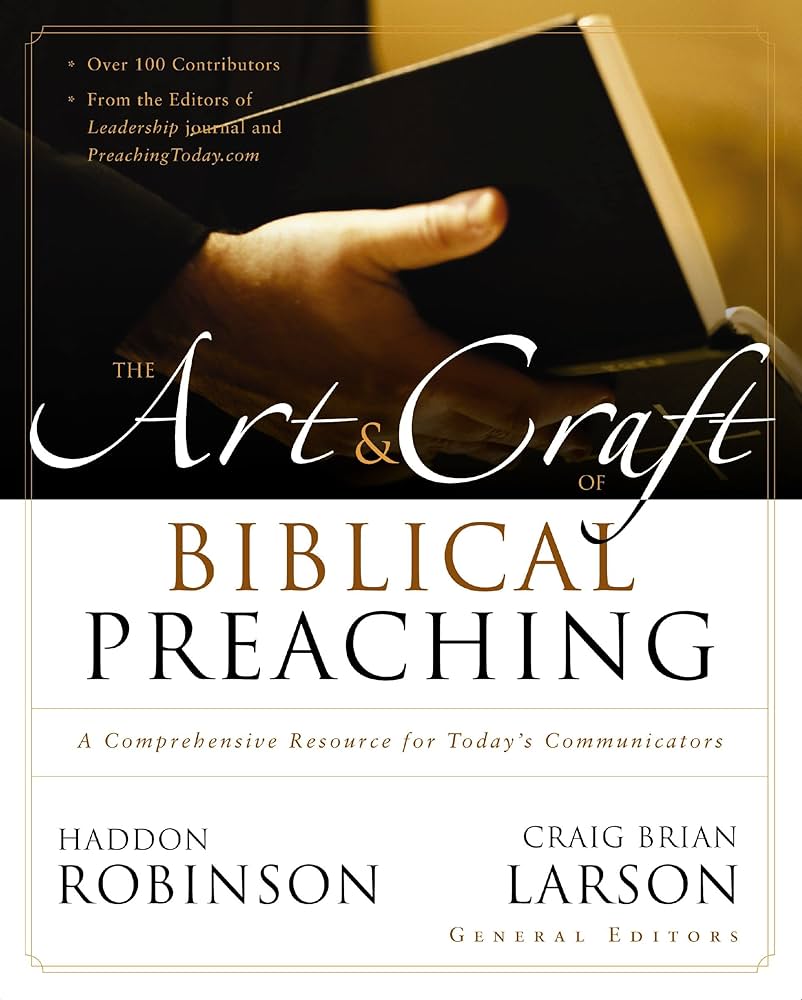
Art & Craft of Biblical Preaching
A Comprehensive Resource for Today’s Communicators
-
The High Call of Preaching
- 1 Core Convictions of Biblical Preaching
- 2 A Definition of Biblical Preaching
- 3 A Weekly Dose of Compressed Dignity
- 4 Overfed, Underchallenged
- 5 Theology of Powerful Preaching
- 6 Preaching That Raises Our Sights
- 7 Leading and Feeding: How Preaching and Leadership Intersect
- 8 John 3:16 in the Key of C
- 9 Spiritual Formation through Preaching
- 10 Preaching Life into the Church
- 11 My Theory of Homiletics
- 12 Staying on the Line
- 13 History of Preaching
-
The Spiritual Life of a Preacher
- 14 A Cup Running Over
- 15 The Patented Preacher
- 16 I Prayed for My Preaching
- 17 How Does Unction Function?
- 18 Squeaky Clean
- 19 Required Reading
- 20 Rightly Dividing the Preaching Load
- 21 Preaching Through Personal Pain
- 22 A Prophet among You
- 23 Burning Clean Fuel
- 24 Backdraft Preaching
- 25 Why I Pace Before I Preach
- 26 Preaching to Convulse the Demons
- 27 Holy Expectation
-
Considering Hearers
- 28 Preaching to Everyone in Particular
- 29 The Power of Simplicity
- 30 View from the Pew
- 31 Preaching to Ordinary People
- 32 Why Serious Preachers Use Humor
- 33 Connect Hearers through Dialogue
- 34 Self-Disclosure That Glorifies Christ
- 35 How to Be Heard
- 36 Opening the Closed American Mind
- 37 Turning an Audience into the Church
- 38 Preaching to Change the Heart
- 39 Preaching Truth, Justice, and the American Way
- 40 Preaching Morality in an Amoral Age
- 41 The Intentional Bridge Builder
- 42 Connecting with Postmoderns
- 43 Preaching Amid Pluralism
- 44 Connecting with Non-Christians
- 45 How to Translate Male Sermons to Women
- 46 He Said, She Heard
- 47 Connecting with Men
- 48 Creating a Singles-Friendly Sermon
- 49 Preaching to Preschoolers
- 50 Hispanic American Preaching
- 51 African American Preaching
- 52 Asian American Preaching
- 53 Work Wins?
- 54 One Sermon, Two Messages
- 55 The Playful Preacher
- 56 What Authority Do We Have Anymore?
-
Interpretation and Application
- 57 Why the Sermon?
- 58 Getting the Gold from the Text
- 59 Faithful First
- 60 God’s Letter of Intent
- 61 Five Bird-dogging Questions for Biblical Exposition
- 62 The Rules of the Game
- 63 Why All the Best Preachers Are–What a Concept!–Theological
- 64 Letting the Listeners Make the Discoveries
- 65 Conviction and Compassion
- 66 The Inadequacy of “Yes” Theology
- 67 What Great Coaches and Preachers Know
- 68 Preaching That Opens Ears and Hearts
- 69 Fundamentals of Genre
- 70 From B.C. to 11 a.m.
- 71 The Big Idea of Narrative Preaching
- 72 Apply Within
- 73 Application Without Moralism
- 74 Blending Bible Content and Life Application
- 75 Showing Promise
- 76 Helping Hearers Practice What We Preach
- 77 The Heresy of Application
- 78 Preaching for True Holiness
- 79 Less Joe, More Jesus
- 80 Preaching That Promotes Self-Centeredness
- 81 The Danger of Practical Preaching
- 82 Grace: A license to Wander?
- 83 The Rich Sound of Grace and Holiness
-
Structure
- 84 Set Free from the Cookie Cutter
- 85 Say and Do
- 86 Connecting Biblical Content with Contemporary Audiences
- 87 Clearly
- 88 Skills of Oral Clarity
- 89 Questions That Put Muscle on Bones
- 90 Better Big Ideas
- 91 The Power of Sequence
- 92 Outlines That Work for You, Not against You
- 93 The Tension Between Clarity and Suspense
- 94 Lifeblood of Preaching
- 95 Alliteration Downfalls
- 96 Modulating Tension
- 97 The Purpose-Driven Title
- 98 Why Should I Listen to You?
- 99 Satisfying Conclusions
-
Style
- 100 Determining Your Strengths and Weaknesses
- 101 Interesting Preaching
- 102 Crafting an Experience
- 103 Seven Habits of Highly Effective Preachers
- 104 The Sermon’s Mood
- 105 Teaching the Whole Bible
- 106 Dramatic Expository Preaching
- 107 Verse-by-Verse Sermons That Really Preach
- 108 What Makes Textual Preaching Unique?
- 109 Can Topical Preaching Be Expository?
- 110 Topical Preaching Can Be Truly Biblical
- 111 Topical Preaching on Bible Characters
- 112 Topical Preaching on Contemporary Issues
- 113 Topical Preaching on Theological Themes
- 114 Making the Most of Biblical Paradoxes
- 115 Getting the Most from the Sermon Series
- 116 The Next Big Thing
- 117 The Compelling Series
- 118 First Person Narrative Sermons
- 119 Biblical Preaching Is about Life Change, Not Sermon Style
- 120 Seven Timeless Principles for Reaching Lost People
- 121 Evangelistic Preaching in the Local Church
- 122 Felt-Needs Preaching
- 123 How to Preach Boldly in a “Whatever” Culture
- 124 Preaching with a Leader’s Heart
- 125 Critique of the New Homiletic
-
Preparation
- 142 Why I Pat the Bible on My Nightstand
- 143 Busting Out of Sermon Block
- 144 Centered
- 145 A Long, Rich Conversation with God
- 146 A Mysterious Impulse to Pray
- 147 Preparing the Messenger
- 148 The Hard Work of Illumination
- 149 Heart-to-Heart Preaching
- 150 Imagination: The Preacher’s Neglected Ally
- 151 Preaching That Magnifies God
- 152 When Is a Sermon Good Enough?
- 153 How to Build a First-Rate Library
- 154 What Makes a Sermon Deep?
- 155 Before You Preach
- 156 Inspiration Points
- 157 Simplify
- 158 Using Someone Else’s Sermon
- 159 Planning for a Richer, Deeper Sermon Series
-
Delivery
- 160 The Source of Passion
- 161 Place of Pathos in Preaching
- 162 Preaching with Intensity
- 163 No Notes, Lots of Notes, Brief Notes
- 164 In the Eye of the Hearer
- 165 No Voice, No Preach
- 166 Eliminating My Um, Um, Annoying Pulpit Mannerisms
- 167 Reading Scripture in Public
- 168 The Importance of Being Urgent
- 169 The Day I Lost My Nerve
-
Special Topics
- 170 When You Don’t Look Forward to Special Days
- 171 Preaching the Terrors
- 172 Preparing People to Suffer
- 173 Preaching Hell in a Tolerant Age
- 174 Speaking into Crisis
- 175 When the News Intrudes
- 176 Redemptive Sermons for Weddings and Funerals
- 177 The Landmark Sermon
- 178 You Had to Bring It Up
- 179 Preaching on Contemporary Issues
- 180 Preaching Sex with Compassion and Conviction
- 181 The Ever-More-Difficult Marriage Sermon
- 182 When the Sermon Goes to Work
- 183 Bridging the Marketplace Gap
- 184 Sermons on Giving That People Actually Like!
PreachingToday.com: John, your books and sermons reflect a knack for finding just the right illustration to fit the message. Where do you find material for your illustrations?
John Ortberg: I want the illustrations to communicate to people that I live in the same world they live in. The single largest source, then, is the people themselves—staying immersed in the lives of people and telling stories about people, because story communicates deeply.
In part, that means watching for things in the spheres of government, business, and the arts. I also look at things like USA Today, The Chicago Tribune, and Time. Especially for the people who are outside the church, I want to communicate that I live in the real world, their world.
I've always tried to think less about illustrating a point, and more in terms of exegeting life.
But the best method I've found came from a great homiletics professor in seminary, Ian Pitt-Watson. He taught us the preacher has two tasks: exegesis of the text and exegesis of life. The idea is if Christ really is present in all of space and time, then there are all kinds of moments in life when Jesus is present. If I learn to look diligently and creatively enough, I can find him there, and I can proclaim his presence.
I've always tried to think less about illustrating a point, and more in terms of exegeting life. There's a little piece of my mind that is always doing that, looking for ways to teach. Those moments in life are the slices of life that make good teaching.
Is this "little piece of your mind" focused on the series you're working on now, or running all the time?
No, it just goes all the time. I hear things people say, or I pick up a story and it strikes me, That'll teach.
Then you file it away?
I know of some folks who keep a file of illustrations and stories, but I don't do that. Occasionally I've tried, but I find it difficult to take canned stuff and insert it into a message and not have it feel canned.
I prefer to immerse myself deeply in whatever the message is and wait for the right slice of life to come along. Whether it's my mind, the Holy Spirit, or some combination, the right thing tends to come up at the right time. If I try to go through a list of written down stuff, it feels less organic, more cut and paste.
A big temptation for lots of us is to try to find something that feels like it's a great story, and then we try to wedge it in somehow. Almost all of us have had the experience of hearing somebody share an illustration in a message, and then we try to do it and it just doesn't work. I can remember early on in preaching being really confused by that.
They say the three laws of real estate are location, location, location. Illustrating is the same way. When an illustration is right in the flow of what we're talking about so that it becomes deeply, intrinsically, organically, connected, it works. If it doesn't fit, you're much better just waiting for when it does.
One thing I've heard you do well in your messages is take an insight into life that many would devote three sentences to, and you take it for a four-minute run. How do you string it out so it builds and has life of its own?
An interesting exercise I'll give to people every once in a while is to ask, "What is the doctrinal truth that is present in this situation?" Thinking about basic theological themes already there—like brokenness or persistent love—and asking how these things are present in the story causes the illustration to deepen.
The vast majority of us as teachers and preachers don't squeeze nearly all the blood out our turnip. It requires the discipline of forcing yourself to sit down and think about it again and again to get the maximum mileage. A lot of people don't take the time to think creatively about connections between everyday stories and theological truths.
Give me an example.
Years ago a group of us were playing Trivial Pursuit when the board game first came out. We were playing with some pranksters, and one of them made up an unanswerable question, "What is the color of Mona Lisa's necklace?" But Mona Lisa didn't wear a necklace. My wife got so frustrated at Trivial Pursuit.
That story later became the primary theme of a message I was doing on Ecclesiastes. The game was hot, everyone was talking about it, and I preached the idea that all life is vanity, a trivial pursuit. The phrase "trivial pursuit" kept playing over and over as I preached how the busyness of life, running errands and such, is a trivial pursuit. Then there's the trivial pursuit of Ecclesiastes: learning, achievements, wealth, and pleasure. You can chase these things as long as you want, but you eventually find this, too, is just a trivial pursuit. The story and the phrase start on a light, easy-to-relate-to level, and then get deeper and deeper.
I also invert the idea, give it a twist. Out of the whole universe there's this one little planet of fallen, bent people, and yet God decides they are worth sending his Son to the cross. And the gospel becomes a story of trivial pursuit. The God of the whole universe goes after this one little bent planet, but in God's mind, it's not a trivial pursuit.
Part of what I'll look for with an illustration is language and images that work on multiple levels. There's where the adaptation and the depth come in.
What would make you reject an illustration? What causes a slice of life not to work?
The biggest rejection factor, again, is fit. I have to discipline myself all the time to say, Have enough trust in God not to use that illustration now; save it for another time. That's the number one criteria.
Another factor is taste, or appropriateness. I remember one time I was at an InterVarsity meeting at Harvard. A Gen-X student was explaining Paul's argument in 1 Corinthians 15. It was a fascinating combination of theological language and Gen-X language. The climactic moment was when she declared, "Basically what Paul is saying here is if Christ be not raised from the dead we're screwed." It was hilarious. At one level it was deeply true, but I just couldn't use that at my church because of the language.
- Can't finish right now?
A huge third factor is tone. Does it feel church-y, or pastor-y? There are many stories in this business where the story, its language, and the voice it assumes sound like a "pastor story." It breaks down the authenticity; it doesn't relate with people.
Are you able to use historical material as illustration?
Actually, I enjoy using historical things. But I'm aware of how it will sound to people and whether I need to make it accessible to them. I won't assume the people I'm speaking to know who Gregory the Great was. I might describe him in contemporary language so I'm bridging this world to that world. If it feels to people as though I'm showing off my historical knowledge, then it gets in the way.
How would you set up Gregory the Great?
I was just reading some of his statements on humility. He's got some wonderful thoughts on pride. I might say, "Here are some terrific insights on the nature of humility that, ironically, come from a guy whose nickname was Gregory the Great." It would just be something to warm him up a little bit.
Exegeting slices of life involves long-term skill development. But what are some practical things preachers could do to help them improve right now?
Become a student of people who preach well. When I first started preaching, I listened to Tony Campolo and thought I needed to tell stories like that. I listened to Swindoll, and I wanted to have that kind of folksy, warm quality. I listened to Ian Pitt-Watson, and I wanted to be artistic. I was influenced by a ton of people, and it's a trial-and-error process of discovering your own voice.
A second thing is to teach narrative material. Illustrations are about story, and narrative material is story. Large chunks of Scripture come with the illustration prepackaged. The slice of life is already set up for you. Practice telling an ancient story and give it a contemporary color that folks will understand.
And get evaluation. When you're done preaching, ask people which illustrations worked, why they worked, and what kept the others from working well.
You mentioned Campolo, Swindoll, and Pitt-Watson. Any others you especially admire?
I admire Lew Smedes's artistry. I like how he uses images multiple times at multiple levels. I remember Lew telling a story from the old PBS series, Upstairs, Downstairs. It was a story of a wealthy family living upstairs and the servants downstairs. There's a vast social chasm between the two.
He shared how it related to when he was in England, and the woman who lived downstairs would serve him but would not consider him a friend. Then he developed it into the gap between us and God—while humans don't normally cross financial gaps, which are relatively small, Jesus crossed the infinite chasm between God and man. And then he said the gospel is Jesus Christ coming all the way downstairs, "and he brought his toothbrush and his jammies, and he came to stay." It was such a creative, vivid, compelling way of expressing the beauty of incarnation.
I love it when there is art in preaching. Not for art's sake, but because it can communicate truth in a way that penetrates both heart and mind.