Table of contents
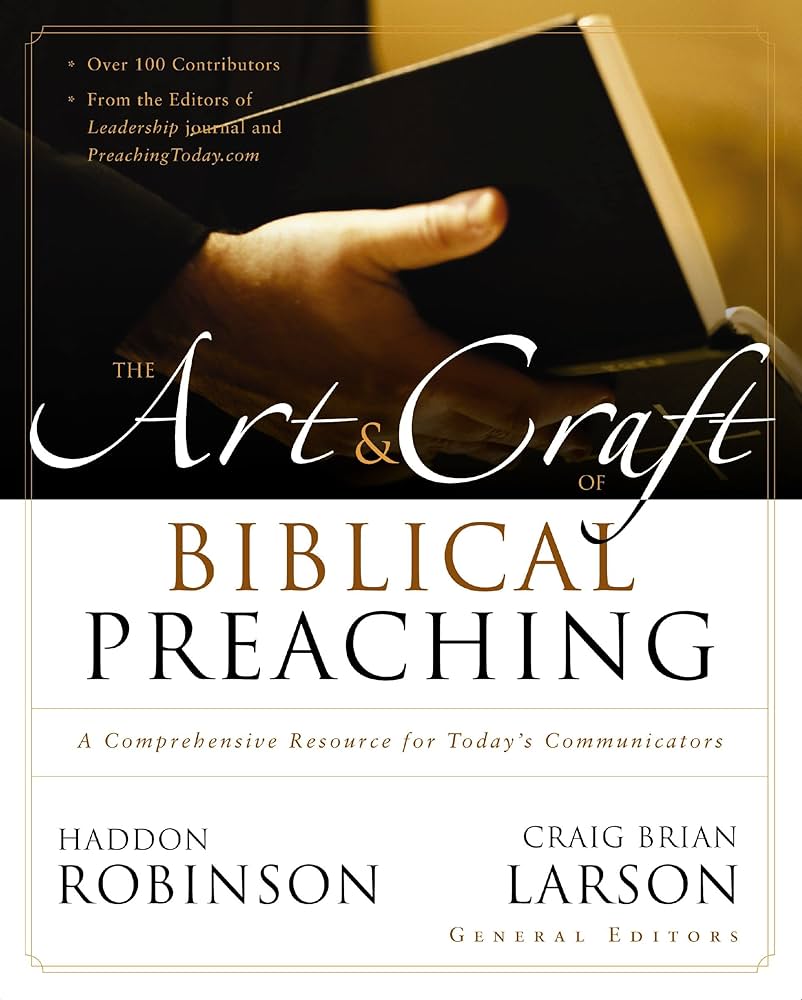
Art & Craft of Biblical Preaching
A Comprehensive Resource for Today’s Communicators
-
The High Call of Preaching
- 1 Core Convictions of Biblical Preaching
- 2 A Definition of Biblical Preaching
- 3 A Weekly Dose of Compressed Dignity
- 4 Overfed, Underchallenged
- 5 Theology of Powerful Preaching
- 6 Preaching That Raises Our Sights
- 7 Leading and Feeding: How Preaching and Leadership Intersect
- 8 John 3:16 in the Key of C
- 9 Spiritual Formation through Preaching
- 10 Preaching Life into the Church
- 11 My Theory of Homiletics
- 12 Staying on the Line
- 13 History of Preaching
-
The Spiritual Life of a Preacher
- 14 A Cup Running Over
- 15 The Patented Preacher
- 16 I Prayed for My Preaching
- 17 How Does Unction Function?
- 18 Squeaky Clean
- 19 Required Reading
- 20 Rightly Dividing the Preaching Load
- 21 Preaching Through Personal Pain
- 22 A Prophet among You
- 23 Burning Clean Fuel
- 24 Backdraft Preaching
- 25 Why I Pace Before I Preach
- 26 Preaching to Convulse the Demons
- 27 Holy Expectation
-
Considering Hearers
- 28 Preaching to Everyone in Particular
- 29 The Power of Simplicity
- 30 View from the Pew
- 31 Preaching to Ordinary People
- 32 Why Serious Preachers Use Humor
- 33 Connect Hearers through Dialogue
- 34 Self-Disclosure That Glorifies Christ
- 35 How to Be Heard
- 36 Opening the Closed American Mind
- 37 Turning an Audience into the Church
- 38 Preaching to Change the Heart
- 39 Preaching Truth, Justice, and the American Way
- 40 Preaching Morality in an Amoral Age
- 41 The Intentional Bridge Builder
- 42 Connecting with Postmoderns
- 43 Preaching Amid Pluralism
- 44 Connecting with Non-Christians
- 45 How to Translate Male Sermons to Women
- 46 He Said, She Heard
- 47 Connecting with Men
- 48 Creating a Singles-Friendly Sermon
- 49 Preaching to Preschoolers
- 50 Hispanic American Preaching
- 51 African American Preaching
- 52 Asian American Preaching
- 53 Work Wins?
- 54 One Sermon, Two Messages
- 55 The Playful Preacher
- 56 What Authority Do We Have Anymore?
-
Interpretation and Application
- 57 Why the Sermon?
- 58 Getting the Gold from the Text
- 59 Faithful First
- 60 God’s Letter of Intent
- 61 Five Bird-dogging Questions for Biblical Exposition
- 62 The Rules of the Game
- 63 Why All the Best Preachers Are–What a Concept!–Theological
- 64 Letting the Listeners Make the Discoveries
- 65 Conviction and Compassion
- 66 The Inadequacy of “Yes” Theology
- 67 What Great Coaches and Preachers Know
- 68 Preaching That Opens Ears and Hearts
- 69 Fundamentals of Genre
- 70 From B.C. to 11 a.m.
- 71 The Big Idea of Narrative Preaching
- 72 Apply Within
- 73 Application Without Moralism
- 74 Blending Bible Content and Life Application
- 75 Showing Promise
- 76 Helping Hearers Practice What We Preach
- 77 The Heresy of Application
- 78 Preaching for True Holiness
- 79 Less Joe, More Jesus
- 80 Preaching That Promotes Self-Centeredness
- 81 The Danger of Practical Preaching
- 82 Grace: A license to Wander?
- 83 The Rich Sound of Grace and Holiness
-
Structure
- 84 Set Free from the Cookie Cutter
- 85 Say and Do
- 86 Connecting Biblical Content with Contemporary Audiences
- 87 Clearly
- 88 Skills of Oral Clarity
- 89 Questions That Put Muscle on Bones
- 90 Better Big Ideas
- 91 The Power of Sequence
- 92 Outlines That Work for You, Not against You
- 93 The Tension Between Clarity and Suspense
- 94 Lifeblood of Preaching
- 95 Alliteration Downfalls
- 96 Modulating Tension
- 97 The Purpose-Driven Title
- 98 Why Should I Listen to You?
- 99 Satisfying Conclusions
-
Style
- 100 Determining Your Strengths and Weaknesses
- 101 Interesting Preaching
- 102 Crafting an Experience
- 103 Seven Habits of Highly Effective Preachers
- 104 The Sermon’s Mood
- 105 Teaching the Whole Bible
- 106 Dramatic Expository Preaching
- 107 Verse-by-Verse Sermons That Really Preach
- 108 What Makes Textual Preaching Unique?
- 109 Can Topical Preaching Be Expository?
- 110 Topical Preaching Can Be Truly Biblical
- 111 Topical Preaching on Bible Characters
- 112 Topical Preaching on Contemporary Issues
- 113 Topical Preaching on Theological Themes
- 114 Making the Most of Biblical Paradoxes
- 115 Getting the Most from the Sermon Series
- 116 The Next Big Thing
- 117 The Compelling Series
- 118 First Person Narrative Sermons
- 119 Biblical Preaching Is about Life Change, Not Sermon Style
- 120 Seven Timeless Principles for Reaching Lost People
- 121 Evangelistic Preaching in the Local Church
- 122 Felt-Needs Preaching
- 123 How to Preach Boldly in a “Whatever” Culture
- 124 Preaching with a Leader’s Heart
- 125 Critique of the New Homiletic
-
Preparation
- 142 Why I Pat the Bible on My Nightstand
- 143 Busting Out of Sermon Block
- 144 Centered
- 145 A Long, Rich Conversation with God
- 146 A Mysterious Impulse to Pray
- 147 Preparing the Messenger
- 148 The Hard Work of Illumination
- 149 Heart-to-Heart Preaching
- 150 Imagination: The Preacher’s Neglected Ally
- 151 Preaching That Magnifies God
- 152 When Is a Sermon Good Enough?
- 153 How to Build a First-Rate Library
- 154 What Makes a Sermon Deep?
- 155 Before You Preach
- 156 Inspiration Points
- 157 Simplify
- 158 Using Someone Else’s Sermon
- 159 Planning for a Richer, Deeper Sermon Series
-
Delivery
- 160 The Source of Passion
- 161 Place of Pathos in Preaching
- 162 Preaching with Intensity
- 163 No Notes, Lots of Notes, Brief Notes
- 164 In the Eye of the Hearer
- 165 No Voice, No Preach
- 166 Eliminating My Um, Um, Annoying Pulpit Mannerisms
- 167 Reading Scripture in Public
- 168 The Importance of Being Urgent
- 169 The Day I Lost My Nerve
-
Special Topics
- 170 When You Don’t Look Forward to Special Days
- 171 Preaching the Terrors
- 172 Preparing People to Suffer
- 173 Preaching Hell in a Tolerant Age
- 174 Speaking into Crisis
- 175 When the News Intrudes
- 176 Redemptive Sermons for Weddings and Funerals
- 177 The Landmark Sermon
- 178 You Had to Bring It Up
- 179 Preaching on Contemporary Issues
- 180 Preaching Sex with Compassion and Conviction
- 181 The Ever-More-Difficult Marriage Sermon
- 182 When the Sermon Goes to Work
- 183 Bridging the Marketplace Gap
- 184 Sermons on Giving That People Actually Like!
All of us who preach are involved in cross-cultural communication. We preach to youth shaped by postmodern culture. We cross the bridge to preach to Asian Americans, Latinos, African Americans, Native Americans, Whites, and internationals. We speak across gender lines. The diversity may be so slight that we haven't noticed it before, but it is real. We may also have opportunities to go on short term missions projects where we will preach cross culturally. As a result, cross-cultural skills and attitudes are becoming more crucial for preaching. Here are seven principles that have helped me to preach to people of different cultures.
Honor what they honor
Do your hearers honor time or event? If they care about punctuality, be on time. If they are laid back about the clock, relax. The occasion is what matters, not the time it starts or how long it lasts.
Are they relational or task-oriented? For some cultures the process is at least as important as the agenda. In another, the objective rules. African American culture is relational, expressive, event-oriented, and ascribes honor. So hang out and express your feelings about things.
Do they ascribe honor because of title and prestige, or is honor achieved by accomplishment and experience? Youth don't care about titles, so credibility is built by sharing your experiences with them. African American culture reveres the pastor and respects titles. That means that when you begin to speak, if you are a guest, you should thank and honor their pastor and leaders. Recognize that as a preacher you will be honored by virtue of your position before you ever say a word.
What do they consider sacred? Something you normally regard as incidental or trivial could be of extreme importance. You might not even be aware that you are being rude. Asian American culture is very honor-and shame-oriented, and honoring elders is crucial. For example, in a sermon I might tell how I've learned a valuable life lesson from my grandparents.
What behavior or dress might offend them? Dress up to speak in a casual culture, and you create a barrier. Dress down, and in many African American contexts, people will spend 90 percent of the time thinking about why you look like you do.
How do they feel about women in ministry? This is pertinent whether or not you are a woman. Don't assume they share your convictions.
Use their heart language whenever you can, but do so with authenticity
The heart language of Native Americans is the language of spiritual experience and of harmony in relationships and nature. Hispanic culture is family-oriented. Talking about your background, your family and children, speaks to their hearts. "Heart" is communicated in the language itself. I don't know much Spanish, but I use what I can when visiting my friend Pedro Aviles's church.
I acknowledge where the bridge is broken before I try to cross it.
When I speak to youth, I try to use a little slang and refer to a hip-hop artist, even though I am not fluent in that culture. Music is the heart language of young people today. Referencing their music shows you are trying to understand their world. A quote from Eminem or 50 Cent can go a long way, especially if you admit your limitations.
Genuineness matters most. I might say, "I'm not the world's most knowledgeable fan of hip-hop, but these lines grabbed my attention" People can smell it when you try to speak their language, and it is inauthentic, but they appreciate even a faltering effort to build the bridge.
Communicate your awareness of the trust issues between your cultures
Jimmy McGee, an African American leader with Intervarsity, told me this detail about America's history of oppression. For 300 years, Africans were brought over on slave ships through what was called the Middle Passage. Millions died on the way, their bodies were thrown overboard, and sharks began following the ships. To this day, sharks travel the Middle passage, because that was their feeding route for 300 years.
Christians were involved in rationalizing and manipulating Scripture to support the horrors of slavery. As a white person, when I preach in a Black context, the baggage from all that evil lingers. I have to show I am aware of that, or I cannot be trusted.
Native Americans experienced genocide at the hands of Whites. As a result, only 6 percent of contemporary Native Americans are Christian. The trust issues are immense, and only people willing to recognize the evils of the past can even be heard.
Postmoderns mistrust anyone who believes they know the truth and that everyone else is wrong. This makes preaching to postmoderns a cross-cultural experience.
Recently at Einstein Bagels, which I frequent, a clerk asked me, "Rick, you're not one of those people who believe Jesus is the only way, are you?" The way he said it, I knew he viewed those who proclaim Jesus as the only way on the level of the 9/11 terrorists. So I said, "Sam, it sounds like you've been hurt by people who excluded you and dismissed you for what you believed." He said, "You're right!" I said, "I'm sorry that happened to you. I hate it when people exclude and dismiss me because of what I believe. That's why it was so surprising for me when I was drawn to some of the unique elements of Christianity."
Similarly, in a sermon, I acknowledge where the bridge is broken before I try to cross it. I identify with people's fears. I talk about how uncomfortable I am with people who reject others. Then I talk about the hope and love that Christ gives.
Become a great storyteller and a narrative theologian
Propositions may not translate between cultures, but stories about life, family, and struggles almost always do. Narratives make us feel we can relate to each other. Through storytelling we share pain, apply truth, and build trust. We must become fluent in the universal language of story if we want to preach cross-culturally.
Start with stories of experiences with people from the host culture. Share stories of your attempts to learn their culture, as well as stories that recognize the trust issues.
- Can't finish right now?
Turn your principles and statements of propositional ideas into illustrations and stories. Tell the stories Jesus told. When you can, choose narrative passages from the Scriptures. Close with stories that challenge people to appropriate the truths you are communicating.
Do what you came to do
After building trust and rapport, don't hold back. Fulfill your calling and speak the truth. The fact that you are from a different culture often gives you tremendous opportunity to challenge people in extraordinary ways. Build the bridge and then walk across it! Billy Graham is great at building trust, but he also knows why he's there and what he came to say, and he always says it.
Since you have identified and built trust, you can now give the gift of your cultural practices and your insights. If your culture does altar calls, do them. If your culture challenges people to reflection and thought, do that. People will likely recognize the style of your culture and affirm it.
Avoid judging their response by your own cultural cues
A group may be with you and not show it in the ways you recognize. When I preach to Asian Presbyterians, who tend to be respectful and quiet, I sometimes wonder if anything I said connected. I need to listen carefully to comments afterward and look for affirmation that goes beyond courtesy to know what happened. When I speak in African American contexts, I have to be ready to amp it up when they respond. There is a call-and-response that is part of the rhythm of the culture. It's fun, and I must learn to work with it and not ignore it.
What's more, cultural tendencies are only tendencies. We will always find people who don't fit those tendencies at all. We can't make assumptions about individuals based on broader cultural characteristics.
Be a curious, lifelong learner and observer, and cultivate cultural "informants"
My friend Brenda Salter McNeil is a world class, cross cultural preacher and has shared her expertise with me generously. When she preaches in Black contexts, she honors every single person who had anything to do with bringing her there or who is an important leader for that community. Brenda helped me understand that dynamic and respond appropriately.
Find women to help you understand whether you are connecting with women. Find informants among youth who can help you know if you are connecting with youth.
Be immensely curious about other people groups. If you want to preach cross-culturally, you are committing to a long-term adventure that will humble and enrich you.