Table of contents
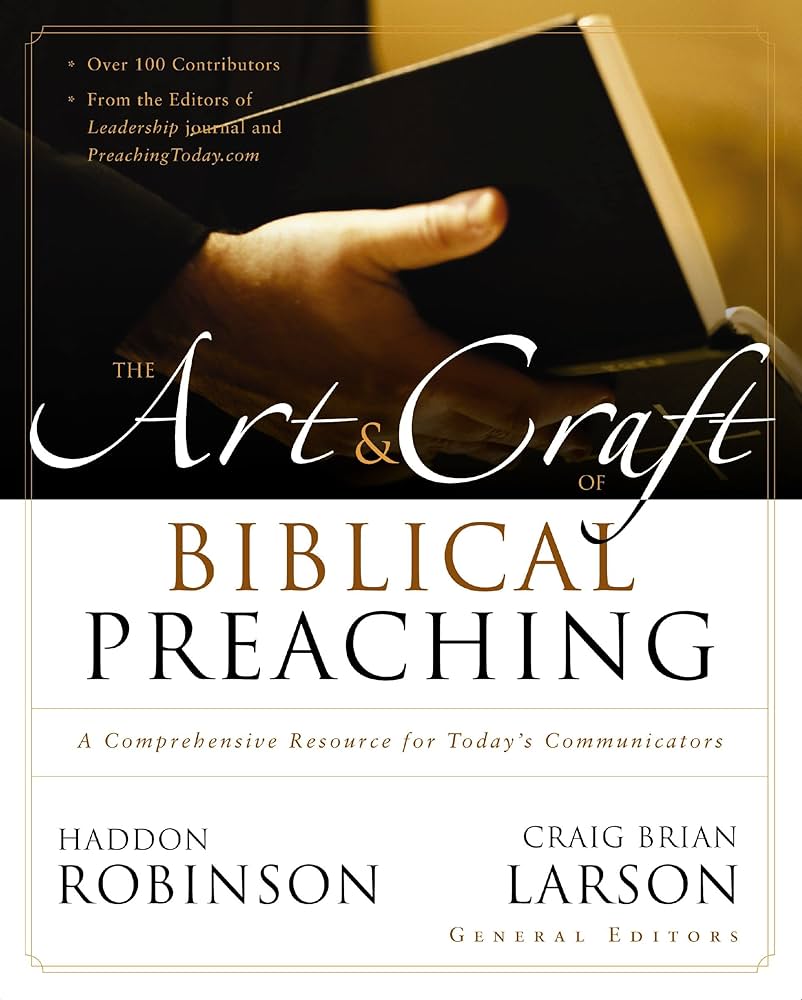
Art & Craft of Biblical Preaching
A Comprehensive Resource for Today’s Communicators
-
The High Call of Preaching
- 1 Core Convictions of Biblical Preaching
- 2 A Definition of Biblical Preaching
- 3 A Weekly Dose of Compressed Dignity
- 4 Overfed, Underchallenged
- 5 Theology of Powerful Preaching
- 6 Preaching That Raises Our Sights
- 7 Leading and Feeding: How Preaching and Leadership Intersect
- 8 John 3:16 in the Key of C
- 9 Spiritual Formation through Preaching
- 10 Preaching Life into the Church
- 11 My Theory of Homiletics
- 12 Staying on the Line
- 13 History of Preaching
-
The Spiritual Life of a Preacher
- 14 A Cup Running Over
- 15 The Patented Preacher
- 16 I Prayed for My Preaching
- 17 How Does Unction Function?
- 18 Squeaky Clean
- 19 Required Reading
- 20 Rightly Dividing the Preaching Load
- 21 Preaching Through Personal Pain
- 22 A Prophet among You
- 23 Burning Clean Fuel
- 24 Backdraft Preaching
- 25 Why I Pace Before I Preach
- 26 Preaching to Convulse the Demons
- 27 Holy Expectation
-
Considering Hearers
- 28 Preaching to Everyone in Particular
- 29 The Power of Simplicity
- 30 View from the Pew
- 31 Preaching to Ordinary People
- 32 Why Serious Preachers Use Humor
- 33 Connect Hearers through Dialogue
- 34 Self-Disclosure That Glorifies Christ
- 35 How to Be Heard
- 36 Opening the Closed American Mind
- 37 Turning an Audience into the Church
- 38 Preaching to Change the Heart
- 39 Preaching Truth, Justice, and the American Way
- 40 Preaching Morality in an Amoral Age
- 41 The Intentional Bridge Builder
- 42 Connecting with Postmoderns
- 43 Preaching Amid Pluralism
- 44 Connecting with Non-Christians
- 45 How to Translate Male Sermons to Women
- 46 He Said, She Heard
- 47 Connecting with Men
- 48 Creating a Singles-Friendly Sermon
- 49 Preaching to Preschoolers
- 50 Hispanic American Preaching
- 51 African American Preaching
- 52 Asian American Preaching
- 53 Work Wins?
- 54 One Sermon, Two Messages
- 55 The Playful Preacher
- 56 What Authority Do We Have Anymore?
-
Interpretation and Application
- 57 Why the Sermon?
- 58 Getting the Gold from the Text
- 59 Faithful First
- 60 God’s Letter of Intent
- 61 Five Bird-dogging Questions for Biblical Exposition
- 62 The Rules of the Game
- 63 Why All the Best Preachers Are–What a Concept!–Theological
- 64 Letting the Listeners Make the Discoveries
- 65 Conviction and Compassion
- 66 The Inadequacy of “Yes” Theology
- 67 What Great Coaches and Preachers Know
- 68 Preaching That Opens Ears and Hearts
- 69 Fundamentals of Genre
- 70 From B.C. to 11 a.m.
- 71 The Big Idea of Narrative Preaching
- 72 Apply Within
- 73 Application Without Moralism
- 74 Blending Bible Content and Life Application
- 75 Showing Promise
- 76 Helping Hearers Practice What We Preach
- 77 The Heresy of Application
- 78 Preaching for True Holiness
- 79 Less Joe, More Jesus
- 80 Preaching That Promotes Self-Centeredness
- 81 The Danger of Practical Preaching
- 82 Grace: A license to Wander?
- 83 The Rich Sound of Grace and Holiness
-
Structure
- 84 Set Free from the Cookie Cutter
- 85 Say and Do
- 86 Connecting Biblical Content with Contemporary Audiences
- 87 Clearly
- 88 Skills of Oral Clarity
- 89 Questions That Put Muscle on Bones
- 90 Better Big Ideas
- 91 The Power of Sequence
- 92 Outlines That Work for You, Not against You
- 93 The Tension Between Clarity and Suspense
- 94 Lifeblood of Preaching
- 95 Alliteration Downfalls
- 96 Modulating Tension
- 97 The Purpose-Driven Title
- 98 Why Should I Listen to You?
- 99 Satisfying Conclusions
-
Style
- 100 Determining Your Strengths and Weaknesses
- 101 Interesting Preaching
- 102 Crafting an Experience
- 103 Seven Habits of Highly Effective Preachers
- 104 The Sermon’s Mood
- 105 Teaching the Whole Bible
- 106 Dramatic Expository Preaching
- 107 Verse-by-Verse Sermons That Really Preach
- 108 What Makes Textual Preaching Unique?
- 109 Can Topical Preaching Be Expository?
- 110 Topical Preaching Can Be Truly Biblical
- 111 Topical Preaching on Bible Characters
- 112 Topical Preaching on Contemporary Issues
- 113 Topical Preaching on Theological Themes
- 114 Making the Most of Biblical Paradoxes
- 115 Getting the Most from the Sermon Series
- 116 The Next Big Thing
- 117 The Compelling Series
- 118 First Person Narrative Sermons
- 119 Biblical Preaching Is about Life Change, Not Sermon Style
- 120 Seven Timeless Principles for Reaching Lost People
- 121 Evangelistic Preaching in the Local Church
- 122 Felt-Needs Preaching
- 123 How to Preach Boldly in a “Whatever” Culture
- 124 Preaching with a Leader’s Heart
- 125 Critique of the New Homiletic
-
Preparation
- 142 Why I Pat the Bible on My Nightstand
- 143 Busting Out of Sermon Block
- 144 Centered
- 145 A Long, Rich Conversation with God
- 146 A Mysterious Impulse to Pray
- 147 Preparing the Messenger
- 148 The Hard Work of Illumination
- 149 Heart-to-Heart Preaching
- 150 Imagination: The Preacher’s Neglected Ally
- 151 Preaching That Magnifies God
- 152 When Is a Sermon Good Enough?
- 153 How to Build a First-Rate Library
- 154 What Makes a Sermon Deep?
- 155 Before You Preach
- 156 Inspiration Points
- 157 Simplify
- 158 Using Someone Else’s Sermon
- 159 Planning for a Richer, Deeper Sermon Series
-
Delivery
- 160 The Source of Passion
- 161 Place of Pathos in Preaching
- 162 Preaching with Intensity
- 163 No Notes, Lots of Notes, Brief Notes
- 164 In the Eye of the Hearer
- 165 No Voice, No Preach
- 166 Eliminating My Um, Um, Annoying Pulpit Mannerisms
- 167 Reading Scripture in Public
- 168 The Importance of Being Urgent
- 169 The Day I Lost My Nerve
-
Special Topics
- 170 When You Don’t Look Forward to Special Days
- 171 Preaching the Terrors
- 172 Preparing People to Suffer
- 173 Preaching Hell in a Tolerant Age
- 174 Speaking into Crisis
- 175 When the News Intrudes
- 176 Redemptive Sermons for Weddings and Funerals
- 177 The Landmark Sermon
- 178 You Had to Bring It Up
- 179 Preaching on Contemporary Issues
- 180 Preaching Sex with Compassion and Conviction
- 181 The Ever-More-Difficult Marriage Sermon
- 182 When the Sermon Goes to Work
- 183 Bridging the Marketplace Gap
- 184 Sermons on Giving That People Actually Like!
I have the privilege of being one of the sermon screeners who review about 250 sermon recordings sent to Preaching Today Audio each year. It is a rare opportunity to hear a wide variety of the best (usually) of American preaching. What follows are the 11 questions by which we evaluate all the sermons received by Preaching Today, and some of the lessons we've learned from listening.
Is this sermon grounded in Scripture?
Most sermons we hear are Scriptural, but many do not " keep their finger on the text. " Listeners are not taken to Scripture frequently through the sermon. The effect is subtle — the source of authority seems to shift quietly from the Bible to the preacher. Too few sermons actually try to follow the reasoning — the logic — of a text.
I carry a PDA — one of those little hand-held computers. The screen is bright and colorful, but if I don't touch the screen the light goes off after about a minute. The words are still there, but there's no light. It is hard to read. Sermons are like that. We need to keep tapping the Scripture as we preach — reading the next sentence in the text, pointing to a phrase explicitly, asking them to look at a certain verse — if we hope to keep the light on the Bible and not ourselves.
Is the exegesis and theology sound?
My most frequent reaction to this question after hearing a sermon is: Sound? Yes. Deep? No. A few sermons unload so much exegesis that you'd think this was an oral final exam in seminary. But most sermons, while true, do not display well the surprises, ingenuity, or depth of Scripture. I suspect the preacher didn't study well.
When it seems the preacher and the original writer are in synch with each other, that is a unique work of the Holy Spirit, and upon that sermon there is unction.
To the natural mind (versus the spiritual mind), the Bible is always counterintuitive. Good sermons reveal how the text teaches us to think differently, showing us how God's truth and logic challenge our " old man " way of thinking.
Screener Jeffrey Arthurs, associate professor of preaching and communication at Gordon-Conwell Theological Seminary, noted another issue: " I am sometimes concerned with 'how-to' sermons typical in the seeker sensitive movement. These often take verses out of context and elevate other sources of authority (especially ethos) on a par with Scripture. "
As to the theology in a sermon, preachers are sometimes surprisingly careless in their choice of words, belying fuzzy theology. But more often, I have the feeling the preacher didn't realize the rich nuances of theology in the text before him, like someone looking at the Grand Canyon and preaching, " Boy, is that big! " We shortchange God's people when we shade their eyes from the glory of theology.
Would you describe the sermon as having unction/anointing?
This is the most difficult question to answer. Screener Scott Wenig, associate professor of applied theology, Denver Seminary, says, " If the sermon really 'connects,' then I'll answer yes. I would guess that less than 15 percent of the sermons I screen meet this specific criteria. "
A sense of passion is a possible tip-off to unction, but sometimes that is more a matter of personality and style than the work of the Holy Spirit. Ultimately, the most sure sign to me is if Scripture speaks loud and clear; if not only the full sense of a passage is made clear, but also the passion of the biblical writer. When it seems the preacher and the original writer are in synch with each other, that is a unique work of the Holy Spirit, and upon that sermon there is unction.
Did it engage your mind from beginning to end?
Scott Wenig says, " Most sermons I listen to don't do this. The sermon must move and hum to keep attention. " One of the benefits to manuscript preachers is that their sermons tend to be tighter, better edited. But most preachers are more extemporaneous. Their sermons tend to bog down somewhere. A stale illustration will do it, or belaboring a point that is already clear, or trying to milk some humor from a story.
Screener John Koessler, chairman, pastoral studies department, Moody Bible Institute, puts another factor very simply: " Are the ideas interesting? " One thing that will certainly engage our minds and hearts are great biblical ideas, expressed well. It takes work and time to hone an idea to vivid expression.
Is the sermon fresh?
Think garden-fresh. The sermon doesn't have to be something you've never heard before, but it needs to come across as crisp, tasty, and newly-harvested. It seems that sometimes preachers are telling their folks things they surely already know and believe, and doing so in terms the congregation would probably find overly familiar.
Koessler identifies one key test of freshness: " I want the speaker to avoid cliches. " Cliches come when a preacher hasn't thought too much about how he will say something and so naturally reverts to road-weary words and phrases. I listened to a fine sermon recently and found myself thinking again and again, That man thought hard about how to say that well. As a result, a familiar theme was fresh.
Is the sermon well-structured and clear?
John Koessler explains that he wants to " be able to discern the major movements within the sermon. I prefer to have the outline points stated and emphasized. I think it is clearer if they are stated as complete sentences rather than phrases. In a narrative I want to be able to follow the plot clearly and have a smooth transition to application. "
Jeffrey Arthurs adds, " The key to clarity is restatement, review, and repetition. The key moments in sermons where those techniques are needed are the transitions. "
Is the sermon well-illustrated?
Koessler responds, " My first question is whether it is illustrated at all. " Many sermons are not well-illustrated, and I think the reason is that illustrating takes time and work, added to all the other elements of sermon preparation. Many of the illustrations we hear are easy; they came quickly to the preacher's mind and are not sharpened particularly well. Quite often it seems that the illustration isn't quite focused enough — a little too general. It fits the sermon like those baggy jeans on a teenage boy. Increasingly, we're hearing video clips as illustrations. Some work very well, but they tend to be general, and sometimes I wonder what a pastor was doing watching that film.
- Can't finish right now?
It is rare to hear metaphors used well. They take time and imagination, but they are such wonderful windows. The Puritan John Owen was a past-master from whom we can learn. For example, he said in one sermon, " The world is but a great inn where we are to stay a night or two and be gone. What madness it is to set our heart upon our inn as to forget our home! "
Analogies work well for giving a fresh understanding of an idea. For example, I recently filed away a news story about a whale carcass exploding on a city street under " life gets messy. " That is an illustration by analogy. It will bring smiles and nods of understanding.
Examples, on the other hand, are stories of people actually working out the sermon's principle — how God provided for a generous giver, for example, or a quote from someone who feels life crashing in on her. Koessler adds, " I want to hear the speaker apply the illustration — tell me its significance. "
Did the message challenge you?
Sermons that challenge listeners as tough as we screeners are pretty special! Again, a rule of thumb is, the more biblical it is, the more challenging. Good sermons have a kind of time-delay medicine pushed into my subconscious mind that keeps treating my soul, keeps dosing me hours and days after I've finished listening.
I often wonder how well a sermon I'm hearing was prayed for. Though I don't know how to gauge it, I think a sermon that has been prayed well carries a long-term potency. Prayer is a means of unction.
For a sermon to challenge us, it has to have a great-heartedness, a grand idea about it. Some sermons feel lightweight.
Is the delivery effective?
All the screeners note something most preachers don't usually think about — the sound of our voices. Scott Wenig says, " Most sermons I listen to for PT leave much to be desired here. " He points to " a lack of variety in terms of voice, inflection, and pacing. "
I listen for a good command of language and emotion. Some preachers are so casual that they undersell weighty subjects. In an effort to " put the cookies on the bottom shelf, " they drop them on the floor. A sermon about sin that is funny, for example, is missing something. Sermons can be warm and human without sacrificing dignity.
Underneath our listening is the subconscious question, " Is this a godly person? Do I discern a Christlike heart and mind? " Somehow we discern that in a preacher's delivery.
Is the application true to Scripture and to life?
Many preachers work hard at this, but John Koessler warns, " Do not tell me the obvious. If it is something that I already know that I should do, help me to understand why I am not doing it. I especially want the preacher to help me explore the nature of the problems I face in implementing the application. "
We usually think of application in terms of what we should do, but much of Scripture addresses how we should think.Romans 12:1 says we will be " transformed by the renewing of our minds. " Show people how their typical thinking is contrary to the truth of Scripture, and then bring sanctified tools of rhetoric to persuade them to think with the mind of Christ. That is application even if we do not speak of doing something.