Table of contents
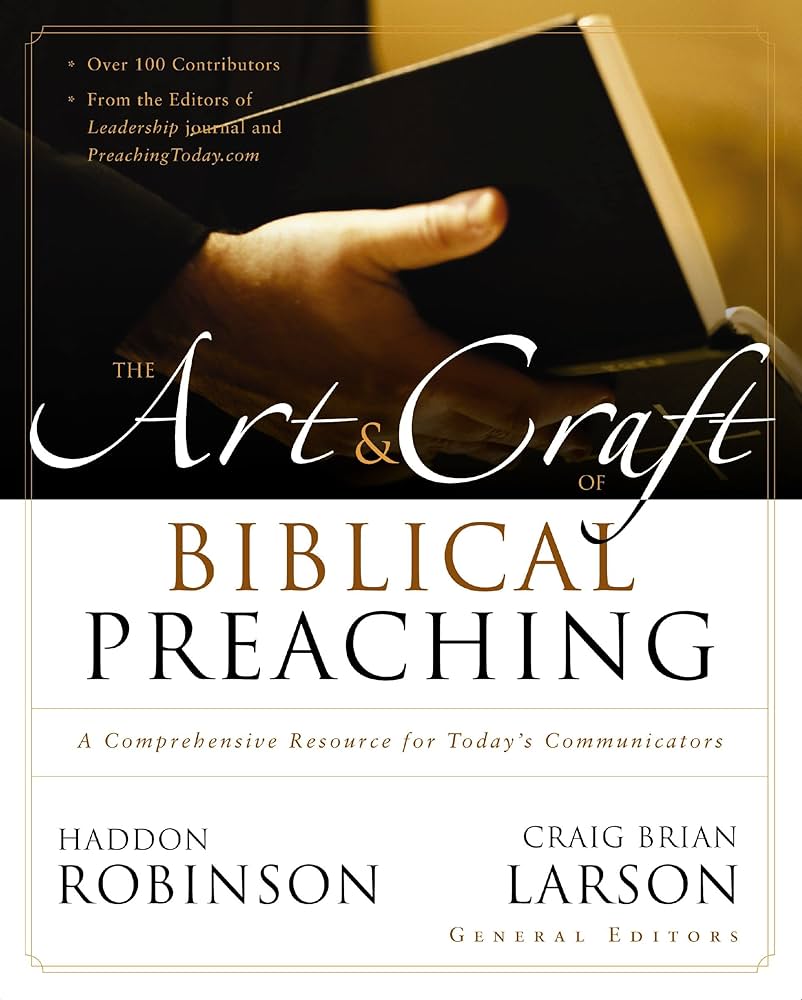
Art & Craft of Biblical Preaching
A Comprehensive Resource for Today’s Communicators
-
The High Call of Preaching
- 1 Core Convictions of Biblical Preaching
- 2 A Definition of Biblical Preaching
- 3 A Weekly Dose of Compressed Dignity
- 4 Overfed, Underchallenged
- 5 Theology of Powerful Preaching
- 6 Preaching That Raises Our Sights
- 7 Leading and Feeding: How Preaching and Leadership Intersect
- 8 John 3:16 in the Key of C
- 9 Spiritual Formation through Preaching
- 10 Preaching Life into the Church
- 11 My Theory of Homiletics
- 12 Staying on the Line
- 13 History of Preaching
-
The Spiritual Life of a Preacher
- 14 A Cup Running Over
- 15 The Patented Preacher
- 16 I Prayed for My Preaching
- 17 How Does Unction Function?
- 18 Squeaky Clean
- 19 Required Reading
- 20 Rightly Dividing the Preaching Load
- 21 Preaching Through Personal Pain
- 22 A Prophet among You
- 23 Burning Clean Fuel
- 24 Backdraft Preaching
- 25 Why I Pace Before I Preach
- 26 Preaching to Convulse the Demons
- 27 Holy Expectation
-
Considering Hearers
- 28 Preaching to Everyone in Particular
- 29 The Power of Simplicity
- 30 View from the Pew
- 31 Preaching to Ordinary People
- 32 Why Serious Preachers Use Humor
- 33 Connect Hearers through Dialogue
- 34 Self-Disclosure That Glorifies Christ
- 35 How to Be Heard
- 36 Opening the Closed American Mind
- 37 Turning an Audience into the Church
- 38 Preaching to Change the Heart
- 39 Preaching Truth, Justice, and the American Way
- 40 Preaching Morality in an Amoral Age
- 41 The Intentional Bridge Builder
- 42 Connecting with Postmoderns
- 43 Preaching Amid Pluralism
- 44 Connecting with Non-Christians
- 45 How to Translate Male Sermons to Women
- 46 He Said, She Heard
- 47 Connecting with Men
- 48 Creating a Singles-Friendly Sermon
- 49 Preaching to Preschoolers
- 50 Hispanic American Preaching
- 51 African American Preaching
- 52 Asian American Preaching
- 53 Work Wins?
- 54 One Sermon, Two Messages
- 55 The Playful Preacher
- 56 What Authority Do We Have Anymore?
-
Interpretation and Application
- 57 Why the Sermon?
- 58 Getting the Gold from the Text
- 59 Faithful First
- 60 God’s Letter of Intent
- 61 Five Bird-dogging Questions for Biblical Exposition
- 62 The Rules of the Game
- 63 Why All the Best Preachers Are–What a Concept!–Theological
- 64 Letting the Listeners Make the Discoveries
- 65 Conviction and Compassion
- 66 The Inadequacy of “Yes” Theology
- 67 What Great Coaches and Preachers Know
- 68 Preaching That Opens Ears and Hearts
- 69 Fundamentals of Genre
- 70 From B.C. to 11 a.m.
- 71 The Big Idea of Narrative Preaching
- 72 Apply Within
- 73 Application Without Moralism
- 74 Blending Bible Content and Life Application
- 75 Showing Promise
- 76 Helping Hearers Practice What We Preach
- 77 The Heresy of Application
- 78 Preaching for True Holiness
- 79 Less Joe, More Jesus
- 80 Preaching That Promotes Self-Centeredness
- 81 The Danger of Practical Preaching
- 82 Grace: A license to Wander?
- 83 The Rich Sound of Grace and Holiness
-
Structure
- 84 Set Free from the Cookie Cutter
- 85 Say and Do
- 86 Connecting Biblical Content with Contemporary Audiences
- 87 Clearly
- 88 Skills of Oral Clarity
- 89 Questions That Put Muscle on Bones
- 90 Better Big Ideas
- 91 The Power of Sequence
- 92 Outlines That Work for You, Not against You
- 93 The Tension Between Clarity and Suspense
- 94 Lifeblood of Preaching
- 95 Alliteration Downfalls
- 96 Modulating Tension
- 97 The Purpose-Driven Title
- 98 Why Should I Listen to You?
- 99 Satisfying Conclusions
-
Style
- 100 Determining Your Strengths and Weaknesses
- 101 Interesting Preaching
- 102 Crafting an Experience
- 103 Seven Habits of Highly Effective Preachers
- 104 The Sermon’s Mood
- 105 Teaching the Whole Bible
- 106 Dramatic Expository Preaching
- 107 Verse-by-Verse Sermons That Really Preach
- 108 What Makes Textual Preaching Unique?
- 109 Can Topical Preaching Be Expository?
- 110 Topical Preaching Can Be Truly Biblical
- 111 Topical Preaching on Bible Characters
- 112 Topical Preaching on Contemporary Issues
- 113 Topical Preaching on Theological Themes
- 114 Making the Most of Biblical Paradoxes
- 115 Getting the Most from the Sermon Series
- 116 The Next Big Thing
- 117 The Compelling Series
- 118 First Person Narrative Sermons
- 119 Biblical Preaching Is about Life Change, Not Sermon Style
- 120 Seven Timeless Principles for Reaching Lost People
- 121 Evangelistic Preaching in the Local Church
- 122 Felt-Needs Preaching
- 123 How to Preach Boldly in a “Whatever” Culture
- 124 Preaching with a Leader’s Heart
- 125 Critique of the New Homiletic
-
Preparation
- 142 Why I Pat the Bible on My Nightstand
- 143 Busting Out of Sermon Block
- 144 Centered
- 145 A Long, Rich Conversation with God
- 146 A Mysterious Impulse to Pray
- 147 Preparing the Messenger
- 148 The Hard Work of Illumination
- 149 Heart-to-Heart Preaching
- 150 Imagination: The Preacher’s Neglected Ally
- 151 Preaching That Magnifies God
- 152 When Is a Sermon Good Enough?
- 153 How to Build a First-Rate Library
- 154 What Makes a Sermon Deep?
- 155 Before You Preach
- 156 Inspiration Points
- 157 Simplify
- 158 Using Someone Else’s Sermon
- 159 Planning for a Richer, Deeper Sermon Series
-
Delivery
- 160 The Source of Passion
- 161 Place of Pathos in Preaching
- 162 Preaching with Intensity
- 163 No Notes, Lots of Notes, Brief Notes
- 164 In the Eye of the Hearer
- 165 No Voice, No Preach
- 166 Eliminating My Um, Um, Annoying Pulpit Mannerisms
- 167 Reading Scripture in Public
- 168 The Importance of Being Urgent
- 169 The Day I Lost My Nerve
-
Special Topics
- 170 When You Don’t Look Forward to Special Days
- 171 Preaching the Terrors
- 172 Preparing People to Suffer
- 173 Preaching Hell in a Tolerant Age
- 174 Speaking into Crisis
- 175 When the News Intrudes
- 176 Redemptive Sermons for Weddings and Funerals
- 177 The Landmark Sermon
- 178 You Had to Bring It Up
- 179 Preaching on Contemporary Issues
- 180 Preaching Sex with Compassion and Conviction
- 181 The Ever-More-Difficult Marriage Sermon
- 182 When the Sermon Goes to Work
- 183 Bridging the Marketplace Gap
- 184 Sermons on Giving That People Actually Like!
In a recent N.Y. Times Magazine interview, three TV executives commiserate over the pressure to come up with a new, blockbuster sitcom or dramatic series. A successful series not only captures a large audience for that time slot, but serves as an anchor show that secures viewers for the entire evening, and positions the network in the marketplace. In the words of one of these media moguls, "Everyone's looking for the next Friends."
Preaching pastors feel their pain. We're always in search of the next sermon series. For me, the most vexing question in preaching is not, How will I preach this text? but, What will I preach next? Like those executives, we know that an effective sermon series not only captures the attention of the listeners for thirty minutes a week, it breathes life into other ministries and shapes the culture of the church.
I find myself much more intentional in my series selection, looking to cast vision, reinforce ministry values, and shepherd the congregation strategically throughout the year.
Series preaching is not a new idea. I grew up under a pastor who routinely preached his way through books of the Bible or relevant topics, and I have followed his lead from my first days of preaching. But over the past 20 years of preparing preaching calendars, I have discerned several changes in my approach to series preaching.
Shorter
The length of a typical sermon series has gotten progressively shorter. Forty years ago it was common for a pastor to spend many months or an entire year in a Book of the Bible. When I first began preaching, I would settle on three or four major series for the year, allowing wiggle room for holidays and a stewardship message, and that would pretty much do it. A series in those days was roughly the length of a school term: about 12 weeks. But somewhere along the way, America's collective attention span shortened, and 12 weeks felt like a long time to talk about anything.
The pace of life continues to quicken, the cultural attention-deficit increases, and things change more rapidly and unpredictably than ever. Shorter series allow us to be more nimble in responding to the changing mood of the nation or to the needs of the congregation. Shorter series also provide frequent entry points for a transient population, and multiple opportunities in a year to connect with a variety of felt needs. Seeking people are more likely to commit to a few weeks than to three months. Most of my series now run from three to seven weeks. If I want to cover a Book of the Bible, I'll deal with it thematically—pulling out the highlights—or else cover it in two or three installments spread out over a year or two.
Sharper Focus
It used to be that a simple, generic title was enough to capture interest and give a sense of movement through the year. Series titles like The Miracles of Jesus, or The Church in Action (), or Beginnings (Genesis 1) worked just fine. Sometimes I would dive in to the series not even certain where it would lead. In this age of specialization and consumerism, I find people want to know exactly what they're getting, and why it will be worth their time.
Packaging the series with clear, compelling titles and subtitles is more important than ever. A dozen years ago I did a rambling series from the Sermon on the Mount entitled simply, Kingdom Living. This time around I called it, The Life God Wants for You, and each week introduced them to a specific dimension of life in the Kingdom of God. Summer in the Psalms was enough to capture attention in the '80s. In 2001 a similar study became Real Life, Real Prayers.
More Strategic
It used to be a pastor's goal was simply to give a balanced offering of Old and New Testament Books, covering the major points of Christian life and doctrine in the course of a year. Now I find myself much more intentional in my series selection, looking to cast vision, reinforce ministry values, and shepherd the congregation strategically throughout the year.
Typically I lead off in the fall with a pacesetting series that casts a specific vision for the ministry year to come. A series from Romans 12 entitled, Discovering the Joy of Authentic Community sets the tone and direction for a year in which community-building is a primary objective. As the year unfolds, I'll do a series for each of our four core values—worship, community, discipleship, and outreach—but that first series in the fall gives us momentum in a particular direction that carries us throughout the year.
While we try to be seeker-friendly throughout the year in our worship and preaching, we are especially sensitive to times of the year when visitors are most likely to attend and our people are most likely to bring friends, like Advent and the Easter season. I usually do a seeker-oriented series for three weeks following Easter, speaking to a felt-need like, Faith for Monday Morning or When Life Gets Out of Control.
I have found the summer months to be rich with newcomers—people moving into the area or wanting to make a change in their lives—so I preach pre-evangelistically in the summer, often working out of the Gospels or the Psalms. During the Lenten season, I preach devotional texts and themes appropriate to the season, being especially sensitive to nurturing the believers' intimacy with God.
Multidimensional
In recent years we have discovered that sometimes a sermon series can be much more than a sermon series. That is, the messages are just one of many components in a broader campaign to effect change in the lives of people or the church. Chapel of the Air pioneered this approach several years ago with the 50 Day Spiritual Adventure, in which a thematic preaching series of 8 messages was complemented by daily study guides, small group materials, and learning activities designed to personalize and reinforce the messages from the pulpit. This fall Saddleback Church took a similar approach in its 40 Days of Purpose series, made available to churches nationwide. The idea is to engage the congregation on a variety of levels, appealing to multiple learning-styles over a long enough period of time to allow real transformation to begin.
- Can't finish right now?
We took a multidimensional approach to our pacesetting series this fall. Our vision is for Grace Chapel to become "A Church You Bring Your Friends To." This fall we wanted to challenge our people to be building genuine friendships with unbelievers and to be praying for opportunities to invite them to an event at church. In order to accomplish that we planned a church-wide campaign we called People Bringing People. In partnership with our evangelism pastor, I laid out a 5-week preaching series from the Gospels looking at stories of what happened when people brought other people to Jesus: Andrew and his brother, the four men who lowered their friend through the roof, Jairus and his daughter (presented as a dramatic monologue), a group of townsfolk who brought the deaf and mute man, and the Samaritan woman bringing her neighbors. Each message was supported by a drama, an interview, or a faith story.
In addition to the Sunday services, we offered a personal study guide with daily readings and action steps. We also custom-designed small group studies that explored the preaching texts and applications in greater depth. A logo for the series reinforced the message visually on the weekly worship folder and on posters and banners around the facilities. On one of the Sundays, we invited people to go to banners on the side walls in the sanctuary and write the names of people they were praying for, asking God for the opportunity to strengthen those friendships and to invite them to some upcoming outreach events. We made bookmarks available as prayer reminders.
The series culminated in an Open House Sunday in which we encouraged people to bring friends to services designed especially to introduce them to the church. I spoke that day on True Friends, exploring the spiritual dimension of friendships from the story of Philip and Nathaniel. What could have been a simple sermon series became a culture-creating event by engaging the entire congregation in a variety of learning activities.
As the TV executives wind down their conversation, one of them suggests that "the hardest thing to do in show business, by far, is to create and execute a high-quality, successful, long-running television series." They all agree that the relentless pursuit of the next big thing is essential to their effectiveness as leaders and to the success of their networks. In some measure, I feel the same way about sermon series.