Table of contents
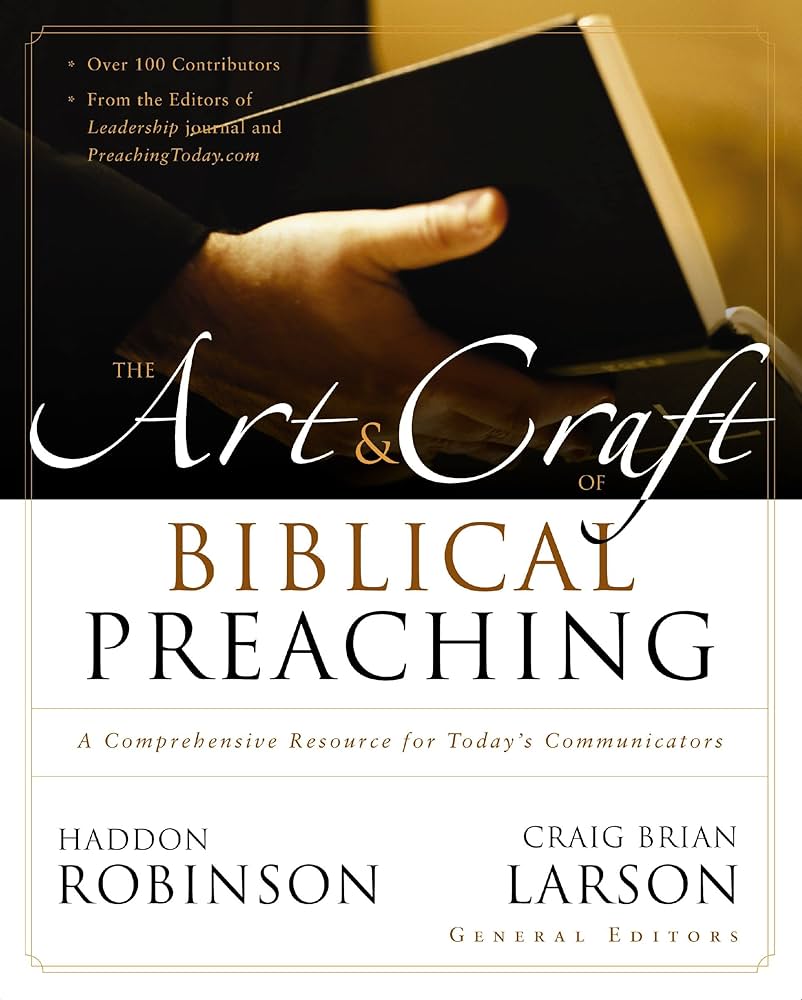
Art & Craft of Biblical Preaching
A Comprehensive Resource for Today’s Communicators
-
The High Call of Preaching
- 1 Core Convictions of Biblical Preaching
- 2 A Definition of Biblical Preaching
- 3 A Weekly Dose of Compressed Dignity
- 4 Overfed, Underchallenged
- 5 Theology of Powerful Preaching
- 6 Preaching That Raises Our Sights
- 7 Leading and Feeding: How Preaching and Leadership Intersect
- 8 John 3:16 in the Key of C
- 9 Spiritual Formation through Preaching
- 10 Preaching Life into the Church
- 11 My Theory of Homiletics
- 12 Staying on the Line
- 13 History of Preaching
-
The Spiritual Life of a Preacher
- 14 A Cup Running Over
- 15 The Patented Preacher
- 16 I Prayed for My Preaching
- 17 How Does Unction Function?
- 18 Squeaky Clean
- 19 Required Reading
- 20 Rightly Dividing the Preaching Load
- 21 Preaching Through Personal Pain
- 22 A Prophet among You
- 23 Burning Clean Fuel
- 24 Backdraft Preaching
- 25 Why I Pace Before I Preach
- 26 Preaching to Convulse the Demons
- 27 Holy Expectation
-
Considering Hearers
- 28 Preaching to Everyone in Particular
- 29 The Power of Simplicity
- 30 View from the Pew
- 31 Preaching to Ordinary People
- 32 Why Serious Preachers Use Humor
- 33 Connect Hearers through Dialogue
- 34 Self-Disclosure That Glorifies Christ
- 35 How to Be Heard
- 36 Opening the Closed American Mind
- 37 Turning an Audience into the Church
- 38 Preaching to Change the Heart
- 39 Preaching Truth, Justice, and the American Way
- 40 Preaching Morality in an Amoral Age
- 41 The Intentional Bridge Builder
- 42 Connecting with Postmoderns
- 43 Preaching Amid Pluralism
- 44 Connecting with Non-Christians
- 45 How to Translate Male Sermons to Women
- 46 He Said, She Heard
- 47 Connecting with Men
- 48 Creating a Singles-Friendly Sermon
- 49 Preaching to Preschoolers
- 50 Hispanic American Preaching
- 51 African American Preaching
- 52 Asian American Preaching
- 53 Work Wins?
- 54 One Sermon, Two Messages
- 55 The Playful Preacher
- 56 What Authority Do We Have Anymore?
-
Interpretation and Application
- 57 Why the Sermon?
- 58 Getting the Gold from the Text
- 59 Faithful First
- 60 God’s Letter of Intent
- 61 Five Bird-dogging Questions for Biblical Exposition
- 62 The Rules of the Game
- 63 Why All the Best Preachers Are–What a Concept!–Theological
- 64 Letting the Listeners Make the Discoveries
- 65 Conviction and Compassion
- 66 The Inadequacy of “Yes” Theology
- 67 What Great Coaches and Preachers Know
- 68 Preaching That Opens Ears and Hearts
- 69 Fundamentals of Genre
- 70 From B.C. to 11 a.m.
- 71 The Big Idea of Narrative Preaching
- 72 Apply Within
- 73 Application Without Moralism
- 74 Blending Bible Content and Life Application
- 75 Showing Promise
- 76 Helping Hearers Practice What We Preach
- 77 The Heresy of Application
- 78 Preaching for True Holiness
- 79 Less Joe, More Jesus
- 80 Preaching That Promotes Self-Centeredness
- 81 The Danger of Practical Preaching
- 82 Grace: A license to Wander?
- 83 The Rich Sound of Grace and Holiness
-
Structure
- 84 Set Free from the Cookie Cutter
- 85 Say and Do
- 86 Connecting Biblical Content with Contemporary Audiences
- 87 Clearly
- 88 Skills of Oral Clarity
- 89 Questions That Put Muscle on Bones
- 90 Better Big Ideas
- 91 The Power of Sequence
- 92 Outlines That Work for You, Not against You
- 93 The Tension Between Clarity and Suspense
- 94 Lifeblood of Preaching
- 95 Alliteration Downfalls
- 96 Modulating Tension
- 97 The Purpose-Driven Title
- 98 Why Should I Listen to You?
- 99 Satisfying Conclusions
-
Style
- 100 Determining Your Strengths and Weaknesses
- 101 Interesting Preaching
- 102 Crafting an Experience
- 103 Seven Habits of Highly Effective Preachers
- 104 The Sermon’s Mood
- 105 Teaching the Whole Bible
- 106 Dramatic Expository Preaching
- 107 Verse-by-Verse Sermons That Really Preach
- 108 What Makes Textual Preaching Unique?
- 109 Can Topical Preaching Be Expository?
- 110 Topical Preaching Can Be Truly Biblical
- 111 Topical Preaching on Bible Characters
- 112 Topical Preaching on Contemporary Issues
- 113 Topical Preaching on Theological Themes
- 114 Making the Most of Biblical Paradoxes
- 115 Getting the Most from the Sermon Series
- 116 The Next Big Thing
- 117 The Compelling Series
- 118 First Person Narrative Sermons
- 119 Biblical Preaching Is about Life Change, Not Sermon Style
- 120 Seven Timeless Principles for Reaching Lost People
- 121 Evangelistic Preaching in the Local Church
- 122 Felt-Needs Preaching
- 123 How to Preach Boldly in a “Whatever” Culture
- 124 Preaching with a Leader’s Heart
- 125 Critique of the New Homiletic
-
Preparation
- 142 Why I Pat the Bible on My Nightstand
- 143 Busting Out of Sermon Block
- 144 Centered
- 145 A Long, Rich Conversation with God
- 146 A Mysterious Impulse to Pray
- 147 Preparing the Messenger
- 148 The Hard Work of Illumination
- 149 Heart-to-Heart Preaching
- 150 Imagination: The Preacher’s Neglected Ally
- 151 Preaching That Magnifies God
- 152 When Is a Sermon Good Enough?
- 153 How to Build a First-Rate Library
- 154 What Makes a Sermon Deep?
- 155 Before You Preach
- 156 Inspiration Points
- 157 Simplify
- 158 Using Someone Else’s Sermon
- 159 Planning for a Richer, Deeper Sermon Series
-
Delivery
- 160 The Source of Passion
- 161 Place of Pathos in Preaching
- 162 Preaching with Intensity
- 163 No Notes, Lots of Notes, Brief Notes
- 164 In the Eye of the Hearer
- 165 No Voice, No Preach
- 166 Eliminating My Um, Um, Annoying Pulpit Mannerisms
- 167 Reading Scripture in Public
- 168 The Importance of Being Urgent
- 169 The Day I Lost My Nerve
-
Special Topics
- 170 When You Don’t Look Forward to Special Days
- 171 Preaching the Terrors
- 172 Preparing People to Suffer
- 173 Preaching Hell in a Tolerant Age
- 174 Speaking into Crisis
- 175 When the News Intrudes
- 176 Redemptive Sermons for Weddings and Funerals
- 177 The Landmark Sermon
- 178 You Had to Bring It Up
- 179 Preaching on Contemporary Issues
- 180 Preaching Sex with Compassion and Conviction
- 181 The Ever-More-Difficult Marriage Sermon
- 182 When the Sermon Goes to Work
- 183 Bridging the Marketplace Gap
- 184 Sermons on Giving That People Actually Like!
Many ministers fill their weeks with sermons, committee meetings, and countless conversations. Unintentionally, they abuse their voices. Voice fatigue sets in. Even if they don't develop chronic hoarseness, weakness, or vocal nodes, their effectiveness as speakers may be diminished by weakened or forced voices.
Not everyone has "golden pipes," but everyone can improve the sound of their voice. The point is not to develop a "stained-glass voice" but to strengthen the natural voice we've been given. Here are some things to improve the voice.
Good posture
Since our bodies house our voices, good posture becomes an important prerequisite for the best use of our vocal instruments. Proper external posture means your head lines up with your back, causing your rib cage (not your shoulders) to lift. Your feet will be flat on the floor with the weight evenly distributed, your knees unlocked. Poor posture crowds the breathing process. After adopting good posture, one speaker's voice stayed strong to the end of his sermon for the first time.
The internal posture maintains a space inside your mouth for a perpetual "Ahh." This helps relax your jaw and tongue and opens your throat. The volume of speech determines the size of the "Ahh"—the softer your voice, the smaller the "Ahh."
Reduced muscle tension
Tension is an enemy of good performance, whether we're speaking, singing, or trying to sink a putt. Reduced tension means we'll be free of tightness in our bodies generally, tightness in our shoulders, jaws, and tongues specifically. If the muscles above and below the vocal cords relax, then the breath can freely vibrate the vocal cords in the larynx, or voice box.
Incidentally, a mirror works well as an effective, but inexpensive, teacher. Speakers can use a mirror daily as they practice to monitor their posture and watch for signs of tense muscles.
Proper breathing
The vocal process that produces sound can be divided into three basic areas: (1) the breathing technique—the activator of the sound; (2) the vocal cords—the source of the sound; (3) the resonators—the reinforcers of the sound, adding quality, volume, and control.
Breathing should be free and silent with no obstruction in the way. Any tightening of the muscles above or below the larynx can inhibit the breath and keep it from carrying the sound into the resonators. Here are some steps that can help ensure effective use of the breath:
- Open your throat as if to begin a yawn ("Ahh"),
- Relax, then open your jaw, inhaling through both your nose and mouth.
- Think of aiming the moving air about three feet in front of you. This helps keep the sound from hanging in the back of your mouth, projecting it out instead.
- It also helps to imagine your lips not touching your teeth. This keeps the muscles around your mouth from tightening and allows enough room for consonants to flow over your tongue and for vowels to resonate in the chambers.
Good vocal health
Friedrich S. Brodnitz, M.D., says, "To no group should the preservation of physical health be more important than to men and women who make professional use of their speaking and singing voices." Here are some things to do to keep your body and voice in good condition:
- Get enough rest to restore body energy.
- Never yell or force your voice.
- Drink lots of liquids, preferably not too hot or too cold. Many speakers request ice water, but tepid water would be better. Cold contracts muscles—and vocal cords are muscles. They'd do better to be kept warm and flexible.
- Avoid clearing your throat. Often this is simply a nervous habit, but it irritates your vocal cords.
- Avoid medicated lozenges, mint, or menthol. These dry the throat and tend to create more phlegm. Drink warm tea or water instead.
- Avoid extended time in a loud environment, such as basketball games. When I attend a Portland Trail Blazers basketball game, I wear ear plugs. This protects both my hearing and my voice. Ear plugs automatically cause me to cut down the volume of my voice. Because I hear it louder inside my head, I'm not so apt to push my voice to be heard above the noise.
- If there seems to be a chronic voice problem, consult a throat specialist.
Exercising your voice
Vocal exercises will help develop your voice. They should be done consistently, even on days when you have no sermon to preach. Spend five to ten minutes doing the following exercises before speaking or singing:
- Loosen your jaw: Take your jaw between your thumb and index finger and shake it up and down rapidly without moving your head. Repeat, "Yah, yah, yah" vigorously. Move your jaw from side to side.
- Massage your face from the hinge of the jaw to the temples. Place a finger at the jaw hinge on each side, move your fingers in a circular motion from there, up to the side of the forehead.
- Move your head slowly to one side as far as possible and then back to the opposite side. Drop your head slowly back to the shoulders and then on to the chest. This isometric exercise should be done often. I do this in the car when I stop for red lights or at my desk.
- Maintaining good posture, inhale slowly. Then let out a slow, breathy sigh, starting in a high voice and going down, much like a descending fire siren.
- Do the same descending breath exercises as a short sentence: "How are you? I am fine." If you produce these sounds freely, you should have the sensation that your vocal cords are doing nothing at all. Your breath should move your voice, and the resonators should reinforce the sounds. Learn to trust these sensations. When you can visualize the correct technique, the sound will take care of itself.
- Practice humming a scale (from high to low) maintaining a relaxed jaw and tongue, keeping an "Ahh" space inside your mouth. Keep your lips together, but not tightly. If your breath freely moves your voice, your lips will vibrate noticeably. My husband, a preacher, always hums during a hymn before his sermon to make sure his lips tingle. This assures him he has the correct room for the breath to bring his voice forward in the mouth.
- Read aloud when practicing a sermon or speech. This helps make the procedures a natural part of your speaking process.
With daily practice on these techniques, your voice can be strengthened and revitalized. You might wish to evaluate your progress by recording your voice.
Rick, a pastoral student, listened carefully to his voice on tape. As a result, he gained new appreciation for the value of good vocal technique. His voice felt more relaxed the next time he preached, and his wife noticed a marked difference in its sound.
If possible, studying with a voice teacher can provide another set of ears to listen for things you cannot hear. Because the techniques for singing are so similar to those for speaking, singing instructors can often help speakers.
Recommended reading:
Jerry Vines and Jim Shaddix, Power in the Pulpit (Moody, 1999), pp. 263290