Table of contents
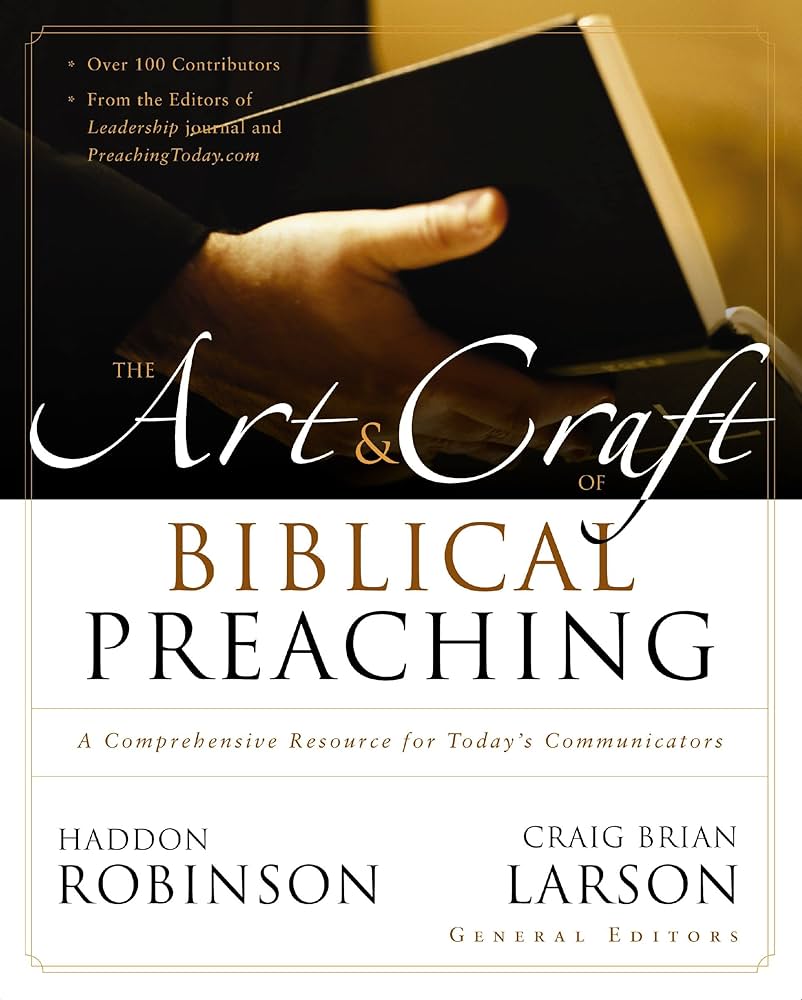
Art & Craft of Biblical Preaching
A Comprehensive Resource for Today’s Communicators
-
The High Call of Preaching
- 1 Core Convictions of Biblical Preaching
- 2 A Definition of Biblical Preaching
- 3 A Weekly Dose of Compressed Dignity
- 4 Overfed, Underchallenged
- 5 Theology of Powerful Preaching
- 6 Preaching That Raises Our Sights
- 7 Leading and Feeding: How Preaching and Leadership Intersect
- 8 John 3:16 in the Key of C
- 9 Spiritual Formation through Preaching
- 10 Preaching Life into the Church
- 11 My Theory of Homiletics
- 12 Staying on the Line
- 13 History of Preaching
-
The Spiritual Life of a Preacher
- 14 A Cup Running Over
- 15 The Patented Preacher
- 16 I Prayed for My Preaching
- 17 How Does Unction Function?
- 18 Squeaky Clean
- 19 Required Reading
- 20 Rightly Dividing the Preaching Load
- 21 Preaching Through Personal Pain
- 22 A Prophet among You
- 23 Burning Clean Fuel
- 24 Backdraft Preaching
- 25 Why I Pace Before I Preach
- 26 Preaching to Convulse the Demons
- 27 Holy Expectation
-
Considering Hearers
- 28 Preaching to Everyone in Particular
- 29 The Power of Simplicity
- 30 View from the Pew
- 31 Preaching to Ordinary People
- 32 Why Serious Preachers Use Humor
- 33 Connect Hearers through Dialogue
- 34 Self-Disclosure That Glorifies Christ
- 35 How to Be Heard
- 36 Opening the Closed American Mind
- 37 Turning an Audience into the Church
- 38 Preaching to Change the Heart
- 39 Preaching Truth, Justice, and the American Way
- 40 Preaching Morality in an Amoral Age
- 41 The Intentional Bridge Builder
- 42 Connecting with Postmoderns
- 43 Preaching Amid Pluralism
- 44 Connecting with Non-Christians
- 45 How to Translate Male Sermons to Women
- 46 He Said, She Heard
- 47 Connecting with Men
- 48 Creating a Singles-Friendly Sermon
- 49 Preaching to Preschoolers
- 50 Hispanic American Preaching
- 51 African American Preaching
- 52 Asian American Preaching
- 53 Work Wins?
- 54 One Sermon, Two Messages
- 55 The Playful Preacher
- 56 What Authority Do We Have Anymore?
-
Interpretation and Application
- 57 Why the Sermon?
- 58 Getting the Gold from the Text
- 59 Faithful First
- 60 God’s Letter of Intent
- 61 Five Bird-dogging Questions for Biblical Exposition
- 62 The Rules of the Game
- 63 Why All the Best Preachers Are–What a Concept!–Theological
- 64 Letting the Listeners Make the Discoveries
- 65 Conviction and Compassion
- 66 The Inadequacy of “Yes” Theology
- 67 What Great Coaches and Preachers Know
- 68 Preaching That Opens Ears and Hearts
- 69 Fundamentals of Genre
- 70 From B.C. to 11 a.m.
- 71 The Big Idea of Narrative Preaching
- 72 Apply Within
- 73 Application Without Moralism
- 74 Blending Bible Content and Life Application
- 75 Showing Promise
- 76 Helping Hearers Practice What We Preach
- 77 The Heresy of Application
- 78 Preaching for True Holiness
- 79 Less Joe, More Jesus
- 80 Preaching That Promotes Self-Centeredness
- 81 The Danger of Practical Preaching
- 82 Grace: A license to Wander?
- 83 The Rich Sound of Grace and Holiness
-
Structure
- 84 Set Free from the Cookie Cutter
- 85 Say and Do
- 86 Connecting Biblical Content with Contemporary Audiences
- 87 Clearly
- 88 Skills of Oral Clarity
- 89 Questions That Put Muscle on Bones
- 90 Better Big Ideas
- 91 The Power of Sequence
- 92 Outlines That Work for You, Not against You
- 93 The Tension Between Clarity and Suspense
- 94 Lifeblood of Preaching
- 95 Alliteration Downfalls
- 96 Modulating Tension
- 97 The Purpose-Driven Title
- 98 Why Should I Listen to You?
- 99 Satisfying Conclusions
-
Style
- 100 Determining Your Strengths and Weaknesses
- 101 Interesting Preaching
- 102 Crafting an Experience
- 103 Seven Habits of Highly Effective Preachers
- 104 The Sermon’s Mood
- 105 Teaching the Whole Bible
- 106 Dramatic Expository Preaching
- 107 Verse-by-Verse Sermons That Really Preach
- 108 What Makes Textual Preaching Unique?
- 109 Can Topical Preaching Be Expository?
- 110 Topical Preaching Can Be Truly Biblical
- 111 Topical Preaching on Bible Characters
- 112 Topical Preaching on Contemporary Issues
- 113 Topical Preaching on Theological Themes
- 114 Making the Most of Biblical Paradoxes
- 115 Getting the Most from the Sermon Series
- 116 The Next Big Thing
- 117 The Compelling Series
- 118 First Person Narrative Sermons
- 119 Biblical Preaching Is about Life Change, Not Sermon Style
- 120 Seven Timeless Principles for Reaching Lost People
- 121 Evangelistic Preaching in the Local Church
- 122 Felt-Needs Preaching
- 123 How to Preach Boldly in a “Whatever” Culture
- 124 Preaching with a Leader’s Heart
- 125 Critique of the New Homiletic
-
Preparation
- 142 Why I Pat the Bible on My Nightstand
- 143 Busting Out of Sermon Block
- 144 Centered
- 145 A Long, Rich Conversation with God
- 146 A Mysterious Impulse to Pray
- 147 Preparing the Messenger
- 148 The Hard Work of Illumination
- 149 Heart-to-Heart Preaching
- 150 Imagination: The Preacher’s Neglected Ally
- 151 Preaching That Magnifies God
- 152 When Is a Sermon Good Enough?
- 153 How to Build a First-Rate Library
- 154 What Makes a Sermon Deep?
- 155 Before You Preach
- 156 Inspiration Points
- 157 Simplify
- 158 Using Someone Else’s Sermon
- 159 Planning for a Richer, Deeper Sermon Series
-
Delivery
- 160 The Source of Passion
- 161 Place of Pathos in Preaching
- 162 Preaching with Intensity
- 163 No Notes, Lots of Notes, Brief Notes
- 164 In the Eye of the Hearer
- 165 No Voice, No Preach
- 166 Eliminating My Um, Um, Annoying Pulpit Mannerisms
- 167 Reading Scripture in Public
- 168 The Importance of Being Urgent
- 169 The Day I Lost My Nerve
-
Special Topics
- 170 When You Don’t Look Forward to Special Days
- 171 Preaching the Terrors
- 172 Preparing People to Suffer
- 173 Preaching Hell in a Tolerant Age
- 174 Speaking into Crisis
- 175 When the News Intrudes
- 176 Redemptive Sermons for Weddings and Funerals
- 177 The Landmark Sermon
- 178 You Had to Bring It Up
- 179 Preaching on Contemporary Issues
- 180 Preaching Sex with Compassion and Conviction
- 181 The Ever-More-Difficult Marriage Sermon
- 182 When the Sermon Goes to Work
- 183 Bridging the Marketplace Gap
- 184 Sermons on Giving That People Actually Like!
When you think of positive and negative preaching, what comes to mind?
Haddon Robinson: The primary emotional element of many evangelical sermons is guilt. People leave feeling guilty. Seldom do they leave feeling they have succeeded.
We can take almost any passage of Scripture and turn it into guilt. Although 1 Peter 1:3-4 says, "Praise be to the God and Father of our Lord Jesus Christ! In his great mercy he has given us new birth into a living hope," the emphasis of our sermon can be, "But your hope isn't as strong as it used to be, is it?" Instead of leaving people with great hope and desire, we keep raising the bar beyond where people can jump.
The problem is people do not change much from guilt. It's not a good motivator.
If guilt is so ineffective, why do we use it?
If you want to learn how to hit a baseball, don't watch three .100 hitters; watch one .300 hitter.
Many people come from homes where they were seldom affirmed by their parents, or at least by their fathers. They can't remember a time when their fathers took them aside and said, "I think you're great. It doesn't matter to me whether you succeed or fail; you are the greatest thing that ever happened to me." If we grew up feeling we couldn't please our parents, we may carry that into the pulpit. We may think we can motivate others by constantly reminding them how far short they fall.
In addition, conservatives are not always comfortable commending people. In Alice in Wonderland, Alice asks the Mad Hatter if there's any cake. He says, "Cake? Well, no. We had cake yesterday, and we'll have cake tomorrow, but we never have any cake today." Similarly, we had cake in the past when God was alive and well and doing things; we'll have cake in the future when Jesus returns; but we treat today like stale bread. Somehow we have a hard time commending the people who are committed and loving and making a difference today.
And yet, the New Testament is filled with places where Paul commends individuals and congregations. For example, he says to the Thessalonians: "We always thank God for all of you, mentioning you in our prayers. We continually remember before our God and Father your work produced by faith, your labor prompted by love, and your endurance inspired by hope in our Lord Jesus Christ." He says to the Philippians, "I think it is necessary to send back to you Epaphroditus, my brother, fellow worker and fellow soldier. Welcome him in the Lord with great joy, and honor men like him, because he almost died for the work of Christ."
What is a legitimate place for negative elements in preaching?
The Old Testament prophets warned that if Israel did not turn from their sin they would be taken captive. You can't preach the Scriptures without pointing to where failure and danger lie.
But even when warning people, we have to say, "By the grace and power of God, you can be different than you are." And that is not just something to throw at the end of the sermon; it is inherent in the way God gives his message. He is always a God of grace and empowerment. He wants the best for his people. The warnings are given within the broader context of God's delight in and concern for his people.
God begins the Ten Commandments by saying, "I am the LORD your God, who brought you out of Egypt, out of the land of slavery." Even the Law begins with the affirmation of God's power and love and concern for the people.
What are some important ways we can include positive elements in our sermons?
Positive preaching shows up in illustrations. Rather than illustrating a virtue by talking about somebody who does not display it, positive preaching shows someone doing it. If you want to learn how to hit a baseball, don't watch three .100 hitters; watch one .300 hitter. Show someone doing it right. Positive preaching encourages people, shows them they can be better than they are, and suggests ways to improve.
At the same time, positive preaching should not deny the reality of where we are now. You can't preach the good news unless a person senses the bad news. Positive preaching recognizes our depravity, but it also recognizes that there is power from the Holy Spirit that enables us to grow. We are all in a growth process. We are often aware of how far we have to go, but not how far we have come. We need to encourage one another by pointing out progress.
Can you suggest a ratio of negative to positive for our preaching?
I had a formula when raising my kids. I wanted to give them ten that-a-boys for every "you jerk." If I had turned that around, I would have destroyed them. As a seminary president, I was at my best when I caught people doing something right and commending them rather than catching them doing something wrong and criticizing them. If the people know a preacher loves and values them, then when he has bad news to give, they hear it. On the other hand, if every sermon is filled with the negative, people shut their ears.
Years ago when we lived in Dallas, I'd often go to First Baptist Church to hear pastor W. A. Criswell. When he came back from a trip, he would say things like, "I've just preached in a score of churches, and you are the greatest people a preacher could want. When I preach here, you give a response to God's Word that is encouraging." When I was younger, I mistook that for flattery. Now I'm absolutely sure he believed what he said. And the people loved him.