Table of contents
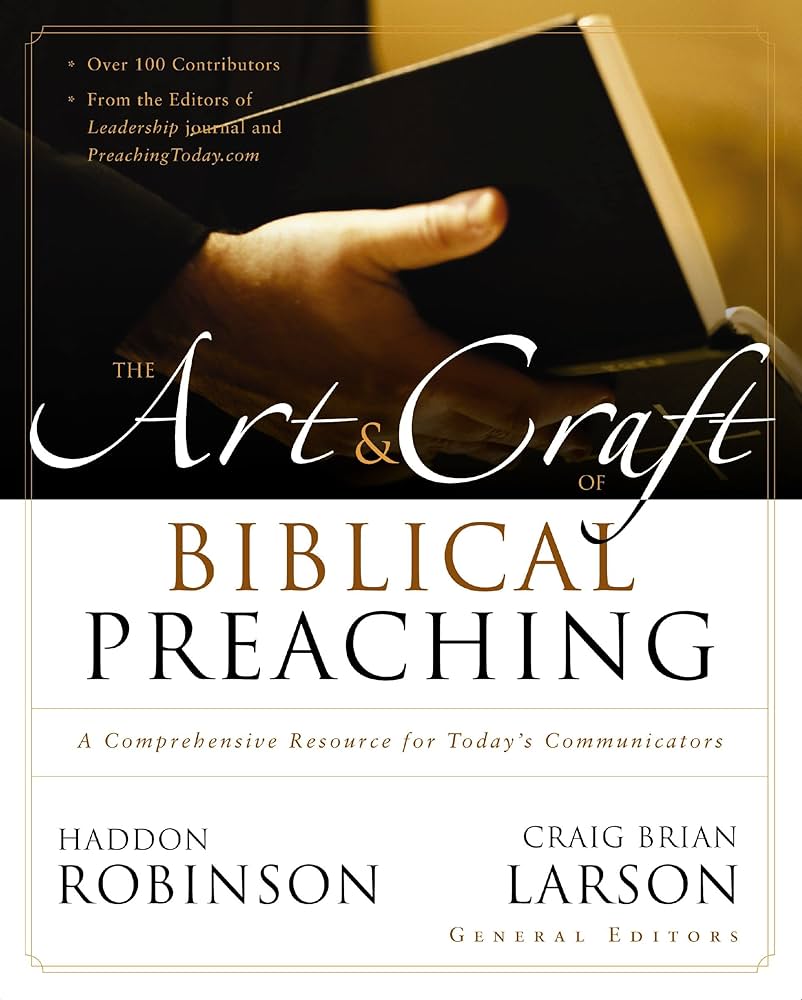
Art & Craft of Biblical Preaching
A Comprehensive Resource for Today’s Communicators
-
The High Call of Preaching
- 1 Core Convictions of Biblical Preaching
- 2 A Definition of Biblical Preaching
- 3 A Weekly Dose of Compressed Dignity
- 4 Overfed, Underchallenged
- 5 Theology of Powerful Preaching
- 6 Preaching That Raises Our Sights
- 7 Leading and Feeding: How Preaching and Leadership Intersect
- 8 John 3:16 in the Key of C
- 9 Spiritual Formation through Preaching
- 10 Preaching Life into the Church
- 11 My Theory of Homiletics
- 12 Staying on the Line
- 13 History of Preaching
-
The Spiritual Life of a Preacher
- 14 A Cup Running Over
- 15 The Patented Preacher
- 16 I Prayed for My Preaching
- 17 How Does Unction Function?
- 18 Squeaky Clean
- 19 Required Reading
- 20 Rightly Dividing the Preaching Load
- 21 Preaching Through Personal Pain
- 22 A Prophet among You
- 23 Burning Clean Fuel
- 24 Backdraft Preaching
- 25 Why I Pace Before I Preach
- 26 Preaching to Convulse the Demons
- 27 Holy Expectation
-
Considering Hearers
- 28 Preaching to Everyone in Particular
- 29 The Power of Simplicity
- 30 View from the Pew
- 31 Preaching to Ordinary People
- 32 Why Serious Preachers Use Humor
- 33 Connect Hearers through Dialogue
- 34 Self-Disclosure That Glorifies Christ
- 35 How to Be Heard
- 36 Opening the Closed American Mind
- 37 Turning an Audience into the Church
- 38 Preaching to Change the Heart
- 39 Preaching Truth, Justice, and the American Way
- 40 Preaching Morality in an Amoral Age
- 41 The Intentional Bridge Builder
- 42 Connecting with Postmoderns
- 43 Preaching Amid Pluralism
- 44 Connecting with Non-Christians
- 45 How to Translate Male Sermons to Women
- 46 He Said, She Heard
- 47 Connecting with Men
- 48 Creating a Singles-Friendly Sermon
- 49 Preaching to Preschoolers
- 50 Hispanic American Preaching
- 51 African American Preaching
- 52 Asian American Preaching
- 53 Work Wins?
- 54 One Sermon, Two Messages
- 55 The Playful Preacher
- 56 What Authority Do We Have Anymore?
-
Interpretation and Application
- 57 Why the Sermon?
- 58 Getting the Gold from the Text
- 59 Faithful First
- 60 God’s Letter of Intent
- 61 Five Bird-dogging Questions for Biblical Exposition
- 62 The Rules of the Game
- 63 Why All the Best Preachers Are–What a Concept!–Theological
- 64 Letting the Listeners Make the Discoveries
- 65 Conviction and Compassion
- 66 The Inadequacy of “Yes” Theology
- 67 What Great Coaches and Preachers Know
- 68 Preaching That Opens Ears and Hearts
- 69 Fundamentals of Genre
- 70 From B.C. to 11 a.m.
- 71 The Big Idea of Narrative Preaching
- 72 Apply Within
- 73 Application Without Moralism
- 74 Blending Bible Content and Life Application
- 75 Showing Promise
- 76 Helping Hearers Practice What We Preach
- 77 The Heresy of Application
- 78 Preaching for True Holiness
- 79 Less Joe, More Jesus
- 80 Preaching That Promotes Self-Centeredness
- 81 The Danger of Practical Preaching
- 82 Grace: A license to Wander?
- 83 The Rich Sound of Grace and Holiness
-
Structure
- 84 Set Free from the Cookie Cutter
- 85 Say and Do
- 86 Connecting Biblical Content with Contemporary Audiences
- 87 Clearly
- 88 Skills of Oral Clarity
- 89 Questions That Put Muscle on Bones
- 90 Better Big Ideas
- 91 The Power of Sequence
- 92 Outlines That Work for You, Not against You
- 93 The Tension Between Clarity and Suspense
- 94 Lifeblood of Preaching
- 95 Alliteration Downfalls
- 96 Modulating Tension
- 97 The Purpose-Driven Title
- 98 Why Should I Listen to You?
- 99 Satisfying Conclusions
-
Style
- 100 Determining Your Strengths and Weaknesses
- 101 Interesting Preaching
- 102 Crafting an Experience
- 103 Seven Habits of Highly Effective Preachers
- 104 The Sermon’s Mood
- 105 Teaching the Whole Bible
- 106 Dramatic Expository Preaching
- 107 Verse-by-Verse Sermons That Really Preach
- 108 What Makes Textual Preaching Unique?
- 109 Can Topical Preaching Be Expository?
- 110 Topical Preaching Can Be Truly Biblical
- 111 Topical Preaching on Bible Characters
- 112 Topical Preaching on Contemporary Issues
- 113 Topical Preaching on Theological Themes
- 114 Making the Most of Biblical Paradoxes
- 115 Getting the Most from the Sermon Series
- 116 The Next Big Thing
- 117 The Compelling Series
- 118 First Person Narrative Sermons
- 119 Biblical Preaching Is about Life Change, Not Sermon Style
- 120 Seven Timeless Principles for Reaching Lost People
- 121 Evangelistic Preaching in the Local Church
- 122 Felt-Needs Preaching
- 123 How to Preach Boldly in a “Whatever” Culture
- 124 Preaching with a Leader’s Heart
- 125 Critique of the New Homiletic
-
Preparation
- 142 Why I Pat the Bible on My Nightstand
- 143 Busting Out of Sermon Block
- 144 Centered
- 145 A Long, Rich Conversation with God
- 146 A Mysterious Impulse to Pray
- 147 Preparing the Messenger
- 148 The Hard Work of Illumination
- 149 Heart-to-Heart Preaching
- 150 Imagination: The Preacher’s Neglected Ally
- 151 Preaching That Magnifies God
- 152 When Is a Sermon Good Enough?
- 153 How to Build a First-Rate Library
- 154 What Makes a Sermon Deep?
- 155 Before You Preach
- 156 Inspiration Points
- 157 Simplify
- 158 Using Someone Else’s Sermon
- 159 Planning for a Richer, Deeper Sermon Series
-
Delivery
- 160 The Source of Passion
- 161 Place of Pathos in Preaching
- 162 Preaching with Intensity
- 163 No Notes, Lots of Notes, Brief Notes
- 164 In the Eye of the Hearer
- 165 No Voice, No Preach
- 166 Eliminating My Um, Um, Annoying Pulpit Mannerisms
- 167 Reading Scripture in Public
- 168 The Importance of Being Urgent
- 169 The Day I Lost My Nerve
-
Special Topics
- 170 When You Don’t Look Forward to Special Days
- 171 Preaching the Terrors
- 172 Preparing People to Suffer
- 173 Preaching Hell in a Tolerant Age
- 174 Speaking into Crisis
- 175 When the News Intrudes
- 176 Redemptive Sermons for Weddings and Funerals
- 177 The Landmark Sermon
- 178 You Had to Bring It Up
- 179 Preaching on Contemporary Issues
- 180 Preaching Sex with Compassion and Conviction
- 181 The Ever-More-Difficult Marriage Sermon
- 182 When the Sermon Goes to Work
- 183 Bridging the Marketplace Gap
- 184 Sermons on Giving That People Actually Like!
When people turn to Christ in faith, God begins the revolutionary process of transforming them to be other-centered and God-centered.
How is a sermon like aspirin?
The answer: You take aspirin with one purpose in mind, but it has unintended side effects, both good and bad. If you take aspirin for a headache, you get pain relief — and a secondary benefit: doctors say one aspirin a day can prevent the recurrence of heart attacks. On the other hand, you might suffer the side effect of an upset stomach.
Sermons, too, have side effects. One is what we say about motives for obedience.
For example, if the text calls people to use their spiritual gifts, we could offer many reasons to obey: the desire to be a faithful steward, to serve God, to build the church, to grow personally, to fulfill one's purpose, to express love to others, to say thank you to God, to imitate Jesus, to glorify God.
Whichever motivations we choose, we teach an important lesson about proper motivations. When your sermon says, " Use your spiritual gift because you will build the church, " you say indirectly, " Building the church is a good thing that should motivate you. " This is indirect because normally we do not take time to justify that motive.
Why teach why
Choosing proper motives is important because righteousness has three characteristics: what we do, how we do it, and why we do it.
If I am a restaurant cook, for example, the what of righteousness is to do what my employer requires: prepare orders according to house recipes. The how of righteousness is to cook in a sanitary way — no putting potatoes dropped on the floor into the pot. Finally, the why of righteousness is to cook to please the Lord. I must not cook motivated by greed and selfish ambition — to curry favor with staff and customers so I can steal them away when I start my own restaurant.
Each week our sermons train believers in the third characteristic of righteousness: why do right, and usually this sermon is unintended. It is the hidden sermon.
Upset stomachs
This indirect sermon can have harmful side effects.
Our greatest challenge in training motives is to change the believer's orbit. Under the full control of their sinful nature, people are self-centered. They have the planetary mass of Jupiter, with God and other people orbiting around them like tiny moons. When people turn to Christ in faith, God begins the revolutionary process of transforming them to be other-centered and God-centered. They begin to see themselves in proper relation to the value of others and the greatness of God. Increasingly they orbit the massive, glorious sun of God's will.
Self-centered deeds do not please God. " All a man's ways seem innocent to him, but motives are weighed by the LORD " (Proverbs 16:2). " [The Lord] will bring to light what is hidden in darkness and will expose the motives of men's hearts " (1 Corinthians 4:5).
The harmful side effect of some preaching is we appeal to self-interest in a way that encourages hearers to continue in an utterly self-centered way of life.
Not that we should never appeal to self-interest. Jesus did constantly. For example, he asked, " What good is it for a man to gain the whole world, and yet lose or forfeit his very self? " (Luke 9:25). While Jesus said deny yourself and take up your cross, he also said, " Give, and it will be given to you, " and " Store up for yourselves treasures in heaven. " Jesus and the New Testament writers teach both a denial of self on the one hand and a sanctified self-interest on the other. With sanctified self-interest we seek what is best for ourselves in a different way and for a different reason. We seek our interests God's way for God's glory, rather than our way for our glory.
Theologian Wayne Grudem lists the following as examples of motivations found in the New Testament (Systematic Theology [Zondervan: 1994], p. 757-758):
Finding right motives
So how do we select the right motive to emphasize? The good news is the correct motives for obedience are almost always given in our sermon text. God is way ahead of us! Preaching the motives in the text keeps us from defaulting to an appeal either to self-centeredness, to self-interest alone, or unthinkingly, almost as a clich, to the glory of God. Either way, we may overlook the why in the text. When we fully illumine the text, our hearers are most likely to develop holy motivations.
For example, we might be surprised at the variety of sanctified reasons/motives Paul offers in 2 Corinthians 9 for giving money to kingdom purposes:
The sermon on this text that appeals to self-centeredness focuses on give-to-get and can foster greed. It ignores the clear principle that we are to replant the increased harvest from the seed of giving. The more we receive the more we give. Further, we give not just for our own benefit but also for God and other believers.
At the other end of the spectrum, the sermon uncomfortable with sanctified self-interest tries to explain away the harvest principle. It suggests that to give in order to receive is ignoble. This, too, distorts the text. We may take this approach because of an either-or mentality about motives. In reality, people rarely make choices for just one reason, but rather, for many.
When we appeal to the motives in the text, we develop highly motivated, God-centered disciples who obey Christ for the right reasons and please God to a fuller degree.