Table of contents
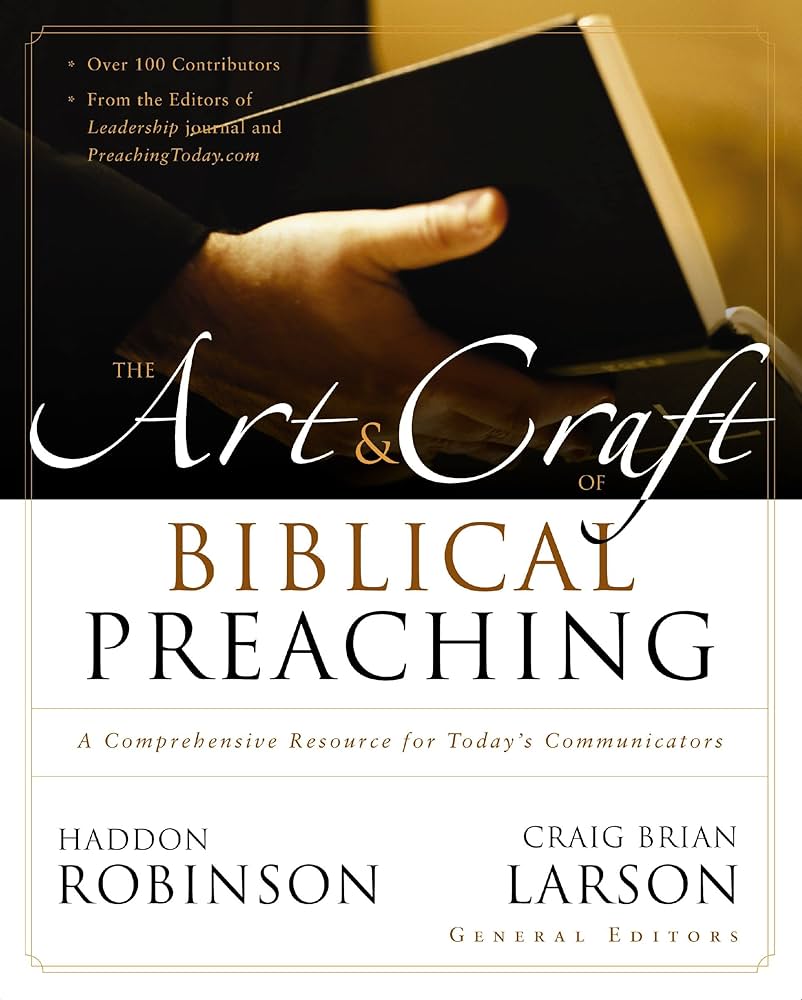
Art & Craft of Biblical Preaching
A Comprehensive Resource for Today’s Communicators
-
The High Call of Preaching
- 1 Core Convictions of Biblical Preaching
- 2 A Definition of Biblical Preaching
- 3 A Weekly Dose of Compressed Dignity
- 4 Overfed, Underchallenged
- 5 Theology of Powerful Preaching
- 6 Preaching That Raises Our Sights
- 7 Leading and Feeding: How Preaching and Leadership Intersect
- 8 John 3:16 in the Key of C
- 9 Spiritual Formation through Preaching
- 10 Preaching Life into the Church
- 11 My Theory of Homiletics
- 12 Staying on the Line
- 13 History of Preaching
-
The Spiritual Life of a Preacher
- 14 A Cup Running Over
- 15 The Patented Preacher
- 16 I Prayed for My Preaching
- 17 How Does Unction Function?
- 18 Squeaky Clean
- 19 Required Reading
- 20 Rightly Dividing the Preaching Load
- 21 Preaching Through Personal Pain
- 22 A Prophet among You
- 23 Burning Clean Fuel
- 24 Backdraft Preaching
- 25 Why I Pace Before I Preach
- 26 Preaching to Convulse the Demons
- 27 Holy Expectation
-
Considering Hearers
- 28 Preaching to Everyone in Particular
- 29 The Power of Simplicity
- 30 View from the Pew
- 31 Preaching to Ordinary People
- 32 Why Serious Preachers Use Humor
- 33 Connect Hearers through Dialogue
- 34 Self-Disclosure That Glorifies Christ
- 35 How to Be Heard
- 36 Opening the Closed American Mind
- 37 Turning an Audience into the Church
- 38 Preaching to Change the Heart
- 39 Preaching Truth, Justice, and the American Way
- 40 Preaching Morality in an Amoral Age
- 41 The Intentional Bridge Builder
- 42 Connecting with Postmoderns
- 43 Preaching Amid Pluralism
- 44 Connecting with Non-Christians
- 45 How to Translate Male Sermons to Women
- 46 He Said, She Heard
- 47 Connecting with Men
- 48 Creating a Singles-Friendly Sermon
- 49 Preaching to Preschoolers
- 50 Hispanic American Preaching
- 51 African American Preaching
- 52 Asian American Preaching
- 53 Work Wins?
- 54 One Sermon, Two Messages
- 55 The Playful Preacher
- 56 What Authority Do We Have Anymore?
-
Interpretation and Application
- 57 Why the Sermon?
- 58 Getting the Gold from the Text
- 59 Faithful First
- 60 God’s Letter of Intent
- 61 Five Bird-dogging Questions for Biblical Exposition
- 62 The Rules of the Game
- 63 Why All the Best Preachers Are–What a Concept!–Theological
- 64 Letting the Listeners Make the Discoveries
- 65 Conviction and Compassion
- 66 The Inadequacy of “Yes” Theology
- 67 What Great Coaches and Preachers Know
- 68 Preaching That Opens Ears and Hearts
- 69 Fundamentals of Genre
- 70 From B.C. to 11 a.m.
- 71 The Big Idea of Narrative Preaching
- 72 Apply Within
- 73 Application Without Moralism
- 74 Blending Bible Content and Life Application
- 75 Showing Promise
- 76 Helping Hearers Practice What We Preach
- 77 The Heresy of Application
- 78 Preaching for True Holiness
- 79 Less Joe, More Jesus
- 80 Preaching That Promotes Self-Centeredness
- 81 The Danger of Practical Preaching
- 82 Grace: A license to Wander?
- 83 The Rich Sound of Grace and Holiness
-
Structure
- 84 Set Free from the Cookie Cutter
- 85 Say and Do
- 86 Connecting Biblical Content with Contemporary Audiences
- 87 Clearly
- 88 Skills of Oral Clarity
- 89 Questions That Put Muscle on Bones
- 90 Better Big Ideas
- 91 The Power of Sequence
- 92 Outlines That Work for You, Not against You
- 93 The Tension Between Clarity and Suspense
- 94 Lifeblood of Preaching
- 95 Alliteration Downfalls
- 96 Modulating Tension
- 97 The Purpose-Driven Title
- 98 Why Should I Listen to You?
- 99 Satisfying Conclusions
-
Style
- 100 Determining Your Strengths and Weaknesses
- 101 Interesting Preaching
- 102 Crafting an Experience
- 103 Seven Habits of Highly Effective Preachers
- 104 The Sermon’s Mood
- 105 Teaching the Whole Bible
- 106 Dramatic Expository Preaching
- 107 Verse-by-Verse Sermons That Really Preach
- 108 What Makes Textual Preaching Unique?
- 109 Can Topical Preaching Be Expository?
- 110 Topical Preaching Can Be Truly Biblical
- 111 Topical Preaching on Bible Characters
- 112 Topical Preaching on Contemporary Issues
- 113 Topical Preaching on Theological Themes
- 114 Making the Most of Biblical Paradoxes
- 115 Getting the Most from the Sermon Series
- 116 The Next Big Thing
- 117 The Compelling Series
- 118 First Person Narrative Sermons
- 119 Biblical Preaching Is about Life Change, Not Sermon Style
- 120 Seven Timeless Principles for Reaching Lost People
- 121 Evangelistic Preaching in the Local Church
- 122 Felt-Needs Preaching
- 123 How to Preach Boldly in a “Whatever” Culture
- 124 Preaching with a Leader’s Heart
- 125 Critique of the New Homiletic
-
Preparation
- 142 Why I Pat the Bible on My Nightstand
- 143 Busting Out of Sermon Block
- 144 Centered
- 145 A Long, Rich Conversation with God
- 146 A Mysterious Impulse to Pray
- 147 Preparing the Messenger
- 148 The Hard Work of Illumination
- 149 Heart-to-Heart Preaching
- 150 Imagination: The Preacher’s Neglected Ally
- 151 Preaching That Magnifies God
- 152 When Is a Sermon Good Enough?
- 153 How to Build a First-Rate Library
- 154 What Makes a Sermon Deep?
- 155 Before You Preach
- 156 Inspiration Points
- 157 Simplify
- 158 Using Someone Else’s Sermon
- 159 Planning for a Richer, Deeper Sermon Series
-
Delivery
- 160 The Source of Passion
- 161 Place of Pathos in Preaching
- 162 Preaching with Intensity
- 163 No Notes, Lots of Notes, Brief Notes
- 164 In the Eye of the Hearer
- 165 No Voice, No Preach
- 166 Eliminating My Um, Um, Annoying Pulpit Mannerisms
- 167 Reading Scripture in Public
- 168 The Importance of Being Urgent
- 169 The Day I Lost My Nerve
-
Special Topics
- 170 When You Don’t Look Forward to Special Days
- 171 Preaching the Terrors
- 172 Preparing People to Suffer
- 173 Preaching Hell in a Tolerant Age
- 174 Speaking into Crisis
- 175 When the News Intrudes
- 176 Redemptive Sermons for Weddings and Funerals
- 177 The Landmark Sermon
- 178 You Had to Bring It Up
- 179 Preaching on Contemporary Issues
- 180 Preaching Sex with Compassion and Conviction
- 181 The Ever-More-Difficult Marriage Sermon
- 182 When the Sermon Goes to Work
- 183 Bridging the Marketplace Gap
- 184 Sermons on Giving That People Actually Like!
I had acted innocently enough. Summer was approaching, and I was in need of fresh sermon ideas. So I prepared a bulletin insert asking for suggested texts or topics.
The first one in sizzled like a fuse on a Fourth of July firecracker: "Why don't you ever preach on patriotism? You need to preach on what our flag stands for!"
I felt torn: I didn't want to reject Fred's request out of hand or offend his national pride (he had served his country honorably in World War II), but I do not believe that truth, justice, and "the American way" are triune. I've always considered myself a loyal citizen, and I'm grateful for the liberties I enjoy, yet for me, national loyalties must bow before the Lordship of Christ. So I explained to Fred that I would be more comfortable preaching what the New Testament teaches concerning the duties of believers toward their nation. He understood my position even though his expectation for a patriotic celebration was not met.
The encounter with Fred ended happily enough, with both our relationship and my sense of integrity intact. But his request got me thinking about the larger question of the influence of cultural values upon the Christian pulpit. I began to wonder about more subtle and often undetected influences of "the American way" on those of us who are called to preach The Way.
Charles Larson's book, Persuasion: Reflection and Responsibility, provided the tools I needed for thinking through this issue. I realized I wrestle with some cultural myths that are as American as baseball, hot dogs, apple pie, and Chevrolet. By calling them myths I do not mean they are necessarily false—or true. Rather I mean they are so much a part of the way our culture interprets reality that we often fail to recognize them as anything but axiomatic. We grow up hearing them, breathing them, and thinking them. Though they have scant basis in biblical chapter and verse, I find they often creep unawares into my preaching.
Myth 1: The possibility of success
This is perhaps the most easily recognized American myth. It has fueled our country since the age of the earliest settlers. This myth was popularized in the nineteenth century by Horatio Alger, who used this story line as the basis for several novels that told of a young man who through hard work, sincerity, honesty, and faith in the future was able to make good. Sometimes he would make it big and own his own company, gain a beautiful wife, enjoy a good life, and even do good for others. This bootstrap mythology is embodied today in "the American dream."
Positive thinking and possibility thinking thrive as richly in our American soil as corn does in Iowa. And to a certain degree, the appeal of the positive preachers is due to the fact that we are uniquely prepared by our culture to receive these messages. This is not to suggest there is no biblical basis for preaching a positive message—countless verses speak hope, possibility, newness, and encouragement.
The dangers of canonizing Horatio Alger, however, are also apparent. Often "success" means only one thing to many people—health and wealth. Listeners hear that gospel of material success even when the preacher is encouraging them to new possibilities in the spiritual dimension.
Yet there is, I believe, an even subtler danger in employing this motif—a subliminal accusation of failure. I recall one sermon our pastor preached when I was a teenager. After dinner that Sunday I overheard my mother muttering as she washed the dishes.
"What's wrong?" I asked.
"I don't think the Lord is calling me to leave my family to be a missionary hero in Africa," she said, venting frustration. "I'm not likely to make a fortune in the near or distant future. But when I hear a sermon that describes all those heroic and successful people, I feel like a total failure. In what possible way can I do anything of consequence for God?"
The possibility of success had become for my mother the impossibility of significance. The heroes were too distant, the goals too high. She needed images of mothers and homemakers who gained ground for the kingdom in the kitchens where they lived.
The lesson of that episode with my mother has stayed with me, and every time I recruit Horatio Alger for the service of the gospel (which I do as often as any other red-blooded preacher), I try to picture my mother in my congregation. She and the rest of the congregation need to be encouraged to new possibilities but not driven to discouragement with impossibilities.
Myth 2: The wisdom of the rustic
One of the enduring legends of our culture is the clever rustic. No matter how sophisticated or devious the opposition, the simple wisdom of the common man or woman wins out. Backwoods figures like Daniel Boone and Paul Bunyan, who outwit their adversaries and overcome great obstacles with clever but simple common sense, fill our folklore. Abraham Lincoln rode this image from the county courthouses of Illinois to the White House in Washington, D.C. The power of this image continues even today. Ronald Reagan developed his reputation as "the Great Communicator" not only because of his acting experience but because of his uncanny ability to speak the language of the common people.
The flip side of this faith in folk wisdom and reliance on initial instincts is a tendency to distrust the educated or intellectual. The disciplines of scholarship are often seen merely as tools of obfuscation (translation: too much book-larnin' gits in the way of clear-headed thinkin').
Those of us who believe in the simple gospel often find within us an accompanying desire to make simplistic the Bible's subtleties and to codify all the complexities of modern existence. In the small-town church in southern Ohio where I was raised, this was regular Sunday fare. We heard the ABCs of the gospel. We heard the four principles for successful marriage. We mapped the approaching finale of world history with a chart. We were taught to be suspicious of psychiatrists, psychologists, sociologists, anthropologists, and any other "ists" we might encounter.
Several crises of confidence later, I have learned that not all of life is simple, easy, or clear. And when the clear-cut answers I was given did not match the complexities of my own life and the lives of those I was called to serve, I felt a bit betrayed. I began to understand why so many have thrown over the faith when life gets rocky.
Fortunately, I have not done so. Nor have I lost my appreciation for the rustic wisdom with which I was raised. Common sense and intuition often serve quite well. But I have found that God also uses diligent study, solid research, and educated reasoning.
Just as it is our task to explain the difficult, at times our task is also to portray life as complex. Not all wisdom arises from the rustic's simplicity. When the congregation is led to seek wisdom from the learned as well as from the common, when the biblical message is proclaimed in all its mysterious fullness, our people are better equipped to face the world as it really is.
Myth 3: The presence of conspiracy
Another widespread cultural premise is the presence of conspiracy: a belief that behind most major political, economic, or social problems is a powerful group that has conspired to create them. American history is filled with suspicions of Masonic conspiracies, Populist conspiracies, and international banking conspiracies. In my own lifetime I have heard conspiracy theories connecting John F. Kennedy and the Vatican. The validity of any of these theories is not my point here. I'm only illustrating our tendency to spread such explanations for certain trends and events.
Usually such explanations attract persons or groups who feel threatened. Conspiracy theories inevitably involve the infamous "they." Usually "they" have labels—right-wingers or left-wingers or humanists or media-types. Labels tend to confirm sinister suspicions and motivate us by our fears. "They" often find their way into our sermons, but only once have I even met one of "them." He is a member of my congregation, a health teacher at the local middle school.
Before I came to the church, Mike was attacked from various local pulpits as one of "those" who taught "values-less" sex education. I discovered that Mike, a committed and sensitive Christian, was trying to walk the tightrope between his Christian values and the realities of public education. In working with those eighth-graders, he was careful to emphasize the church and home as key influences in decision making. But because he was "one of them," more than one local pastor excoriated him from the pulpit, and Mike was besieged with phone calls, letters, and visits from irate parents.
Now, whenever I hear conspiracies preached, I cannot help but think of a disillusioned Mike, harassed and harangued by professing brothers and sisters who were more willing to believe in a conspiracy than in a brother's good intentions for their children.
We are called to proclaim Christ, but by necessity we do so in the context of our cultural assumptions. Since cultural premises are part of the way we think, they can be powerful persuasive tools. Our job is to employ them with an eye toward discernment and fairness—without compromise.
It is not simply a matter of preaching truth, justice or the American way. Nor of preaching truth, justice, and the American way. But rather it is a matter of preaching in an American way without doing injustice to The Way of truth.