Table of contents
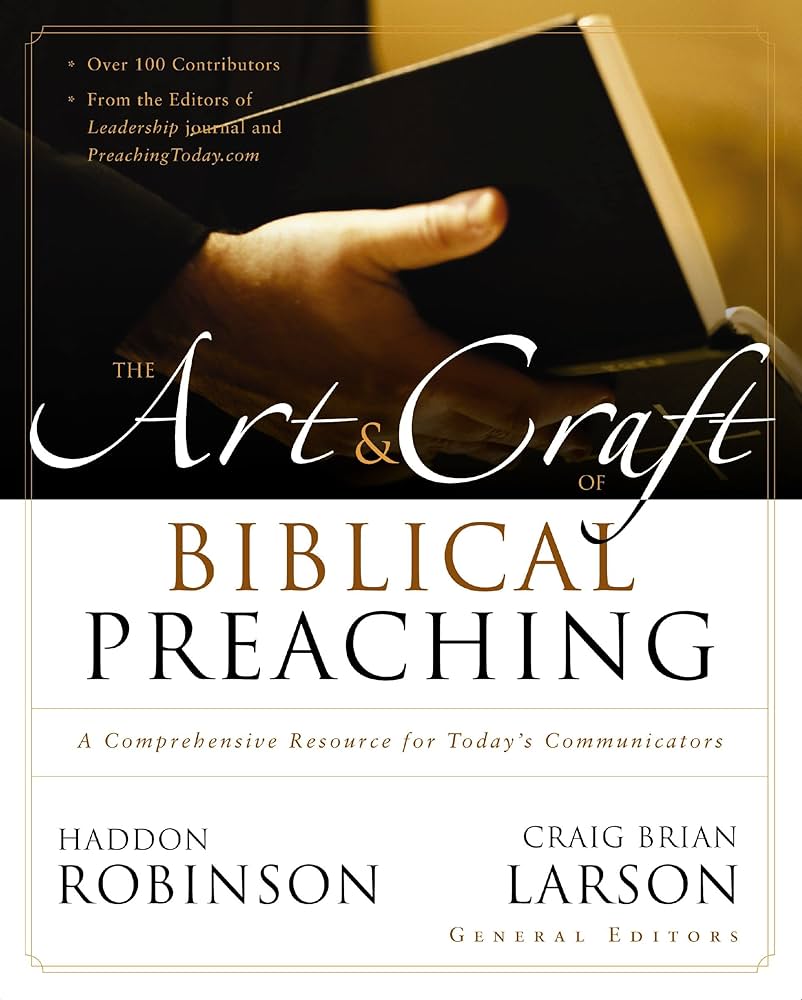
Art & Craft of Biblical Preaching
A Comprehensive Resource for Today’s Communicators
-
The High Call of Preaching
- 1 Core Convictions of Biblical Preaching
- 2 A Definition of Biblical Preaching
- 3 A Weekly Dose of Compressed Dignity
- 4 Overfed, Underchallenged
- 5 Theology of Powerful Preaching
- 6 Preaching That Raises Our Sights
- 7 Leading and Feeding: How Preaching and Leadership Intersect
- 8 John 3:16 in the Key of C
- 9 Spiritual Formation through Preaching
- 10 Preaching Life into the Church
- 11 My Theory of Homiletics
- 12 Staying on the Line
- 13 History of Preaching
-
The Spiritual Life of a Preacher
- 14 A Cup Running Over
- 15 The Patented Preacher
- 16 I Prayed for My Preaching
- 17 How Does Unction Function?
- 18 Squeaky Clean
- 19 Required Reading
- 20 Rightly Dividing the Preaching Load
- 21 Preaching Through Personal Pain
- 22 A Prophet among You
- 23 Burning Clean Fuel
- 24 Backdraft Preaching
- 25 Why I Pace Before I Preach
- 26 Preaching to Convulse the Demons
- 27 Holy Expectation
-
Considering Hearers
- 28 Preaching to Everyone in Particular
- 29 The Power of Simplicity
- 30 View from the Pew
- 31 Preaching to Ordinary People
- 32 Why Serious Preachers Use Humor
- 33 Connect Hearers through Dialogue
- 34 Self-Disclosure That Glorifies Christ
- 35 How to Be Heard
- 36 Opening the Closed American Mind
- 37 Turning an Audience into the Church
- 38 Preaching to Change the Heart
- 39 Preaching Truth, Justice, and the American Way
- 40 Preaching Morality in an Amoral Age
- 41 The Intentional Bridge Builder
- 42 Connecting with Postmoderns
- 43 Preaching Amid Pluralism
- 44 Connecting with Non-Christians
- 45 How to Translate Male Sermons to Women
- 46 He Said, She Heard
- 47 Connecting with Men
- 48 Creating a Singles-Friendly Sermon
- 49 Preaching to Preschoolers
- 50 Hispanic American Preaching
- 51 African American Preaching
- 52 Asian American Preaching
- 53 Work Wins?
- 54 One Sermon, Two Messages
- 55 The Playful Preacher
- 56 What Authority Do We Have Anymore?
-
Interpretation and Application
- 57 Why the Sermon?
- 58 Getting the Gold from the Text
- 59 Faithful First
- 60 God’s Letter of Intent
- 61 Five Bird-dogging Questions for Biblical Exposition
- 62 The Rules of the Game
- 63 Why All the Best Preachers Are–What a Concept!–Theological
- 64 Letting the Listeners Make the Discoveries
- 65 Conviction and Compassion
- 66 The Inadequacy of “Yes” Theology
- 67 What Great Coaches and Preachers Know
- 68 Preaching That Opens Ears and Hearts
- 69 Fundamentals of Genre
- 70 From B.C. to 11 a.m.
- 71 The Big Idea of Narrative Preaching
- 72 Apply Within
- 73 Application Without Moralism
- 74 Blending Bible Content and Life Application
- 75 Showing Promise
- 76 Helping Hearers Practice What We Preach
- 77 The Heresy of Application
- 78 Preaching for True Holiness
- 79 Less Joe, More Jesus
- 80 Preaching That Promotes Self-Centeredness
- 81 The Danger of Practical Preaching
- 82 Grace: A license to Wander?
- 83 The Rich Sound of Grace and Holiness
-
Structure
- 84 Set Free from the Cookie Cutter
- 85 Say and Do
- 86 Connecting Biblical Content with Contemporary Audiences
- 87 Clearly
- 88 Skills of Oral Clarity
- 89 Questions That Put Muscle on Bones
- 90 Better Big Ideas
- 91 The Power of Sequence
- 92 Outlines That Work for You, Not against You
- 93 The Tension Between Clarity and Suspense
- 94 Lifeblood of Preaching
- 95 Alliteration Downfalls
- 96 Modulating Tension
- 97 The Purpose-Driven Title
- 98 Why Should I Listen to You?
- 99 Satisfying Conclusions
-
Style
- 100 Determining Your Strengths and Weaknesses
- 101 Interesting Preaching
- 102 Crafting an Experience
- 103 Seven Habits of Highly Effective Preachers
- 104 The Sermon’s Mood
- 105 Teaching the Whole Bible
- 106 Dramatic Expository Preaching
- 107 Verse-by-Verse Sermons That Really Preach
- 108 What Makes Textual Preaching Unique?
- 109 Can Topical Preaching Be Expository?
- 110 Topical Preaching Can Be Truly Biblical
- 111 Topical Preaching on Bible Characters
- 112 Topical Preaching on Contemporary Issues
- 113 Topical Preaching on Theological Themes
- 114 Making the Most of Biblical Paradoxes
- 115 Getting the Most from the Sermon Series
- 116 The Next Big Thing
- 117 The Compelling Series
- 118 First Person Narrative Sermons
- 119 Biblical Preaching Is about Life Change, Not Sermon Style
- 120 Seven Timeless Principles for Reaching Lost People
- 121 Evangelistic Preaching in the Local Church
- 122 Felt-Needs Preaching
- 123 How to Preach Boldly in a “Whatever” Culture
- 124 Preaching with a Leader’s Heart
- 125 Critique of the New Homiletic
-
Preparation
- 142 Why I Pat the Bible on My Nightstand
- 143 Busting Out of Sermon Block
- 144 Centered
- 145 A Long, Rich Conversation with God
- 146 A Mysterious Impulse to Pray
- 147 Preparing the Messenger
- 148 The Hard Work of Illumination
- 149 Heart-to-Heart Preaching
- 150 Imagination: The Preacher’s Neglected Ally
- 151 Preaching That Magnifies God
- 152 When Is a Sermon Good Enough?
- 153 How to Build a First-Rate Library
- 154 What Makes a Sermon Deep?
- 155 Before You Preach
- 156 Inspiration Points
- 157 Simplify
- 158 Using Someone Else’s Sermon
- 159 Planning for a Richer, Deeper Sermon Series
-
Delivery
- 160 The Source of Passion
- 161 Place of Pathos in Preaching
- 162 Preaching with Intensity
- 163 No Notes, Lots of Notes, Brief Notes
- 164 In the Eye of the Hearer
- 165 No Voice, No Preach
- 166 Eliminating My Um, Um, Annoying Pulpit Mannerisms
- 167 Reading Scripture in Public
- 168 The Importance of Being Urgent
- 169 The Day I Lost My Nerve
-
Special Topics
- 170 When You Don’t Look Forward to Special Days
- 171 Preaching the Terrors
- 172 Preparing People to Suffer
- 173 Preaching Hell in a Tolerant Age
- 174 Speaking into Crisis
- 175 When the News Intrudes
- 176 Redemptive Sermons for Weddings and Funerals
- 177 The Landmark Sermon
- 178 You Had to Bring It Up
- 179 Preaching on Contemporary Issues
- 180 Preaching Sex with Compassion and Conviction
- 181 The Ever-More-Difficult Marriage Sermon
- 182 When the Sermon Goes to Work
- 183 Bridging the Marketplace Gap
- 184 Sermons on Giving That People Actually Like!
Conclusions do more than simply end a sermon, they bring a message to a satisfying finale. Conclusions are to sermons what the final chapter is to a good mystery novel. What the final two minutes are to a great basketball or football game. What a great cup of coffee is to a gourmet meal.
Effective conclusions accomplish two objectives.
Reinforcing the Main Idea of the Sermon
Good conclusions reinforce the main idea of the sermon. They should enable the listener to understand with even greater clarity what the sermon is all about. It should bring all of the information of the message into burning focus. To achieve this level of intellectual precision in the conclusion, the wise preacher will do the following.
Avoid introducing new concepts. By this time in the sermon, all of the relevant concepts should have been presented and adequately developed. Serving up leftover thoughts will only diffuse the clarity you have worked so hard to achieve.
Review the main points. Briefly draw the points together into your central idea. While restatement is often more effective than rote repetition, the results of this review can be profound. In oral communication, it is almost impossible to repeat yourself too often. Repetition leads to clarity in the mind of the listener, and clarity is a critical component of legitimate behavioral change. People cannot obey a biblical passage they do not understand.
Avoid an exhaustive review of the sermon. It is more effective to hit the highlights. Those who try to repreach their sermon during the conclusion risk dissipating any interest they might have generated.
Utilize appropriate emotion. Good sermons crescendo as they conclude. They end with a bang, not a whimper. A dull anticlimactic closing can ruin an otherwise excellent message.
Good conclusions emphasize application
Effective conclusions reach beyond the listener's mind to the will. They call listeners to embrace the action that the sermon calls for. While some application will usually be given during the main body of a sermon, it is in the conclusion where the clearest and most compelling call for response often occurs. This is where the answer to the question "so what?" is communicated with maximum clarity and specificity.
Many of the sermons recorded in Scripture conclude with strong applications. In the end of his message, Peter tells his audience in Acts 2 that they should "repent and be baptized." Joshua climaxes his sermon to Israel by saying, "Choose for yourselves this day whom you will serve." Jesus, in his Sermon on the Mount, finishes by exhorting his listeners to build their lives on the rock of his words. The preachers of Scripture conclude their sermons with a call for concrete behavioral change. We need to do the same.
Here are several methods of concluding a sermon:
Give suggestions concerning the ways and means that the central idea can be carried out. Take the time to give specifics of what should take place because of the truth. Good preaching occurs when a sermon is shaped and spoken with a consciousness that the weekend will soon end. Monday morning's world must be brought into harmony with Sunday morning's truth.
Paint a picture. Visualization can intensify desire and lead to action. Preachers can place their audience into a plausible scenario that allows them to experience the benefits of applying God's truth. Or, they could select a situation that highlights how bad things will be if the listeners were to choose to ignore the biblical concept. What is important, however, is that the preachers visualization stand the test of reality. To be effective, the conditions chosen should be probable. To be highly effective, the preacher must make the situation so vivid that it touches the senses of those listening. The audience should be able to see, hear, taste, and smell God's word in action.
Give an illustration that applies the truth. More than just a heartwarming story to close out the message, this is a slice of life that embodies the big idea of the sermon. It shows either positively or negatively (although positive illustrations are often more effective) how the biblical idea has worked itself out in the lives of people past and present. This testimonial approach allows congregants to "connect the dots" of theory and practice.
Use a poem or hymn. Although this approach may have been overused in a previous generation, it can still be utilized with great effect. Preachers need not restrict their poetry search to old high school textbooks. Lyrics from a contemporary song or a line from a well-known movie may be appropriate. If concluding with an older hymn, it is worth the effort to quote it from memory.
Employ a contrasting truth. When the biblical text presents an idea in the negative, for example, "do not commit adultery," the preacher may choose to apply that idea positively: "build a strong marriage."
Be audience specific. Do the research necessary to learn how to best apply the truth to the individuals you will be speaking to. Ask questions such as: How old? What education level? What work situation? What ethnicity? What sex?