Table of contents
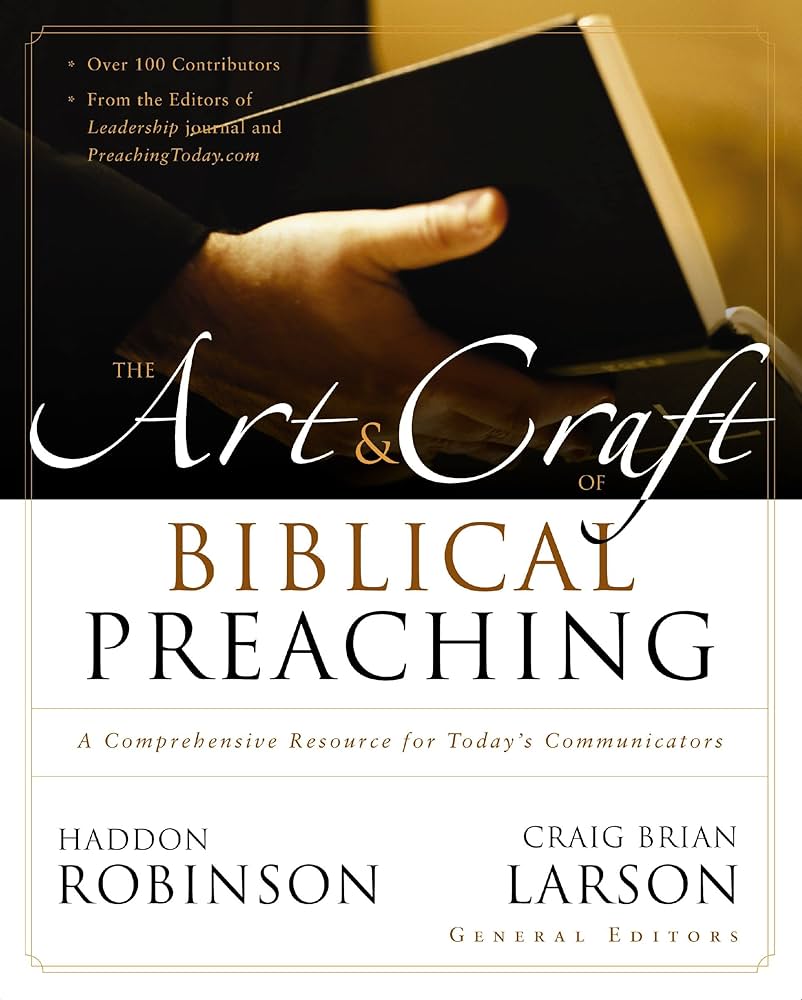
Art & Craft of Biblical Preaching
A Comprehensive Resource for Today’s Communicators
-
The High Call of Preaching
- 1 Core Convictions of Biblical Preaching
- 2 A Definition of Biblical Preaching
- 3 A Weekly Dose of Compressed Dignity
- 4 Overfed, Underchallenged
- 5 Theology of Powerful Preaching
- 6 Preaching That Raises Our Sights
- 7 Leading and Feeding: How Preaching and Leadership Intersect
- 8 John 3:16 in the Key of C
- 9 Spiritual Formation through Preaching
- 10 Preaching Life into the Church
- 11 My Theory of Homiletics
- 12 Staying on the Line
- 13 History of Preaching
-
The Spiritual Life of a Preacher
- 14 A Cup Running Over
- 15 The Patented Preacher
- 16 I Prayed for My Preaching
- 17 How Does Unction Function?
- 18 Squeaky Clean
- 19 Required Reading
- 20 Rightly Dividing the Preaching Load
- 21 Preaching Through Personal Pain
- 22 A Prophet among You
- 23 Burning Clean Fuel
- 24 Backdraft Preaching
- 25 Why I Pace Before I Preach
- 26 Preaching to Convulse the Demons
- 27 Holy Expectation
-
Considering Hearers
- 28 Preaching to Everyone in Particular
- 29 The Power of Simplicity
- 30 View from the Pew
- 31 Preaching to Ordinary People
- 32 Why Serious Preachers Use Humor
- 33 Connect Hearers through Dialogue
- 34 Self-Disclosure That Glorifies Christ
- 35 How to Be Heard
- 36 Opening the Closed American Mind
- 37 Turning an Audience into the Church
- 38 Preaching to Change the Heart
- 39 Preaching Truth, Justice, and the American Way
- 40 Preaching Morality in an Amoral Age
- 41 The Intentional Bridge Builder
- 42 Connecting with Postmoderns
- 43 Preaching Amid Pluralism
- 44 Connecting with Non-Christians
- 45 How to Translate Male Sermons to Women
- 46 He Said, She Heard
- 47 Connecting with Men
- 48 Creating a Singles-Friendly Sermon
- 49 Preaching to Preschoolers
- 50 Hispanic American Preaching
- 51 African American Preaching
- 52 Asian American Preaching
- 53 Work Wins?
- 54 One Sermon, Two Messages
- 55 The Playful Preacher
- 56 What Authority Do We Have Anymore?
-
Interpretation and Application
- 57 Why the Sermon?
- 58 Getting the Gold from the Text
- 59 Faithful First
- 60 God’s Letter of Intent
- 61 Five Bird-dogging Questions for Biblical Exposition
- 62 The Rules of the Game
- 63 Why All the Best Preachers Are–What a Concept!–Theological
- 64 Letting the Listeners Make the Discoveries
- 65 Conviction and Compassion
- 66 The Inadequacy of “Yes” Theology
- 67 What Great Coaches and Preachers Know
- 68 Preaching That Opens Ears and Hearts
- 69 Fundamentals of Genre
- 70 From B.C. to 11 a.m.
- 71 The Big Idea of Narrative Preaching
- 72 Apply Within
- 73 Application Without Moralism
- 74 Blending Bible Content and Life Application
- 75 Showing Promise
- 76 Helping Hearers Practice What We Preach
- 77 The Heresy of Application
- 78 Preaching for True Holiness
- 79 Less Joe, More Jesus
- 80 Preaching That Promotes Self-Centeredness
- 81 The Danger of Practical Preaching
- 82 Grace: A license to Wander?
- 83 The Rich Sound of Grace and Holiness
-
Structure
- 84 Set Free from the Cookie Cutter
- 85 Say and Do
- 86 Connecting Biblical Content with Contemporary Audiences
- 87 Clearly
- 88 Skills of Oral Clarity
- 89 Questions That Put Muscle on Bones
- 90 Better Big Ideas
- 91 The Power of Sequence
- 92 Outlines That Work for You, Not against You
- 93 The Tension Between Clarity and Suspense
- 94 Lifeblood of Preaching
- 95 Alliteration Downfalls
- 96 Modulating Tension
- 97 The Purpose-Driven Title
- 98 Why Should I Listen to You?
- 99 Satisfying Conclusions
-
Style
- 100 Determining Your Strengths and Weaknesses
- 101 Interesting Preaching
- 102 Crafting an Experience
- 103 Seven Habits of Highly Effective Preachers
- 104 The Sermon’s Mood
- 105 Teaching the Whole Bible
- 106 Dramatic Expository Preaching
- 107 Verse-by-Verse Sermons That Really Preach
- 108 What Makes Textual Preaching Unique?
- 109 Can Topical Preaching Be Expository?
- 110 Topical Preaching Can Be Truly Biblical
- 111 Topical Preaching on Bible Characters
- 112 Topical Preaching on Contemporary Issues
- 113 Topical Preaching on Theological Themes
- 114 Making the Most of Biblical Paradoxes
- 115 Getting the Most from the Sermon Series
- 116 The Next Big Thing
- 117 The Compelling Series
- 118 First Person Narrative Sermons
- 119 Biblical Preaching Is about Life Change, Not Sermon Style
- 120 Seven Timeless Principles for Reaching Lost People
- 121 Evangelistic Preaching in the Local Church
- 122 Felt-Needs Preaching
- 123 How to Preach Boldly in a “Whatever” Culture
- 124 Preaching with a Leader’s Heart
- 125 Critique of the New Homiletic
-
Preparation
- 142 Why I Pat the Bible on My Nightstand
- 143 Busting Out of Sermon Block
- 144 Centered
- 145 A Long, Rich Conversation with God
- 146 A Mysterious Impulse to Pray
- 147 Preparing the Messenger
- 148 The Hard Work of Illumination
- 149 Heart-to-Heart Preaching
- 150 Imagination: The Preacher’s Neglected Ally
- 151 Preaching That Magnifies God
- 152 When Is a Sermon Good Enough?
- 153 How to Build a First-Rate Library
- 154 What Makes a Sermon Deep?
- 155 Before You Preach
- 156 Inspiration Points
- 157 Simplify
- 158 Using Someone Else’s Sermon
- 159 Planning for a Richer, Deeper Sermon Series
-
Delivery
- 160 The Source of Passion
- 161 Place of Pathos in Preaching
- 162 Preaching with Intensity
- 163 No Notes, Lots of Notes, Brief Notes
- 164 In the Eye of the Hearer
- 165 No Voice, No Preach
- 166 Eliminating My Um, Um, Annoying Pulpit Mannerisms
- 167 Reading Scripture in Public
- 168 The Importance of Being Urgent
- 169 The Day I Lost My Nerve
-
Special Topics
- 170 When You Don’t Look Forward to Special Days
- 171 Preaching the Terrors
- 172 Preparing People to Suffer
- 173 Preaching Hell in a Tolerant Age
- 174 Speaking into Crisis
- 175 When the News Intrudes
- 176 Redemptive Sermons for Weddings and Funerals
- 177 The Landmark Sermon
- 178 You Had to Bring It Up
- 179 Preaching on Contemporary Issues
- 180 Preaching Sex with Compassion and Conviction
- 181 The Ever-More-Difficult Marriage Sermon
- 182 When the Sermon Goes to Work
- 183 Bridging the Marketplace Gap
- 184 Sermons on Giving That People Actually Like!
Many preachers are taught a well-organized sermon requires a clear preview and review. Tell the audience what you will say, say it, and then tell them what you said.
Hogwash! I can't think of a more tedious way to communicate the Good News than to sap it of all intrigue.
Movies, novels, stories, even jokes—every effective communication medium uses suspense as part of its appeal. Every one, that is, except the sermon. In an effort to be clear and concise, many sermon writers have jettisoned the element of suspense, leaving their outlines with all the wonder of a dishwasher instruction manual.
Suspense keeps listeners involved. Who walks away from a joke half-told? Anticipation of the punch line grips the listeners. Yet people routinely tune out in the middle of sermons. Why? There's no suspense.
Master storytellers can speak much longer than a preacher, yet maintain the rapt attention of their audience. Garrison Keillor, for example, knows how to keep the audience hooked by "letting out" his story one incident at a time. He doesn't announce what a story will be about, who will be involved, or how it will end.
You don't need to be as gifted as Garrison Keillor to make good use of suspense in preaching. Suspense is simply the withholding of information followed by its strategic release. As the word implies, it's a "suspending" of the communication process. Incorporating a variety of tension and release moments involves the listeners, intellectually and emotionally, throughout the message.
We can learn the art of suspense from storytellers, but be warned: their lessons may contradict what the experts taught you.
Don't say too much
Preachers often structure their sermons like an academic lecture—three bullet-points and an illustration for each. Thinking of the sermon as a story, however, creates the potential for building suspense. I don't mean adding stories to the sermon. I mean thinking of the entire sermon as a story, a novel slowly unwinding.
Stories build suspense because the ending is withheld. So look at your sermon. Is anything being withheld? Or are you giving away the ending too early? Like a good novelist, a pastor who conceals a plot twist captures the listener.
Even familiar passages become riveting when given a suspenseful twist. For example, if the first half of a sermon on the Golden Rule from Matthew 7 stresses not the "do unto others" part, but instead the importance of knowing your own needs, you can raise the possibility that this teaching of Jesus sounds self-centered. That's the idea. It's part of the suspense.
After making the case for knowing your needs, the preacher can throw in the sudden plot twist. "Now that you've discovered how to identify your needs, realize Jesus' purpose was not for you to get them met, but for you to meet that need in someone else. Your own needs are the seeds for serving others."
The sermon that announces instead, "Today, we'll examine how to identify our needs in order to discern the needs of others," squanders the opportunity to keep the listeners baited for the application. The simple suspending of the communication process is more likely to keep listeners' attention.
Oddly enough, it is possible for a sermon to be too clear. Jesus was willing to trade clarity for mystery, knowing a mystified person will be more affected by the truth than a bored one.
In John 16:16, at the Last Supper, Jesus teases his disciples with "In a little while you will see me no more, and then after a little while you will see me." His message is cryptic. He lets the disciples turn that teaching over in their heads and speculate about what he might mean.
"Some of his disciples said to one another, 'What does he mean by saying, "In a little while you will see me no more, and then after a little while you will see me," and "Because I am going to the Father"?' They kept asking, 'What does he mean by "a little while"? We don't understand what he is saying'" (John 16:1718). He waits until they're really hungry for answers before he offers his meaning.
Long before cultural gurus were analyzing postmodern thinking process and concluding that people don't want to be told all the answers, Jesus was cultivating questions in the minds of his hearers. Gnawing questions led them to pursue answers. May we be as subtle, and as bold.
Jesus also avoided a common pitfall that saps suspense from many sermons. His preaching struck images that made his audience acutely uncomfortable. He issued strong warnings laced with hyperbole. Yet today's sermons are often so balanced and innocuous that few can protest. Scarcely does a strong statement slip from a preacher's lips before he begins back-pedaling and explaining away its power.
When preaching about the prosperity of the righteous from Psalm 1, we could balance it right away by acknowledging that Scripture does not promise constant prosperity, but that would rob the message of its suspense.
If instead, we preach uncompromisingly about how God does bless the righteous, a tension fills the room. People wrestle with the idea, examine their theology against their experience, and wonder how the preacher intends to apply this teaching. And isn't the goal of preaching to cause people to wrestle and examine and apply?
Once the issue has been successfully framed, then it can be counter-balanced if necessary. "Now at this point some of you are thinking, Wait a minute. It doesn't always work that way … "
Suspenseful preaching allows Scripture to make strong statements without dousing them too quickly. Audiences need to squirm a little under the heat.
The sound of symbols
A sermon doesn't have to be simply an auditory experience. The more sensory experiences built into the sermon, the more engaging it becomes. After all, Jesus said, "Show me the coin used for paying the tax." And when they brought him a denarius, he asked, "Whose portrait is this? And whose inscription?" (Matthew 22:1920). Can you imagine the curiosity that asking for a coin aroused? Jesus had their undivided attention.
- Can't finish right now?
I recently started a sermon with a battered, old chair to the left of the pulpit. It was there throughout the worship, leaving people to wonder who forgot to take out the trash. But when it came time to preach on God's passion for restoring broken-down lives, I had the visual cue right beside me. The tension, which had been building since I started, was released.
Many pastors are realizing that object lessons are no longer just for Sunday school. But if we wait to bring out the prop until it's needed, we've missed an opportunity to utilize suspense.
I started another sermon with a Styrofoam cup and a hand-crafted ceramic mug sitting on top of the pulpit. I offered no explanation for their presence. Later in the sermon, I used the cup to illustrate a mass-produced object designed only for temporary use. The hand-made mug demonstrated the lasting value of God's individual workmanship. I challenged the congregation not to be Styrofoam Christians. Instead I called them to demonstrate the creativity and thumbprint of the Potter.
Baiting the hook
A final tool for preaching with suspense is the sermon title. Typically, this is the congregation's first glimpse of the message. If they see "Five Ways to Improve Your Marriage" or "God's Passion for Good Marriages," they already know the topic and tone, and can probably guess what the conclusion will be. Little curiosity is aroused.
On the other hand, a title like "What Marriage Seminars Will Never Teach You" starts to build suspense before the preacher utters a word. A suspenseful title leaves people wondering what they might miss if they don't "tune in" on Sunday.
From the cover, to the illustrations, to the plot itself, a suspenseful story captures attention and imagination. Suspense in a sermon can do the same