Table of contents
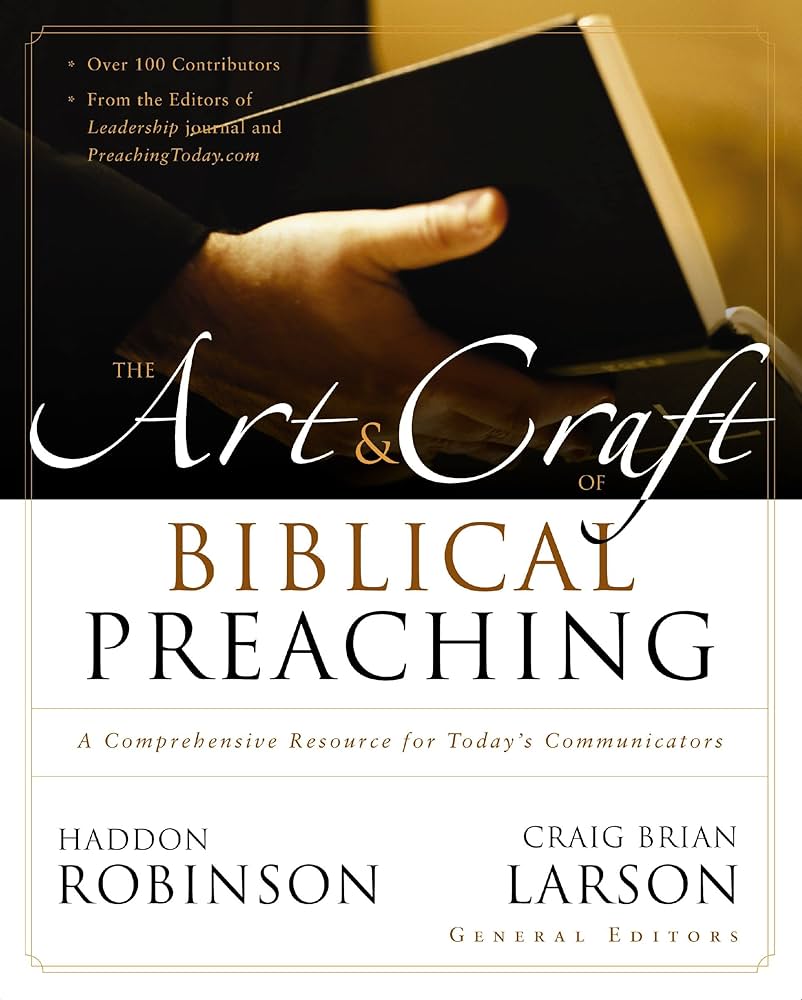
Art & Craft of Biblical Preaching
A Comprehensive Resource for Today’s Communicators
-
The High Call of Preaching
- 1 Core Convictions of Biblical Preaching
- 2 A Definition of Biblical Preaching
- 3 A Weekly Dose of Compressed Dignity
- 4 Overfed, Underchallenged
- 5 Theology of Powerful Preaching
- 6 Preaching That Raises Our Sights
- 7 Leading and Feeding: How Preaching and Leadership Intersect
- 8 John 3:16 in the Key of C
- 9 Spiritual Formation through Preaching
- 10 Preaching Life into the Church
- 11 My Theory of Homiletics
- 12 Staying on the Line
- 13 History of Preaching
-
The Spiritual Life of a Preacher
- 14 A Cup Running Over
- 15 The Patented Preacher
- 16 I Prayed for My Preaching
- 17 How Does Unction Function?
- 18 Squeaky Clean
- 19 Required Reading
- 20 Rightly Dividing the Preaching Load
- 21 Preaching Through Personal Pain
- 22 A Prophet among You
- 23 Burning Clean Fuel
- 24 Backdraft Preaching
- 25 Why I Pace Before I Preach
- 26 Preaching to Convulse the Demons
- 27 Holy Expectation
-
Considering Hearers
- 28 Preaching to Everyone in Particular
- 29 The Power of Simplicity
- 30 View from the Pew
- 31 Preaching to Ordinary People
- 32 Why Serious Preachers Use Humor
- 33 Connect Hearers through Dialogue
- 34 Self-Disclosure That Glorifies Christ
- 35 How to Be Heard
- 36 Opening the Closed American Mind
- 37 Turning an Audience into the Church
- 38 Preaching to Change the Heart
- 39 Preaching Truth, Justice, and the American Way
- 40 Preaching Morality in an Amoral Age
- 41 The Intentional Bridge Builder
- 42 Connecting with Postmoderns
- 43 Preaching Amid Pluralism
- 44 Connecting with Non-Christians
- 45 How to Translate Male Sermons to Women
- 46 He Said, She Heard
- 47 Connecting with Men
- 48 Creating a Singles-Friendly Sermon
- 49 Preaching to Preschoolers
- 50 Hispanic American Preaching
- 51 African American Preaching
- 52 Asian American Preaching
- 53 Work Wins?
- 54 One Sermon, Two Messages
- 55 The Playful Preacher
- 56 What Authority Do We Have Anymore?
-
Interpretation and Application
- 57 Why the Sermon?
- 58 Getting the Gold from the Text
- 59 Faithful First
- 60 God’s Letter of Intent
- 61 Five Bird-dogging Questions for Biblical Exposition
- 62 The Rules of the Game
- 63 Why All the Best Preachers Are–What a Concept!–Theological
- 64 Letting the Listeners Make the Discoveries
- 65 Conviction and Compassion
- 66 The Inadequacy of “Yes” Theology
- 67 What Great Coaches and Preachers Know
- 68 Preaching That Opens Ears and Hearts
- 69 Fundamentals of Genre
- 70 From B.C. to 11 a.m.
- 71 The Big Idea of Narrative Preaching
- 72 Apply Within
- 73 Application Without Moralism
- 74 Blending Bible Content and Life Application
- 75 Showing Promise
- 76 Helping Hearers Practice What We Preach
- 77 The Heresy of Application
- 78 Preaching for True Holiness
- 79 Less Joe, More Jesus
- 80 Preaching That Promotes Self-Centeredness
- 81 The Danger of Practical Preaching
- 82 Grace: A license to Wander?
- 83 The Rich Sound of Grace and Holiness
-
Structure
- 84 Set Free from the Cookie Cutter
- 85 Say and Do
- 86 Connecting Biblical Content with Contemporary Audiences
- 87 Clearly
- 88 Skills of Oral Clarity
- 89 Questions That Put Muscle on Bones
- 90 Better Big Ideas
- 91 The Power of Sequence
- 92 Outlines That Work for You, Not against You
- 93 The Tension Between Clarity and Suspense
- 94 Lifeblood of Preaching
- 95 Alliteration Downfalls
- 96 Modulating Tension
- 97 The Purpose-Driven Title
- 98 Why Should I Listen to You?
- 99 Satisfying Conclusions
-
Style
- 100 Determining Your Strengths and Weaknesses
- 101 Interesting Preaching
- 102 Crafting an Experience
- 103 Seven Habits of Highly Effective Preachers
- 104 The Sermon’s Mood
- 105 Teaching the Whole Bible
- 106 Dramatic Expository Preaching
- 107 Verse-by-Verse Sermons That Really Preach
- 108 What Makes Textual Preaching Unique?
- 109 Can Topical Preaching Be Expository?
- 110 Topical Preaching Can Be Truly Biblical
- 111 Topical Preaching on Bible Characters
- 112 Topical Preaching on Contemporary Issues
- 113 Topical Preaching on Theological Themes
- 114 Making the Most of Biblical Paradoxes
- 115 Getting the Most from the Sermon Series
- 116 The Next Big Thing
- 117 The Compelling Series
- 118 First Person Narrative Sermons
- 119 Biblical Preaching Is about Life Change, Not Sermon Style
- 120 Seven Timeless Principles for Reaching Lost People
- 121 Evangelistic Preaching in the Local Church
- 122 Felt-Needs Preaching
- 123 How to Preach Boldly in a “Whatever” Culture
- 124 Preaching with a Leader’s Heart
- 125 Critique of the New Homiletic
-
Preparation
- 142 Why I Pat the Bible on My Nightstand
- 143 Busting Out of Sermon Block
- 144 Centered
- 145 A Long, Rich Conversation with God
- 146 A Mysterious Impulse to Pray
- 147 Preparing the Messenger
- 148 The Hard Work of Illumination
- 149 Heart-to-Heart Preaching
- 150 Imagination: The Preacher’s Neglected Ally
- 151 Preaching That Magnifies God
- 152 When Is a Sermon Good Enough?
- 153 How to Build a First-Rate Library
- 154 What Makes a Sermon Deep?
- 155 Before You Preach
- 156 Inspiration Points
- 157 Simplify
- 158 Using Someone Else’s Sermon
- 159 Planning for a Richer, Deeper Sermon Series
-
Delivery
- 160 The Source of Passion
- 161 Place of Pathos in Preaching
- 162 Preaching with Intensity
- 163 No Notes, Lots of Notes, Brief Notes
- 164 In the Eye of the Hearer
- 165 No Voice, No Preach
- 166 Eliminating My Um, Um, Annoying Pulpit Mannerisms
- 167 Reading Scripture in Public
- 168 The Importance of Being Urgent
- 169 The Day I Lost My Nerve
-
Special Topics
- 170 When You Don’t Look Forward to Special Days
- 171 Preaching the Terrors
- 172 Preparing People to Suffer
- 173 Preaching Hell in a Tolerant Age
- 174 Speaking into Crisis
- 175 When the News Intrudes
- 176 Redemptive Sermons for Weddings and Funerals
- 177 The Landmark Sermon
- 178 You Had to Bring It Up
- 179 Preaching on Contemporary Issues
- 180 Preaching Sex with Compassion and Conviction
- 181 The Ever-More-Difficult Marriage Sermon
- 182 When the Sermon Goes to Work
- 183 Bridging the Marketplace Gap
- 184 Sermons on Giving That People Actually Like!
Topical preaching that is truly biblical is
- through a common subject
- and through either parallel or progressive assertions about that subject.
The danger in topical preaching is we may short-cut the exegesis of a passage and fail to get the true point of the biblical author.
Let's unpack each of these bullets.
First, a topical message, as all good preaching, attempts to communicate a single idea — one central truth, one dominant sentence that expresses the sermon in a nutshell.
Second, this central truth is formed from several different passages, each of which genuinely addresses the same specific subject.
It is at this point that many topical messages go biblically astray, as the preacher makes a passage speak about a subject other than the one intended by the biblical writer.
For example, a preacher who delivers a message on "How to Parent Teenagers" might be tempted to include James 1:19 among his main points: "Be swift to hear, slow to speak, and slow to become angry."
But James is not talking about parenting teenagers. Instead, his flow of thought through chapter 1 is:
The danger in topical preaching is we may short-cut the exegesis of a passage, fail to get the true point of the biblical author, and instead attach his words to a topic far different from what he had in mind.
In a sermon on "A Man after God's Own Heart" (1 Samuel 13:14) the preacher might be tempted to highlight David's
I. Fearless Trust (1 Samuel 17) II. Generous Devotion (1 Chronicles 29) III. Genuine Confession (Psalm 51)
But none of these passages is intended by the biblical author to explain what made David a man after God's own heart. The selection is purely arbitrary on the part of the preacher, who could have just as inappropriately listed David's "Skillful Songwriting," and thus eliminated most of us from ever qualifying as a person after God's heart.
Instead, the context of 1 Samuel 13-15 clearly shows which of David's traits the biblical author has in mind. David, in contrast to Saul, will "keep the Lord's command"; he will obey everything God says (13:14; 15:19-27; Acts 13:22). This unswerving obedience, and not any of the factors above, is what made David a man after God's own heart.
Biographical sermons are especially vulnerable to this abuse of using verses to establish points unintended by the biblical author. For example, a sermon on "What Are the Marks of a Spirit-Filled Man?" based on the life of Philip (Acts 6:3-5), would certainly be suspect if its main points were
I. A Spirit-filled man will leave a successful ministry and labor unknown in a desolate region (Acts 8:4-8, 26-40). II. A Spirit-filled man will channel his daughters into celibate ministries (Acts 21:8-9).
There is no suggestion in the text that Philip was struggling with the decision to relocate. For all we know, he had completed God's mission in Samaria and was anticipating returning to his home in Jerusalem. Nor is his Gaza road assignment a posting to a desolate region. Instead, he is walking just outside the Jerusalem city limits, on the road that leads south through the desert to Gaza, and is being overtaken by the traffic exiting from the city.
The point of Acts 8 is not the ministry choices a godly man should make, but rather how the Spirit is expanding the church into previously excluded countries and social classes. And, obviously, point II is an absurd extreme of what can result when we incorrectly attach biblical statements to our chosen topics.
Topical preaching that is truly biblical thoroughly studies each individual passage in its context to make sure the biblical author is genuinely talking about the speaker's chosen subject. Properly done, topical preaching will result in profitable messages, such as
"How to Be a Good Husband" I. Live considerately (1 Peter 3:7). II. Love sacrificially (Ephesians 5:25-33).
Or, in a message on "Honor Your Father and Mother"
I. In our early years, we honor our parents by obeying them (Ephesians 6:1-3). II. In our middle years, we honor our parents by respecting them (Leviticus 19:3, 32). III. In our mature years, we honor our parents by assisting them financially. A. Assisting our parents financially comes ahead of commitments to the Lord's work (Matthew 15:1-9). B. Assisting our parents financially shows our own genuine godliness (1 Timothy 5:3-8).
Sometimes a speaker may be tempted to use a general verse to speak to a specific topic. For example, in the above message on "How to Be a Good Husband," the speaker may be tempted to include "Forgive freely" (Colossians 3:13) as one of the main points. Or, in the message on "Honor Your Father and Mother," the speaker may be inclined to make the point, "We honor our parents by being kind and compassionate toward them" (Ephesians 4:32). While such statements may be true, the listener senses: We're supposed to do this to everybody; that Scripture is not uniquely about husbands, or parents.
In such cases, it is better to preach a passage exposition on the specific verse, rather than a topical exposition on a subject. In a passage exposition on Colossians 3:13, the speaker would explain what it means to freely forgive, and then apply this to many relationships in life — husbands, wives, parents, co-workers. Similarly, for Ephesians 4:32, the speaker would explain kindness and compassion, and then illustrate how we could show these to many different people — parents, spouses, children, harried sales clerks, and so on. In this way the topical speaker saves specific verses for their specific subjects, and the result is a message that has greater focus, penetration, and impact.
Finally, in biblical topical preaching, the subject will develop into a central truth by means of either parallel or progressive assertions.
The assertions will be parallel when each individual passage answers the same specific question about the subject. For example, in a sermon on "God Speaks to You," each of the main points answers the same question, "How does God speak to us?"
I. Through creation (Psalm 19:1-6; Romans 1:18-20) II. Through conscience (Romans 2:14-15) III. Through Christ, the incarnate Word (Hebrews 1:1-5) IV. Through Scripture, the written Word (2 Timothy 3:16-17; 2 Peter 1:20-21).
The assertions will be progressive when each individual passage answers a different question about the subject. For example, a message on "Fasting" might address the questions,
The main point assertions would progressively develop into a central truth along the lines of:
Done correctly, topical preaching can lead to a more comprehensive understanding of a biblical doctrine or subject. But done incorrectly, it can lead to ideas the Bible never intended to say. We need to study thoroughly and organize carefully, to be sure we can say, "Thus saith the Lord."
To respond to the editor, click here.