Table of contents
Art & Craft of Biblical Preaching
A Comprehensive Resource for Today’s Communicators
-
The High Call of Preaching
- 1 Core Convictions of Biblical Preaching
- 2 A Definition of Biblical Preaching
- 3 A Weekly Dose of Compressed Dignity
- 4 Overfed, Underchallenged
- 5 Theology of Powerful Preaching
- 6 Preaching That Raises Our Sights
- 7 Leading and Feeding: How Preaching and Leadership Intersect
- 8 John 3:16 in the Key of C
- 9 Spiritual Formation through Preaching
- 10 Preaching Life into the Church
- 11 My Theory of Homiletics
- 12 Staying on the Line
- 13 History of Preaching
-
The Spiritual Life of a Preacher
- 14 A Cup Running Over
- 15 The Patented Preacher
- 16 I Prayed for My Preaching
- 17 How Does Unction Function?
- 18 Squeaky Clean
- 19 Required Reading
- 20 Rightly Dividing the Preaching Load
- 21 Preaching Through Personal Pain
- 22 A Prophet among You
- 23 Burning Clean Fuel
- 24 Backdraft Preaching
- 25 Why I Pace Before I Preach
- 26 Preaching to Convulse the Demons
- 27 Holy Expectation
-
Considering Hearers
- 28 Preaching to Everyone in Particular
- 29 The Power of Simplicity
- 30 View from the Pew
- 31 Preaching to Ordinary People
- 32 Why Serious Preachers Use Humor
- 33 Connect Hearers through Dialogue
- 34 Self-Disclosure That Glorifies Christ
- 35 How to Be Heard
- 36 Opening the Closed American Mind
- 37 Turning an Audience into the Church
- 38 Preaching to Change the Heart
- 39 Preaching Truth, Justice, and the American Way
- 40 Preaching Morality in an Amoral Age
- 41 The Intentional Bridge Builder
- 42 Connecting with Postmoderns
- 43 Preaching Amid Pluralism
- 44 Connecting with Non-Christians
- 45 How to Translate Male Sermons to Women
- 46 He Said, She Heard
- 47 Connecting with Men
- 48 Creating a Singles-Friendly Sermon
- 49 Preaching to Preschoolers
- 50 Hispanic American Preaching
- 51 African American Preaching
- 52 Asian American Preaching
- 53 Work Wins?
- 54 One Sermon, Two Messages
- 55 The Playful Preacher
- 56 What Authority Do We Have Anymore?
-
Interpretation and Application
- 57 Why the Sermon?
- 58 Getting the Gold from the Text
- 59 Faithful First
- 60 God’s Letter of Intent
- 61 Five Bird-dogging Questions for Biblical Exposition
- 62 The Rules of the Game
- 63 Why All the Best Preachers Are–What a Concept!–Theological
- 64 Letting the Listeners Make the Discoveries
- 65 Conviction and Compassion
- 66 The Inadequacy of “Yes” Theology
- 67 What Great Coaches and Preachers Know
- 68 Preaching That Opens Ears and Hearts
- 69 Fundamentals of Genre
- 70 From B.C. to 11 a.m.
- 71 The Big Idea of Narrative Preaching
- 72 Apply Within
- 73 Application Without Moralism
- 74 Blending Bible Content and Life Application
- 75 Showing Promise
- 76 Helping Hearers Practice What We Preach
- 77 The Heresy of Application
- 78 Preaching for True Holiness
- 79 Less Joe, More Jesus
- 80 Preaching That Promotes Self-Centeredness
- 81 The Danger of Practical Preaching
- 82 Grace: A license to Wander?
- 83 The Rich Sound of Grace and Holiness
-
Structure
- 84 Set Free from the Cookie Cutter
- 85 Say and Do
- 86 Connecting Biblical Content with Contemporary Audiences
- 87 Clearly
- 88 Skills of Oral Clarity
- 89 Questions That Put Muscle on Bones
- 90 Better Big Ideas
- 91 The Power of Sequence
- 92 Outlines That Work for You, Not against You
- 93 The Tension Between Clarity and Suspense
- 94 Lifeblood of Preaching
- 95 Alliteration Downfalls
- 96 Modulating Tension
- 97 The Purpose-Driven Title
- 98 Why Should I Listen to You?
- 99 Satisfying Conclusions
-
Style
- 100 Determining Your Strengths and Weaknesses
- 101 Interesting Preaching
- 102 Crafting an Experience
- 103 Seven Habits of Highly Effective Preachers
- 104 The Sermon’s Mood
- 105 Teaching the Whole Bible
- 106 Dramatic Expository Preaching
- 107 Verse-by-Verse Sermons That Really Preach
- 108 What Makes Textual Preaching Unique?
- 109 Can Topical Preaching Be Expository?
- 110 Topical Preaching Can Be Truly Biblical
- 111 Topical Preaching on Bible Characters
- 112 Topical Preaching on Contemporary Issues
- 113 Topical Preaching on Theological Themes
- 114 Making the Most of Biblical Paradoxes
- 115 Getting the Most from the Sermon Series
- 116 The Next Big Thing
- 117 The Compelling Series
- 118 First Person Narrative Sermons
- 119 Biblical Preaching Is about Life Change, Not Sermon Style
- 120 Seven Timeless Principles for Reaching Lost People
- 121 Evangelistic Preaching in the Local Church
- 122 Felt-Needs Preaching
- 123 How to Preach Boldly in a “Whatever” Culture
- 124 Preaching with a Leader’s Heart
- 125 Critique of the New Homiletic
-
Preparation
- 142 Why I Pat the Bible on My Nightstand
- 143 Busting Out of Sermon Block
- 144 Centered
- 145 A Long, Rich Conversation with God
- 146 A Mysterious Impulse to Pray
- 147 Preparing the Messenger
- 148 The Hard Work of Illumination
- 149 Heart-to-Heart Preaching
- 150 Imagination: The Preacher’s Neglected Ally
- 151 Preaching That Magnifies God
- 152 When Is a Sermon Good Enough?
- 153 How to Build a First-Rate Library
- 154 What Makes a Sermon Deep?
- 155 Before You Preach
- 156 Inspiration Points
- 157 Simplify
- 158 Using Someone Else’s Sermon
- 159 Planning for a Richer, Deeper Sermon Series
-
Delivery
- 160 The Source of Passion
- 161 Place of Pathos in Preaching
- 162 Preaching with Intensity
- 163 No Notes, Lots of Notes, Brief Notes
- 164 In the Eye of the Hearer
- 165 No Voice, No Preach
- 166 Eliminating My Um, Um, Annoying Pulpit Mannerisms
- 167 Reading Scripture in Public
- 168 The Importance of Being Urgent
- 169 The Day I Lost My Nerve
-
Special Topics
- 170 When You Don’t Look Forward to Special Days
- 171 Preaching the Terrors
- 172 Preparing People to Suffer
- 173 Preaching Hell in a Tolerant Age
- 174 Speaking into Crisis
- 175 When the News Intrudes
- 176 Redemptive Sermons for Weddings and Funerals
- 177 The Landmark Sermon
- 178 You Had to Bring It Up
- 179 Preaching on Contemporary Issues
- 180 Preaching Sex with Compassion and Conviction
- 181 The Ever-More-Difficult Marriage Sermon
- 182 When the Sermon Goes to Work
- 183 Bridging the Marketplace Gap
- 184 Sermons on Giving That People Actually Like!
Stories work because they talk about people. People, their character traits and constant struggles, invest stories with interest and value. Even stories about the natural elements, man-made objects, or animals give people-like personalities to their characters. The sun competes with the wind to cause a traveler to remove his coat. Herbie saves the day and the girl for his friend. Babe wins the prize to help keep the farm. Stories work because of people.
The role the character plays in the story will determine the way the character can be preached.
Sermons work because of relevance. No one seeks information simply for information's sake. Even a trivia guru gains a sense of superiority over the ignorant masses. Our culture, especially, finds the value of preaching not so much in a knowledge of truth, but in relevance, the application of truth.
When people and relevance come together, as they do in topical biographical sermons, a preacher can anticipate an enthusiastic response. Perhaps the most popular form of preaching today is the topical biographical sermon.
You don't have to abandon faithful exposition to preach on Bible persons.
Like all topical expository sermons, topical biographical expository sermons follow the expositional model. Exposition takes a preacher progressively through an exegetical understanding of a text/paragraph, through a theological interpretation of the passage, through a homiletical application, and into practice. Topical expository preaching is a subset of exposition that takes two or more passages through this same process.
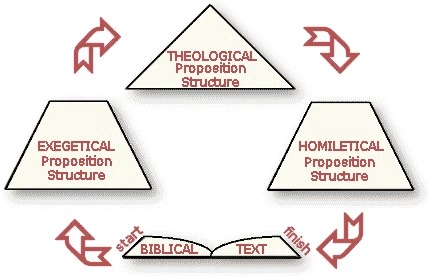
Topical biographical messages are based on a biblical character, the biblical story/stories that include that character, and especially, the biblical author's intended use of that character in the story/stories.
Two questions may help clarify this definition.
- Is a sermon topical if it does not expound two or more different texts/paragraphs in their own contexts? No. By definition topical preaching expounds two or more passages.
- Can we preach biographical sermons that are not topical? Yes. There must be hundreds of biblical characters that show up in one story line and then disappear, never to be mentioned again. Some of those characters, because of the specifically intended roles they play in the narrative, provide legitimate expositional material. Achan's story takes place in Joshua 7:1-26. His name appears only once after that, in Joshua 22:20, and only as a sermon illustration. Achan's biography, short as it is, intentionally models how to avoid God's judgment: don't covet, steal, deceive. True topical biographical expository sermons, however, deal with characters that appear in more than one passage, one unit of Scripture.
To be expository, your sermon must have a biblical mandate.
Some biographical sermons begin with the selection of a character from a biblical passage(s)—Abraham, David, Herod, Peter—and then develop a character trait that chosen individual's life mandates: faith, a heart after God's heart, submission, discipleship. Others start with a characteristic topic—dependence, loyal-love, leadership, or repentance—and then find a biblical character who's story mandates that trait: Jacob, Hosea, John the Baptizer, Paul.
No matter where the preacher starts the process, the challenge of topical biographical expository preaching will seldom be relevance, but rather the demonstration of a biblical mandate for what is being preached.
Two things are worth noting here. First, God uses other means than expository preaching to evangelize the lost and edify believers. I've heard many "talks" based on biblical characters that were interesting, relevant, true, even biblical. Many of those "devotionals" were beneficial, even challenging. But they were not expository because their messages were not developed from, nor were they shown to be the intended exegetical/theological message of, a specific passage or passages. So, you can "talk about" many helpful topics, but you shouldn't confuse that with, or substitute it for, expository preaching.
Second, the only way to demonstrate the intended message of any passage is to interpret it fully in preparation and then expound it sufficiently in presentation. If a preacher doesn't show that the subject of his message is the subject of the passage(s), and if he doesn't explain that the relevant application of that message is, at some level, intended by his passage(s), then he shouldn't call it preaching. In summary, you need not take a biblical text/paragraph to say many interesting, relevant, true, even biblical things, but if you call it expository preaching you'd better be able to demonstrate that your sermon idea is the intended message of your text(s)/paragraph(s).
As a result, when you begin sermon preparation with the selection of a character, you have to ask why and how that character was included in the story. Does your character merely help carry the plot along so that the author can develop the theological message, or does your character intentionally model a mandated behavior? The role the character plays in the story will determine the way the character can be preached. (Editor's note: Timothy Warren plans to write an article for PreachingToday.com Journal before 2001 is out on how to determine whether a biblical character is intended to convey a particular message.)
I don't think Potiphar, a mere agent, was placed in the biblical record intentionally to model compassion when he imprisoned rather than executed Joseph (Genesis 39). I'm certain that Matthew's intent in Matthew 4:1-11 was not to use Jesus, though he is a major character, to mandate a strategy for resisting temptation. Matthew's intent was to prove that Jesus alone, unlike any other, could resist all temptations, a victory validating his messianic claim.
On the other hand, I could demonstrate that Judges intentionally used Jephthah, a major character in chapters Judges 11, to warn against succumbing to pagan influences (foolish vows, human sacrifice, extreme violence) that taint true worship. Mark intentionally contrasts the disloyalty of the religious authorities, major characters, with the loyalty demonstrated by the widow, a mere agent, who gave two coins out of her poverty (Mark 12:38-44). She is more than an illustration; she is held up as a model to imitate. The question every biographical preacher must ask is whether the character is an incidental illustration or an intentional model. I'm afraid that in our typical rush to relevance we often find more than the author intended.
Starting a biographical sermon with a character trait and then searching for a biblical character who's role in the narrative mandates that trait, requires a preacher to ask the same question. Is this trait merely illustrated in the life of this character, or is this trait mandated by the author's intent?
- Can't finish right now?
Caleb, for example, serves as more than an illustration of complete devotion to God. Three different texts report that, "He followed the Lord fully," (Numbers 32:12; Deuteronomy 1:36; Joshua 14:14). Caleb's complete devotion enabled him (1) to trust God to give Israel the promised land, (2) to escape God's judgment upon Israel in the wilderness, and (3) to inherit the blessings of the promised land. The biblical evaluations of Caleb's biography do more than illustrate devotion, they mandate complete devotion.
What I learned when I preached on the twelve disciples.
Preaching through Matthew pericope by pericope, I came upon the list of disciples in chapter Matthew 10:2-4. I thought a biographical series might provide a welcome change of pace. I was sure there would be many biblical principles to expound through topical biographical expositions on each of the disciples.
I found that the amount of material on each disciple varies enormously. Peter's name appears nearly 150 times in the New Testament, while Thaddaeus appears twice. Even James manages to do only one thing by himself: he's martyred in Acts 12:2. I quickly decided I wouldn't preach on Thaddaeus. And I had far too much material for a single, focused sermon on Peter.
I'm smiling as I think back on how I handled Peter and James. Most of what I preached in that series was not topical biographical exposition. Instead I preached textually, using the disciples as illustrations. My key text for Peter came from his last recorded words, 2 Peter 3:18, "Grow in the grace and knowledge of our Lord and Savior Jesus Christ."Peter says grow, Peter spent his life growing (lots of illustrations here), and you should grow. My text for James was John 12:24, "Except a grain of wheat falls into the earth and dies, it remains by itself alone, but if it dies, it bears much fruit." What a leap!
I am much more pleased to tell you about the true topical biographical expository sermon I preached on Thomas. Except when he appears in lists with the other disciples, Thomas shows up on only three occasions; all of them in John and all related to the subject of believing. I knew the purpose of John's Gospel was that his readers might believe in Jesus (John 20:31) and that believing was a key theological theme (the Greek term pisteuw is used nearly one hundred times in John). I had decided on my character, Thomas, and identified the three key passages I needed to study (John 11, John 14, and John 20). I also had a general notion that each passage emphasized belief. The question was whether my exegetical/theological interpretation would confirm or negate that notion.
In my judgment, John used Thomas on all three occasions to model a believing disciple. Granted, he was known as Doubting Thomas, but I discovered that was a misrepresentation. Unquestionably Thomas demonstrated the struggle of coming to belief, but that was John's point. Ultimately each story/pericope shows Thomas finding substantive reasons for believing in Jesus. My theological proposition went something like, "Believing disciples conquer all obstacles with belief." My homiletical proposition stated, "Keep on believing in Jesus." My outline (here abbreviated) developed as follows:
As in all topical expository preaching, a biographical sermon must find its topic/character in two or more passages. It must also convincingly demonstrate the author's intended use of the character to mandate a legitimate application. People and relevance make biographical sermons work. Genuine exposition makes them authoritative.