Table of contents
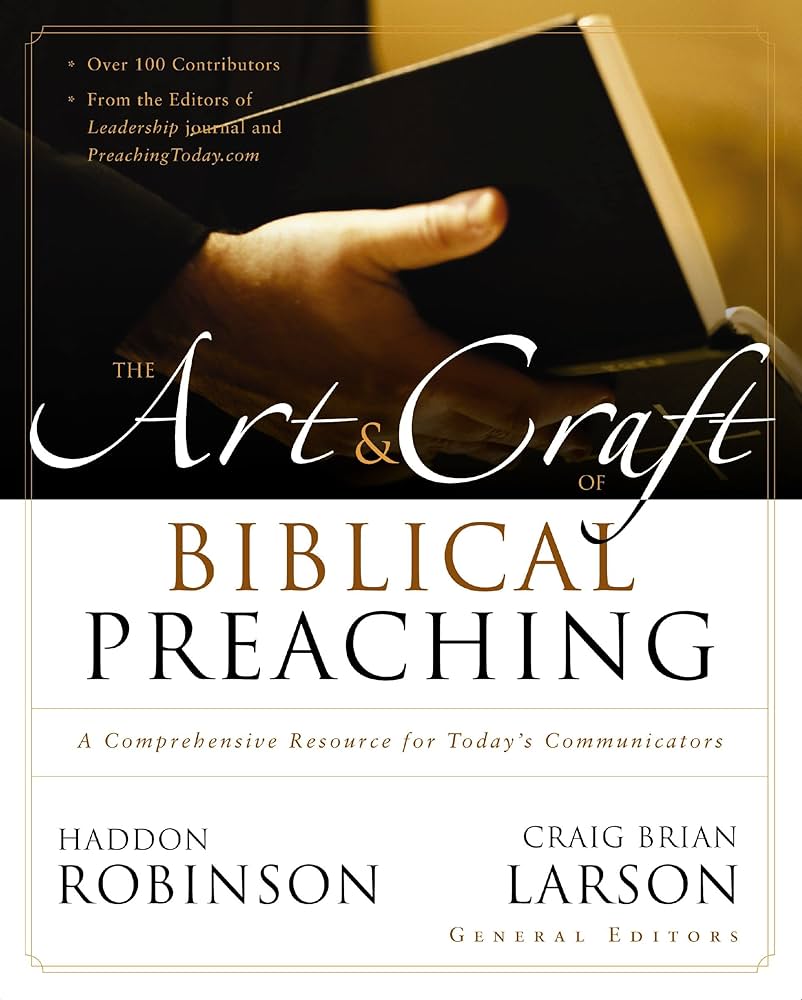
Art & Craft of Biblical Preaching
A Comprehensive Resource for Today’s Communicators
-
The High Call of Preaching
- 1 Core Convictions of Biblical Preaching
- 2 A Definition of Biblical Preaching
- 3 A Weekly Dose of Compressed Dignity
- 4 Overfed, Underchallenged
- 5 Theology of Powerful Preaching
- 6 Preaching That Raises Our Sights
- 7 Leading and Feeding: How Preaching and Leadership Intersect
- 8 John 3:16 in the Key of C
- 9 Spiritual Formation through Preaching
- 10 Preaching Life into the Church
- 11 My Theory of Homiletics
- 12 Staying on the Line
- 13 History of Preaching
-
The Spiritual Life of a Preacher
- 14 A Cup Running Over
- 15 The Patented Preacher
- 16 I Prayed for My Preaching
- 17 How Does Unction Function?
- 18 Squeaky Clean
- 19 Required Reading
- 20 Rightly Dividing the Preaching Load
- 21 Preaching Through Personal Pain
- 22 A Prophet among You
- 23 Burning Clean Fuel
- 24 Backdraft Preaching
- 25 Why I Pace Before I Preach
- 26 Preaching to Convulse the Demons
- 27 Holy Expectation
-
Considering Hearers
- 28 Preaching to Everyone in Particular
- 29 The Power of Simplicity
- 30 View from the Pew
- 31 Preaching to Ordinary People
- 32 Why Serious Preachers Use Humor
- 33 Connect Hearers through Dialogue
- 34 Self-Disclosure That Glorifies Christ
- 35 How to Be Heard
- 36 Opening the Closed American Mind
- 37 Turning an Audience into the Church
- 38 Preaching to Change the Heart
- 39 Preaching Truth, Justice, and the American Way
- 40 Preaching Morality in an Amoral Age
- 41 The Intentional Bridge Builder
- 42 Connecting with Postmoderns
- 43 Preaching Amid Pluralism
- 44 Connecting with Non-Christians
- 45 How to Translate Male Sermons to Women
- 46 He Said, She Heard
- 47 Connecting with Men
- 48 Creating a Singles-Friendly Sermon
- 49 Preaching to Preschoolers
- 50 Hispanic American Preaching
- 51 African American Preaching
- 52 Asian American Preaching
- 53 Work Wins?
- 54 One Sermon, Two Messages
- 55 The Playful Preacher
- 56 What Authority Do We Have Anymore?
-
Interpretation and Application
- 57 Why the Sermon?
- 58 Getting the Gold from the Text
- 59 Faithful First
- 60 God’s Letter of Intent
- 61 Five Bird-dogging Questions for Biblical Exposition
- 62 The Rules of the Game
- 63 Why All the Best Preachers Are–What a Concept!–Theological
- 64 Letting the Listeners Make the Discoveries
- 65 Conviction and Compassion
- 66 The Inadequacy of “Yes” Theology
- 67 What Great Coaches and Preachers Know
- 68 Preaching That Opens Ears and Hearts
- 69 Fundamentals of Genre
- 70 From B.C. to 11 a.m.
- 71 The Big Idea of Narrative Preaching
- 72 Apply Within
- 73 Application Without Moralism
- 74 Blending Bible Content and Life Application
- 75 Showing Promise
- 76 Helping Hearers Practice What We Preach
- 77 The Heresy of Application
- 78 Preaching for True Holiness
- 79 Less Joe, More Jesus
- 80 Preaching That Promotes Self-Centeredness
- 81 The Danger of Practical Preaching
- 82 Grace: A license to Wander?
- 83 The Rich Sound of Grace and Holiness
-
Structure
- 84 Set Free from the Cookie Cutter
- 85 Say and Do
- 86 Connecting Biblical Content with Contemporary Audiences
- 87 Clearly
- 88 Skills of Oral Clarity
- 89 Questions That Put Muscle on Bones
- 90 Better Big Ideas
- 91 The Power of Sequence
- 92 Outlines That Work for You, Not against You
- 93 The Tension Between Clarity and Suspense
- 94 Lifeblood of Preaching
- 95 Alliteration Downfalls
- 96 Modulating Tension
- 97 The Purpose-Driven Title
- 98 Why Should I Listen to You?
- 99 Satisfying Conclusions
-
Style
- 100 Determining Your Strengths and Weaknesses
- 101 Interesting Preaching
- 102 Crafting an Experience
- 103 Seven Habits of Highly Effective Preachers
- 104 The Sermon’s Mood
- 105 Teaching the Whole Bible
- 106 Dramatic Expository Preaching
- 107 Verse-by-Verse Sermons That Really Preach
- 108 What Makes Textual Preaching Unique?
- 109 Can Topical Preaching Be Expository?
- 110 Topical Preaching Can Be Truly Biblical
- 111 Topical Preaching on Bible Characters
- 112 Topical Preaching on Contemporary Issues
- 113 Topical Preaching on Theological Themes
- 114 Making the Most of Biblical Paradoxes
- 115 Getting the Most from the Sermon Series
- 116 The Next Big Thing
- 117 The Compelling Series
- 118 First Person Narrative Sermons
- 119 Biblical Preaching Is about Life Change, Not Sermon Style
- 120 Seven Timeless Principles for Reaching Lost People
- 121 Evangelistic Preaching in the Local Church
- 122 Felt-Needs Preaching
- 123 How to Preach Boldly in a “Whatever” Culture
- 124 Preaching with a Leader’s Heart
- 125 Critique of the New Homiletic
-
Preparation
- 142 Why I Pat the Bible on My Nightstand
- 143 Busting Out of Sermon Block
- 144 Centered
- 145 A Long, Rich Conversation with God
- 146 A Mysterious Impulse to Pray
- 147 Preparing the Messenger
- 148 The Hard Work of Illumination
- 149 Heart-to-Heart Preaching
- 150 Imagination: The Preacher’s Neglected Ally
- 151 Preaching That Magnifies God
- 152 When Is a Sermon Good Enough?
- 153 How to Build a First-Rate Library
- 154 What Makes a Sermon Deep?
- 155 Before You Preach
- 156 Inspiration Points
- 157 Simplify
- 158 Using Someone Else’s Sermon
- 159 Planning for a Richer, Deeper Sermon Series
-
Delivery
- 160 The Source of Passion
- 161 Place of Pathos in Preaching
- 162 Preaching with Intensity
- 163 No Notes, Lots of Notes, Brief Notes
- 164 In the Eye of the Hearer
- 165 No Voice, No Preach
- 166 Eliminating My Um, Um, Annoying Pulpit Mannerisms
- 167 Reading Scripture in Public
- 168 The Importance of Being Urgent
- 169 The Day I Lost My Nerve
-
Special Topics
- 170 When You Don’t Look Forward to Special Days
- 171 Preaching the Terrors
- 172 Preparing People to Suffer
- 173 Preaching Hell in a Tolerant Age
- 174 Speaking into Crisis
- 175 When the News Intrudes
- 176 Redemptive Sermons for Weddings and Funerals
- 177 The Landmark Sermon
- 178 You Had to Bring It Up
- 179 Preaching on Contemporary Issues
- 180 Preaching Sex with Compassion and Conviction
- 181 The Ever-More-Difficult Marriage Sermon
- 182 When the Sermon Goes to Work
- 183 Bridging the Marketplace Gap
- 184 Sermons on Giving That People Actually Like!
Crash-testing the text against the walls of real lives helps me find the weaknesses in my sermons.
Have you noticed that some preachers seem to think more deeply about a text than others? Their exegesis isn't necessarily better, and the depth isn't just from their lucid outline, revealing illustrations, or practical applications. But they see implications in the text others miss, connections to human experience others haven't pondered before. It is as though, in surveying the starry wonders of the passage, they have a telescope and others have binoculars.
I call that wisdom preaching. I think it is accomplished through what Eugene Peterson calls " contemplative exegesis. "
Wisdom preaching begins with careful exegesis and exposition. We must study hard — parse verbs, track context, consider the theological themes, grasp the author's logic. If we turn contemplative without thorough exegesis first, we will not think clearly or deeply. Our natural mind, even in considering a sublime subject, will take us astray, or not take us deep enough. So first we indoctrinate our mind with the text. Only hard study is likely to force our minds out of their spiritual clichs and allow us to think in fresh ways.
But as we study, and after we study, we must think. Of course, we are thinking all the time about how to explain words or concepts, how to apply and how to structure our message. But there is a deeper kind of thinking involved here.
I was in high school when I set out to think " deep thoughts. " Seeking to separate myself from " shallow " classmates I would go for long walks at night, preferably in a drizzle, and brood. But I kept running into a problem in my pursuit of deep thoughts — I couldn't think of anything.
Sometimes I feel that way in sermon preparation. I know I ought to be " deep, " but I can't seem to think of anything. But at other times I am finding ways to think about a sermon that I think are taking me beyond shallow clichs. Here are the tools that guide me in the spelunking of a text.
Don't substitute endless fact-finding for thinking Folks who love to study never want to stop. There is always one more word to trace, one more commentator to check out, a leftover handful of cross-references to read. But there is limited time to prepare a sermon, and if we take all our time in research and writing, we leave no time to ponder. We are not preparing a term paper; we are preparing our hearts as much as our heads.
Pester the passage Things I read in Scripture generally do not surprise me anymore. My first reaction is often, " Oh, I know that. " But I've learned to assume that, in fact, a text probably doesn't say what I expect. It almost surely goes deeper and takes more unexpected turns than meet even my practiced eye. So I've learned to think of a passage as something like a professor I know who will just answer my question if I ask, but who will tell all kinds of wonders if I pester him a little. So I pester the text each week.
Like many other pastors, I'm constantly amazed that often none of my commentaries answers the questions I have. That means I must nag the passage for answers. Actually I'm pestering the Holy Spirit to help me understand. " But why did you use this word? " " I don't see what this verse has to do with the one before it. " " Didn't you just say this? Why did you say it again? " " What would be missing if this weren't here? "
Let the passage pester me This is a form of prayer for me, listening prayer. I pray, of course, for understanding as I study and for help with concentration. But after I've done my exegesis, I try to pray — weave the text into me.
" Lord, " I once prayed, " the text says, 'Apart from you I have no good thing.' Where don't I live like that's true? " Some things came to mind. Then I had to decide if it was just my overcritical personality coming after me or if the Bible was exposing a weakness. That process of consideration helps me grow wise in the text. The Bible passage has just burrowed into me, and I have learned something of how the heart responds to this truth, and that will help me be a more penetrating preacher.
Mental doodling I like words. I find I think better as I write out my observations, so I fill several pages of musings each week: fragments of outlines, half-ideas, questions, running reflections, private prayers. Some of these things are ultimately useless; after I preach I throw most of them away. But this mental muttering helps me go deeper. I extrapolate the text: " If this is true, then. " I find fresh words to say familiar things, and find that the fresh words and metaphors help me see things I had missed in all my exegesis.
Know when to hold 'em; know when to fold 'em Books, I mean. We have all learned that insights we come to ourselves are more alive when we preach than those we get from someone else. There's something about the inner-transformation of personal discovery that comes through to our listeners. So there is a time to study and a time to stop.
Many pastors have learned the benefits of doing a serious amount of study before we turn to commentaries. We may use lexicons, other translations and the like, to be sure we are getting our facts straight, but we try to do our own thinking about the theology of the text, the structure, the importance of words. Then, when we turn to the books, they can test our conclusions and explain questions we just couldn't untangle.
But something else happens then, too. When we are full of the text, and we begin to read someone else's thoughts on it, their words springboard us to fresh thoughts of our own. The same kind of thing may happen when we just talk with someone else about what we've been studying. But if I haven't done considerable thinking on my own first, the books I read rarely stimulate my own ideas. I am a passive rather than active receiver.
- Can't finish right now?
Mine the metaphors Most Bible passages are rich in metaphors. Some are obvious ( " the full armor of God " ), and others are hidden in the original languages and lost in translation. Sometimes the metaphor is really the Bible story or parable. The power of metaphors is the power of suggestion. They are implicit, not explicit, truth. As a picture, they are worth a thousand words. Good preachers don't dissect metaphors; they frame them like beautiful pictures, so people see the wisdom hidden in them.
On a recent Preaching Today Audio Tape (#206), Tim Keller preaches on Jacob's marriages to Leah and Rachel from Genesis 29:15-35. At one point, he says, " No matter what your hopes for a project, no matter what your hopes for marriage, no matter what your hopes for a career, no matter what you hope in, in the morning it will always be Leah. No matter what you think is Rachel, it will always be Leah. " That is wisdom preaching in a metaphor.
Death to clichs One reason I write out a manuscript is to fight the clichs that seem to dominate my sermon without it. A clich is verbal shorthand. Some are overused phrases ( " lead, guide, and direct " ), and others are overused ideas ( " This Christmas, let us, like the Wise Men, lay our treasures before the Lord " ). It isn't that they are untrue, but that they are unheard. They become like white noise. They don't communicate much any longer. Wisdom preaching startles us with fresh phrases that arrest our thinking. In that same sermon by Tim Keller, he concludes by driving home the truth that though we may be ugly like Leah, God loves ugly people. Well, that is the clichd way of saying it. What Keller actually says is, " Is there anybody here who feels ugly? The only eyes that count are ravished by you. "
Browse the library of lives you have known When I am working through a text, people I've known come to mind. I test the verses against their stories. One Sunday morning years ago I had spoken on a text of great encouragement. After the sermon, a grieving mother came through the hand-shaking line and ambushed me. " It doesn't work, " is all she said. So now when I have a passage like that, I think, " What would keep someone from believing that this works? "
Once when I was preaching about Moses' excuses to God in Exodus 3, I called a pastor I know who stutters. " For Moses, stuttering was an excuse, " I said to him. " Why wasn't it for you? " His answer helped me make the sermon more practical. Many times, I've pushed God in my prayers, " Lord, I think I know what this text says, but I just don't see how it will make much difference to Dave or Marjie. I really don't think people will go home moved by this. What am I missing? " Crash-testing the text against the walls of real lives helps me find the weaknesses in my sermons and make them strong enough to keep people safe in real life.
Often on Sunday mornings, when I come to the end of a sermon, I inwardly marvel at the wisdom of God that I have been privileged to study and explain. By the gracious help of God's Spirit and Word, not only can we reveal the deep thoughts of God to our people, but those thoughts become our thoughts. From the flax of our foolishness God spins for us the gold of wisdom.