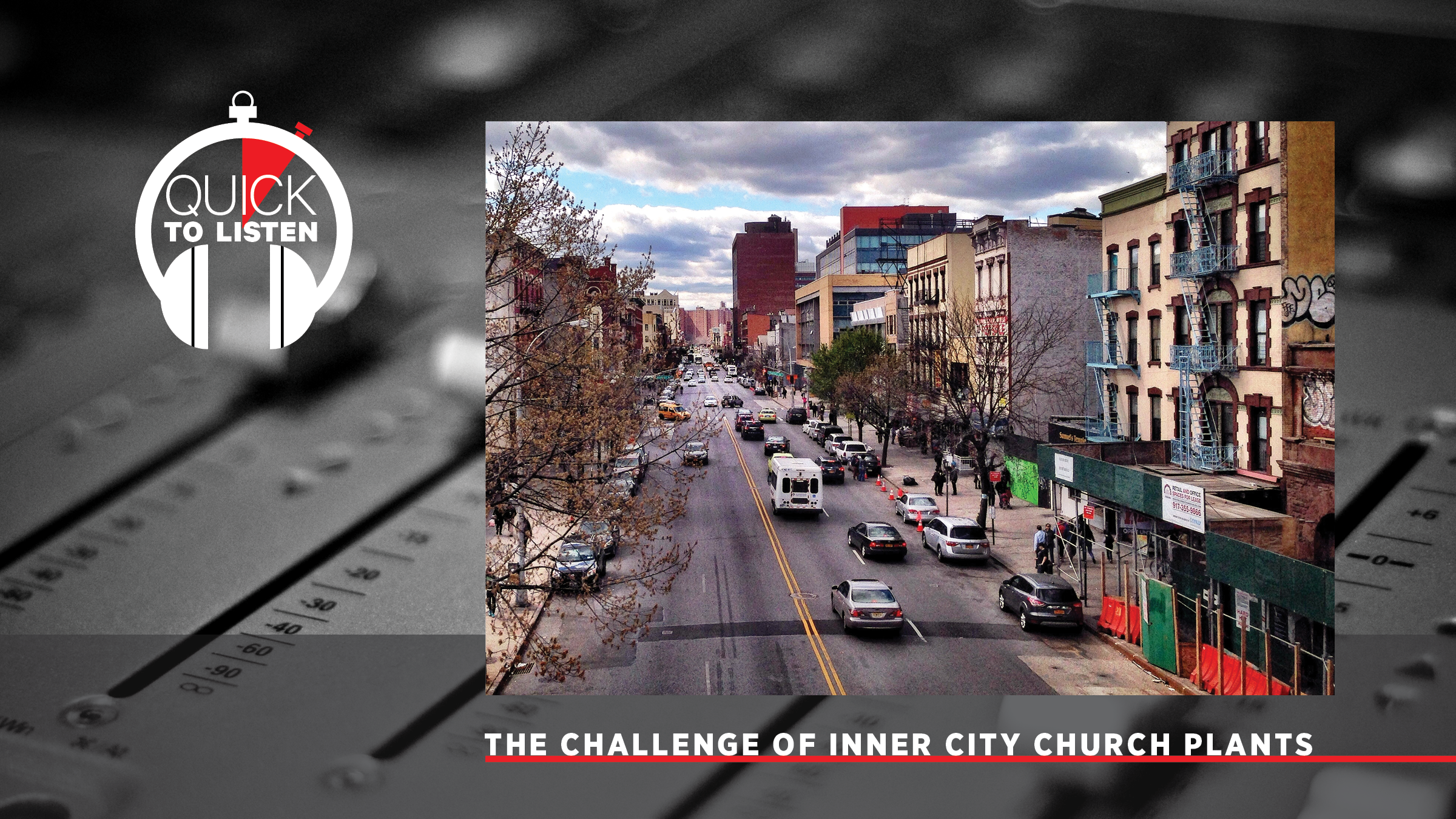
In 2011, The New York Times profiled several church plants in New York City trying to make it in Manhattan:
In recent decades the number of English-speaking evangelical churches south of Harlem has grown tenfold, to more than 100, said Tony Carnes, a researcher … who has studied New York churches since the 1970s. Without fanfare, the newcomers have created networks to pay for new churches and to form church-planting incubators, treating the city as a mission field.
That was seven years ago. More recently, these church plants are moving into Harlem and into boroughs and neighborhoods less financially well off as center-city Manhattan. These characteristics of New York church planting are part of a larger tension across the country, as dozens of churches increasingly open up in some of the urban area’s most disinvested communities.
As they launch, the neighborhoods they inhabit often begin to change—begging the question: Are these churches drivers of changes in the community or merely swept up into economic and social forces outside of their control?
José Humphreys is a pastor and was part of a team that founded a church in one of these neighborhoods.
“Church plants need to be more is a little more mindful, discerning and self-critical. Look at the different ways they show up. What does your incarnational presence communicate to the community around you? What do you bring in your embodied presence, in your body, skin, class, your education?” said Humphreys, the author of the forthcoming Seeing Jesus in East Harlem: What Happens When Churches Show Up and Stay Put. “My wife and I realize that just because her last name is Lopez and my first name is José doesn’t necessarily mean we automatically identify with people in East Harlem.”
Humphreys joined associate digital media producer Morgan Lee and associate theology editor Caleb Lindgren to discuss the catalysts behind church plants entering under-resourced neighborhoods, what separates church plants from the storefront churches, and if people should move into the neighborhoods in which they worship.
This episode of Quick to Listen was brought to you by the Christian Standard Bible. To learn more about the Christian Standard Bible, visit CSBible.com/CT.
What is “Quick to Listen”? Read more
Subscribe to Quick to Listen on Apple Podcasts
Follow the podcast on Twitter
Follow our hosts on Twitter: Morgan Lee and Caleb Lindgren
Follow our guest on Twitter: Jos é Humphreys
Quick to Listen is produced by Morgan Lee, Richard Clark, and Cray Allred