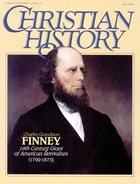
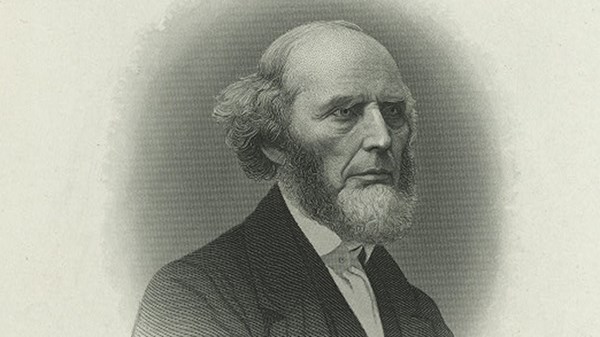
Charles Grandison Finney: Father of American Revivalism
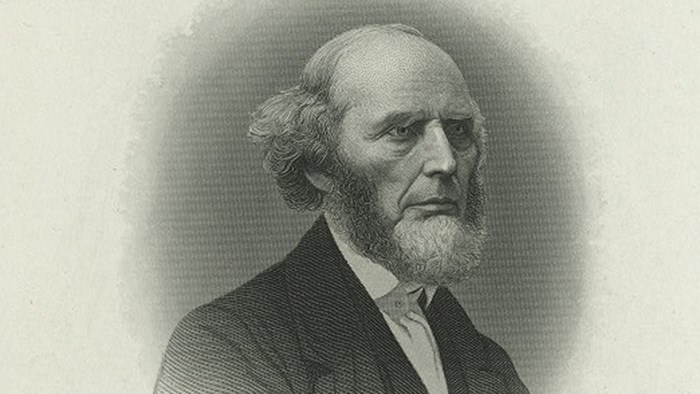


The career of Charles Finney was nothing short of remarkable. From international fame as a revivalist, to professor at and president of a unique educational institution, to advocate and defender of a controversial doctrine of Christian perfection, Finney has left a major imprint on American religion. He challenged common ideas about conversion, evangelism, and personal holiness, and helped reshape American Christian thought. No matter what your opinion of the controversial Charles Finney, this magnetic Christian leader was genuinely remarkable.
Charles Finney was born in Warren, Connecticut, in 1792 into an old New England family. In 1794 his family moved to New York State, where, in the central and northern sections, he spent his childhood. Eventually, his family settled in Henderson, near Lake Ontario, where Charles spent most of his adolescent years.
As a young man he decided to study law, and he began that study in the office of lawyer Benjamin Wright in Adams, New York. Charles was also an amateur musician who played the cello, and apparently led the choir at the local Presbyterian church, which was pastored by the Rev. George W. Gale.
According to the account in his Memoirs, around this time he decided that he must settle the question of his soul’s salvation. Having gone alone into the woods, he knelt by a log and wrestled with God in prayer, and was instantaneously converted. The event was so dramatic that Finney later recalled that he experienced what seemed like waves of liquid love throughout his body; it so affected him that he explained it in intimate detail when he was at an advanced age. The drama of the event may have made him impatient in later years with those who could not testify to a similar experience.
The next morning at the law office a client came in to inquire about the status of his case. No doubt to the client’s consternation, Finney replied that the man would have to find someone else to help him, for he was no longer going to pursue a law career so that he might become a preacher of the gospel. The St. Lawrence Presbytery took him under their care and he was licensed to preach in December 1823. The Female Missionary Society of Western New York commissioned him as a missionary to Jefferson County in March of 1824. Thus Finney’s revivalistic career was launched.
Early Work and the Burned-over District
Finney’s early meetings were held in the frontier communities of upper New York state, and he received, at best, a mixed reception. It was plain that his preaching was different than that of the local parish ministers, and his theology seemed a reaction against the prevailing Calvinism of the time. He married Lydia Andrews of Whitestown, New York, in October 1824, and appeared to be on a course for a normal and uneventful parish ministry of some sort in that area.
However, Finney’s career took a turn in 1825, when while on a journey to Whitestown to visit Lydia’s parents, he and his wife stayed over at the home of his former pastor, George Gale, in the town of Western, NY. Gale asked Finney to preach and when the young evangelist complied, the results were immediate and dramatic. Crowds came to hear Finney and many asked him for help in obtaining assurance of conversion. The results were the same when he afterward preached in the towns of Utica and Rome, NY. (The whole area where Finney was then preaching has been referred to by historians as the “Burned-over district”; a reference to the fact that the area had experienced so much religious enthusiasm—from revivals and new religions, to cults and spiritualism—that the district had been scorched.) The revival meetings were described in detail by the Oneida Presbytery in a pamphlet referred to as the Narrative of Revival. These meetings in the Burned-over District moved Finney up a notch and made him the subject of some notice in East Coast newspapers.
Finney began to gather friends and supporters who saw in him a figure of more than local importance. Among them were George W. Gale, his former pastor, Theodore D. Weld, a Utica revival convert and eventual national figure in the antislavery movement, Joshua Leavitt, a New York City newspaper editor, Lewis and Arthur Tappan, prominent lay merchants in New York City, and Nathan S. S. Beman, a pastor in Troy, NY.
Controversy and the New Measures
Finney began to receive opposition from many people as well. The Old School Presbyterians, led by the New England revivalist Asahel Nettleton, resented Finney’s modifications to Calvinist theology. Traditional Calvinists taught that a person would only come to believe the gospel if God had elected them to salvation. Hence, a person might hear the gospel in church, go home to meditate on the preacher’s message, and pray and wait for assurance from on high. Finney stated that unbelief was a “will not,” instead of a “cannot,” and could be remedied if a person willed to become a Christian. The revivalistic Congregationalists, led by Lyman Beecher, feared that Finney was opening the door to fanaticism within the ranks by allowing too much expression of human emotion. On the other side, the Unitarians and Universalists opposed Finney on the general grounds that he was using scare tactics in his messages in order to gain converts. They were particularly offended by his references to Hell as the destination of those who refused to believe the gospel.
There was also a growing controversy over the New Measures being used by Finney in conducting his evangelistic meetings. Particularly offensive were his allowing women to pray in mixed public meetings; the use of an anxious bench at the front of the church—special seats for singling out persons who felt a special urgency about their salvation; the adoption of protracted meetings—daily meetings, as opposed to regular weekly meetings only; informal, instead of reverential, language, especially in prayer; and the hasty admission of new converts to church membership. A meeting was held at New Lebanon, NY, beginning on 18 July 1827, to examine the use of these so-called New Measures. The clergy present was mixed in their opposition and support of Finney, but the New Measures passed the test and Finney became nationally known as a result of the publicity surrounding these meetings.
The zenith of Finney’s evangelistic career was reached at Rochester, NY, where he held meetings during 1830–1831. The whole city was involved as shopkeepers closed down their businesses and urged people to attend Finney’s meetings. The frontier crudeness once criticized was now gone and witnesses described Finney’s approach as that of a lawyer making his case before a jury. People from all walks of life attended the meetings and the entire region was affected by Finney’s presence. He still was convinced that persons could will to be saved. A person visiting Finney told him that he had no feeling regarding the condition of his soul. At this Finney picked up a fire poker and threatened to strike the man. The defensive reaction from the man caused Finney to remark that he was demonstrating feeling and should have feeling about his salvation also.
Not long after the Rochester campaign, Finney accepted the pastorate of the Chatham Street Chapel in New York City. Whether his wife was weary of caring for a family on the itinerant trail and influenced his decision can only be guessed, but they settled in at their new home. After a bout with illness and a trip abroad to recover his health, Finney gave a series of lectures that were transcribed and published as Lectures on Revivals of Religion. This book made Finney more famous and added to the controversy surrounding him, for he stressed at the beginning of the book that a revival was not a miracle, but the right use of proper means. Professor Charles Hodge of Princeton Seminary, a famous Old School Presbyterian theologian, condemned the book; soon thereafter Finney left that denomination. He was now an acknowledged leader of the New School Presbyterians (progressive Presbyterians, many of whom had abandoned traditional Calvinistic teachings) and an important leader in the free church movement. Free churches were congregations that rejected the concept of pew rent in favor of free seating for anyone who wanted to enter the church. Friends of Finney built the Broadway Tabernacle in 1835 for him to pastor, and the emphasis there was on wide-open doors as an invitation for all to enter.
Oberlin and Social Reform
Finney’s life took another turn when he left New York City in 1835 to become a professor at Oberlin College in Ohio. (He was going to divide his time between Oberlin and the Broadway Tabernacle, but before long devoted himself to Oberlin.) This offer was made to him as a result of a group of students at Lane Seminary in Cincinatti, Ohio, who were mostly his converts from the Burned-over District revivals. These students insisted that slave-owning was a sin; they were opposed by Lane Seminary trustees, many of whom owned slaves themselves. The students left Lane and traveled to Oberlin on the condition that Finney become their professor. Arthur and Lewis Tappan—wealthy abolition leaders—agreed to underwrite the costs, so Finney and his family moved to Oberlin. There he taught a class in pastoral theology, went East each year after classes were over to conduct revival meetings, and began to write for the Oberlin Evangelist. The more his writings appeared, the more he irritated members of the Old School who sensed that he was distorting Calvinism in order to give a free and open invitation for all to be converted in his revival meetings.
Finney succeeded in involving Oberlin in the leading social reforms of the Jacksonian era. One historian said that he unleashed a mighty impulse to social reform by insisting that new converts make their lives count for the Kingdom of God. The result was an optimistic, postmillenial theological thrust and the revitalization of a “benevolent empire” of Protestant organizations determined to make the world a better place by hastening the coming of the Kingdom. The reform movements involved were: the temperance movement, Sabbath keeping, manual labor schools, and abolitionism. Oberlin even became a station on the Underground Railroad (a network of locations used to help slaves escape to Canada), and the scene of a dramatic slave rescue. Indeed, Finney was successful in linking evangelical circles to antislavery crusades. On the other hand, he cautioned Theodore Weld and others not to allow reform efforts to replace revivalism. Charles Finney was, first and foremost, a revivalist.
Perfectionism and British Revivals
Finney began to ponder the problem raised by the number of his revival converts who became backsliders. The result was the formulation of a doctrine on Christian perfectionism by himself and Oberlin College president Asa Mahan. [see Timothy Smith’s article on Finney’s perfectionism in this issue] Perfectionist ideas earned for Finney many more criticisms and placed a stigma on Oberlin College.
Later revivals Finney conducted in Rochester and Boston—scenes of earlier triumphs—were not as successful, perhaps because his listeners did not understand his new perfectionist emphasis. He was the pastor of the First Congregational Church at Oberlin, and now did most of his preaching there, instead of on the itinerant trail. His first wife, Lydia, died at Oberlin on December 18, 1847, leaving five children from ages three to 19; Finney was profoundly affected by the loss. She had not only been the mother of his children, but also a devoted helper in his revival meetings as well. Soon after Lydia’s death, Finney married Elizabeth Ford Atkins, a widow from Rochester. The degree to which Finney allowed Lydia and, later, Elizabeth to be involved in his campaigns demonstrates the impact of Finney on the changing roles of women in Jacksonian America.
The Finneys journeyed to England twice during the decade of the 1850s. Charles preached throughout the British Isles and was generally successful with the same methods he had used in America. Elizabeth began holding meetings for women, starting a trend that would become an accepted practice in some Christian circles. Finney’s impact in England shows his effectiveness as a religious bridge across the Atlantic. His last trip to England, on the eve of the American Civil War, seems to have worn him out physically; he was never well after that time.
Finney’s later years were spent at Oberlin College teaching theology, serving for 15 years as its president, and writing rather extensively in opposition to Freemasonry. His wife Elizabeth died in 1864, when he was 71; a year later he married Rebecca Rayl, assistant principal of Oberlin’s ladies department. He was encouraged by friends to write down a narrative of the revivals he conducted; he began this work in 1868. Published after his death as his Memoirs, they are still popular today. Charles Finney died at Oberlin on the dawn of Monday 16 August 1875, two weeks before his 83rd birthday.
Finney’s Legacy
Charles Finney made a significant impression upon the religious life of 19th century America, and his influence is still evident today. Called the “father of modern revivalism” by some historians, he paved the way for later revivalists like Dwight L. Moody, Billy Sunday, and Billy Graham. He constructed a theology that harmonized with the ideals of the Jacksonian era; if President Andrew Jackson was the political folk-hero of early l9th-century America, Charles Grandison Finney was its religious folk-hero. Just as the American frontier was being widened and common folk were getting the vote, Finney gave the public an opportunity to cast their votes on the matter of salvation.
This democratization of Calvinism worked and no doubt caused some jealousy among his rivals in the field of revivalism. In fact, his New Measures opened up the field so that lay-witnessing became the order of the day, including contingents of women who made house visits and held special prayer meetings. The measures worked and Finney was in demand because of the successful results obtained in his meetings. He also personalized religion so that individuals attending his meetings were forced to make a choice. Indeed, the choice of a destiny in Heaven or in Hell was entirely up to the individual.
Finney did not rebuke his hearers for the sin of Adam (what theologians call imputed sin), but rather challenged them to do something about their own sins. He left no room for excuses and interpreted a “cannot” as a “will not.” Rejecting Calvinism’s total depravity, he taught that the only bondage a person was under was a voluntary bondage to their own selfishness and love of the world. Hence, he argued that the revivalist could demand immediate repentance and submission to God. Indeed, he insisted that ministers should expect results before the potential converts left the meetings.
His impression on Oberlin was also significant; in fact, from 1835 to his death in 1875, Oberlin and Finney were synonymous. Alumni later recalled “Father Finney” as he prayed during the class, preached from the pulpit, walked the paths of the campus, or tended his raspberry patch at home. His mark was made on the reform movements during the Jacksonian years, especially in the areas of women’s rights and the antislavery movement. His ideas about Christian perfectionism and sanctification caused the Oberlin community some distress, but the idea of holiness has endured and flourished in parts of the Christian community. His trips to England were successful, even when judged by the remarks of his critics. [see Garth Rosell’s article on Trans-Atlantic revivalism in this issue]
Finney’s writings were numerous and influential. The Lectures on Revivals have been translated into several languages and are still being published and sold today. They are used as texts in colleges and seminary classes, and remain the starting point for discussions on modern revivalism. His writings on Christian perfectionism have endured as well, and are in favor today among many charismatic Christians. Although systematic theologians generally do not accept the premises outlined in his large works on that subject, these works too have stood the test of time. Finney’s writings persist, in spite of the critics, and seem to be increasing in popularity.
Some critics have referred to a “Finney cult” in America. Finney still has his serious opponents, and is blamed for, among other things, some of the more controversial techniques of modern mass evangelism. We might imagine Finney replying to his critics that he did what he had to do to get people out of what he saw as a valley of Calvinist apathy and into the path of active soul-winning. History leaves to our opinions whether he was right or wrong. Nevertheless, it seems fitting that even today, more than a century after his long and remarkable career, Charles Grandison Finney still arouses our feelings, and presses us with a decision.
James E. Johnson is professor of history and Chairperson of the Department of History at Bethel College in St. Paul, Minnesota. Dr. Johnson is also Editor of Fides et Historia, the historical journal published three times a year at Bethel College by the Conference on Faith and History.
Copyright © 1988 by the author or Christianity Today/Christian History magazine.
Click here for reprint information on Christian History.

Support Our Work
Subscribe to CT for less than $4.25/month