Sailing for the Kingdom of God


Charles Finney was already well known in England by the time he arrived for his first visit in 1849. News of his remarkable revival activities in America, now spanning some twenty-five years, was carried regularly in religious periodicals throughout the British Isles and was eagerly read by the Christian community there. His Lectures on Revivals of Religion (the English edition of which was published in 1837) became an immediate best seller—gaining Finney thousands of new friends throughout those countries. In Wales, for example, its impact was so substantial that the great Welsh awakening of the early 1840s came to be known in some circles as “Finney’s revival.”
Close ties, of course, had long existed between Britain and America. Since the early Seventeenth century, when the English colonies were first planted in the New World, many Christians from both sides of the ocean considered themselves to be part of the same family. Literally thousands of letters—many carrying news of revival activity—flowed back and forth across the Atlantic. Individuals too, despite the enormous difficulties which were involved, made the lengthy and hazardous crossing aboard the relatively small ships which gave them passage.
Among these courageous travellers were many of the notable revival leaders of the Eighteenth and Nineteenth Centuries. George Whitefield, the great Church of England minister, had been one of the first. Under his powerful preaching, the religious revivals which had broken out in the 1720s quickly spread throughout the American colonies—combining ultimately in what historians have come to call The Great Awakening.
In the century and a half between George Whitefield’s visit to America in 1737 and Dwight L. Moody’s visit to England in 1873, scores of preachers sought to carry the fires of revival across the Atlantic. Emerson Andrews, Robert Baird, Lyman Beecher, James Caughey, Calvin Colton, Samuel H. Cox, Asahel Nettleton, Phoebe and Walter Palmer, and William Buell Sprague were among the better-known figures who did so. Their efforts contributed to the peaks of transatlantic revival activity which marked the late 1820s and early 1830s, the late 1830s and early 1840s, and the late 1850s. The story of these remarkable seasons of spiritual refreshment is told by Richard Carwardine in his superb volume Trans-Atlantic Revivalism: Popular Evangelicalism in Britain and America, 1790–1865.
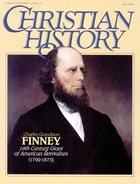
Perhaps the best-known figure to travel to England during these years, however, was Charles G. Finney. His two visits to the British Isles—from November 1849 to April 1851 and from December 1858 to August 1860—not only produced thousands of new converts but helped to bring renewed vitality to a number of churches in England and Scotland. Although he preached in small communities such as Houghton, where he was hosted by his generous friend Potto Brown, the bulk of Finney’s ministry was centered in larger cities such as London, Birmingham, Worcester, Edinburgh, Manchester and Liverpool. During his first visit, in fact, over eight months alone were spent preaching in the famous 3,000 seat Whitefield Tabernacle in London.
New Measures in Britian
In many respects, Finney’s revival labors in Britain paralleled his practice in America. Proven measures such as prayer, protracted services, inquiry meetings, calls to public commitment, encouragement of lay leadership, and the like were used with success on both sides of the Atlantic. While he was at the Whitefield Tabernacle (built for George Whitefield in 1753), for example, Finney preached to crowded congregations not only twice on Sundays but on Tuesday, Wednesday, Thursday and Friday evenings as well. Monday evenings were given to general prayer meetings at the Tabernacle. “I preached a course of sermons designed to convict the people of sin as deeply and as universally as possible,” Finney commented in his Memoirs. We are fortunate that twenty-two of these sermons are conveniently available to us in a collection which was published in 1851 under the title Sermons on Important Subjects.
The response to Finney’s preaching was little short of remarkable. On the evening of his fourth Sunday at the Tabernacle, as described in the Memoirs, Finney suggested to the pastor, the Rev. Dr. John Campbell, that he would like to hold a special meeting for inquirers following the evening service. Expressing his doubts as to whether any would be interested in attending such a gathering, Dr. Campbell suggested that Finney might use a small Sunday school room seating approximately forty persons. “Have you not a larger room?” Finney asked, “I believe there are hundreds of inquirers in the congregation.” Laughing, Campbell responded, “Mr. Finney, remember you are in England, and in London;—and that you are not acquainted with our people. You might get people to attend such a meeting, under such a call as you propose to make, in America; but you will not get people to attend here.” Notwithstanding Campbell’s comment, however, Finney persisted. Reluctantly, Campbell suggested that he might use the nearby British school room, which seated between fifteen and sixteen hundred. “Yes,” responded Finney, “that is the very room.” Dr. Campbell, “I know what the state of people is better than you do. The Gospel is as well adapted to the English people as to the American people; and I have no fears at all that the pride of the people will prevent their responding to such a call, any more than that of the people in America.”
After preaching a short sermon that evening, Finney called upon “all who were anxious for their souls, and who were then disposed immediately to make their peace with God,” to attend the inquiry meeting. After dismissing the congregation, Finney relates in his Memoirs, “Dr. Campbell nervously and anxiously looked out of the window” to see which way the congregation would go. To his “great astonishment,” he discovered that no less than fifteen or sixteen hundred of them were heading directly for the assigned room. While Dr. Campbell looked on in “amazement,” Finney pressed the inquirers to lay down “their weapons of rebellion” and “accept Jesus as their only Redeemer.”
Difficulties and Disappointments
Not all of Finney’s meetings, of course, were marked by such spectacular success. In several locations, in fact, Finney’s efforts were both difficult and disappointing. Not only was Finney confronted by the same kinds of theological questions which were raised regularly against him in America, but he was also thrown into an ecclesiastical situation which was quite new to him. Unlike America, Finney discovered, England had an established Church. Other religious bodies were considered part of the dissenting tradition. Even among the dissenting bodies, moreover, there were deep divisions and antagonisms. Consequently, as Finney learned, the style of interdenominational revivalism with which he had become comfortable in America did not seem to operate as fully in England. As a result, Finney’s influence—like that of virtually all of the revival leaders who had preceded him—was largely confined not only to churches within the subculture of dissent but also to particular strands (such as the Methodist and Baptist) within the subculture itself.
Finney’s ministry in Scotland, during the fall of 1859, illustrates the problem. By accepting John Kirk’s invitation to preach to his large Edinburgh congregation, Finney soon discovered that he had effectively limited his ministry to those dissenting churches which were associated with the Evangelical Union. Founded in 1843 by James Morison, as a kind of offshoot of Presbyterianism, the Evangelical Union was opposed by many of the larger Christian bodies throughout the country on theological as well as ecclesiastical grounds. As a result, Finney’s work in Scotland was confined almost exclusively to one body—and a rather small one at that.
Related to this problem was the difficulty of space. Outside of the large cities, it was almost impossible to find buildings large enough to seat the crowds wanting to hear Finney preach. Potto Brown provided a temporary solution to the problem by securing a thousand-seat tent, which Finney used in 1849 when the Union Chapel in Houghton ran out of space. Several months later, a wealthy gentleman in Worcester offered to have a portable “tabernacle” built for Finney’s use—one that could be disassembled and moved by train from place to place. Convinced that the ministers of England would “disapprove of a course so novel,” however, Finney rejected the idea. The building of such a structure would have to wait until 1875, when enormous crowds gathered to hear Dwight L. Moody.
Preparing the Way
Despite all of the difficulties, however, the years which Charles and Elizabeth Finney spent in the British Isles produced some important results. Several thousand individuals were converted. Church membership was increased. congregations were revitalized. Anglo-American ties were strengthened. Bridges were built between an older revival tradition and that which was yet to come. While it may be true that, in the long run, Finney’s writings have had a more profound impact upon the British churches than did his actual ministry there, it is also possible that Finney’s ministry in England and Scotland helped to prepare the way for the coming of the great Keswick Movement of the 1870s and the subsequent work of American evangelists from D. L. Moody to Billy Graham.
“There is always something due to the instruments of eminent usefulness in the cause of God,” remarked Dr. John Campbell at a special farewell gathering for the Finneys at the Whitefield Tabernacle on March 31, 1851, shortly before their departure from England to return to America. “To honour the servant is, in effect, to honor the Master. Among such instruments a very high place is due to the Rev. C. G. Finney, who has left behind him, in England, an impression such as was never made by any other American among the British churches.”
Garth Rosell is professor of church history and director of the Ockenga Institute at Gordon- Conwell Theological Seminary in South Hamilton, Massachusetts. Dr Rosell has written numerous articles on Finney, and along with Richard A G Dupais, has prepared a new critical edition, with the complete restored text, of Finney's Memoirs (Academie/Zondervan, 1988, 704pp).
Copyright © 1988 by the author or Christianity Today/Christian History magazine.
Click here for reprint information on Christian History.

Support Our Work
Subscribe to CT for less than $4.25/month