


“I am Cyrus”
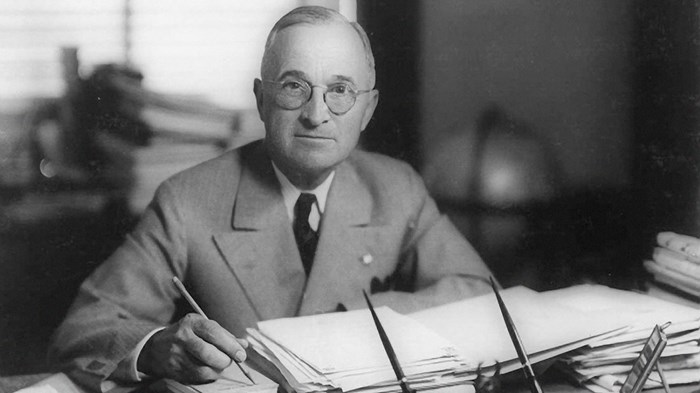


In November 1953, just a few months after leaving the presidency of the United States, Harry S. Truman was brought to the Jewish Theological Seminary in New York to meet a group of Jewish dignitaries. Accompanying him was his good friend Eddie Jacobson, a comrade from his Army days and former business partner in a short-lived men's haberdashery 30 years earlier. Jacobson introduced his friend to the assembled theologians: "This is the man who helped create the State of Israel." Truman retorted, "What do you mean, 'helped to create'? I am Cyrus. I am Cyrus."
Truman was the only president of the 20th century who did not have a college education. In his generation, however, a secondary school education included the study of the Bible and ancient history, and therefore his audience would have known what few graduates of university history departments today know—that Cyrus II ("the Great") was the Persian king who overthrew the Babylonian empire in 539 B.C. and subsidized the return to Jerusalem of the Jewish population that been held captive in Babylon for 70 years. Cyrus's successors permitted the rebuilding of the Jerusalem Temple and city walls. Throughout the two-and-a-half millennia of historical calamities that followed, Cyrus served as the symbol of the righteous gentile ruler who would make possible the ultimate and irreversible return of the Jewish people to the Land of Israel—the restoration of their nationhood and security against their enemies.
Truman's self-identification with Cyrus had nothing to do with self-glorification. It followed from his understanding of history and of the Bible. His Sunday School teachers had taught him that someone, someday, would be called upon to be a second Cyrus.
Truman had joined a Baptist church in Kansas City at the age of 18 and maintained membership in a Baptist church throughout his life. At the time of his baptism, he wrote out a prayer on a card that he carried in his wallet for the rest of his life:
Oh! Almighty and Everlasting God, Creator of Heaven, Earth, and the Universe: Help me to be, think, to act what is right, because it is right; make me truthful, honest and honorable in all things; make me intellectually honest for the sake of right and honor and without thought of reward to me. Give me the ability to be charitable, forgiving, and patient with my fellowmen—help me to understand their motives and their shortcomings—even as Thou understandest mine!
Truman regarded himself (with justification) as a well-read man. Although he never went to college, he had as good a grounding in classical literature and the Bible as any other president in the 20th century—and in fact better than most. He was thoroughly convinced of God's direction of his own life, and of everyone else's. He pondered the extraordinary circumstances that had brought him into the Oval Office. He studied soberly his own strengths and weakness—fully at peace about the fact of his humble origins. And he came to the perfectly calm conclusion that he was Cyrus.
Keeping Britain's promises
Few Americans were prepared for the sudden death of President Roosevelt on April 12, 1945, and fewer still for the succession to his office of the little-known vice-president Harry Truman. Buried within the enormous pile of projects on Roosevelt's desk when he died was the matter of how to dispose of Britain's Mandate over Palestine. Truman knew that the United Nations would inherit the promise of the League of Nations and Great Britain expressed in the Balfour Declaration of November, 2, 1917: "That His Majesty's Government view with favour the establishment in Palestine of a national home for the Jewish people …" Truman knew, too, that Prime Minister Lloyd George and Foreign Secretary Arthur Balfour, the British statesmen who devised this formula, and President Woodrow Wilson, who endorsed it fully, understood that they were fulfilling the mandate that religious Jews associated with Cyrus.
The Balfour project had been compromised, however, in the 1930s. The local Arab population had proved unwilling to accept a Jewish state in its midst. It had been necessary for Britain to keep a substantial military presence there, precisely as Hitler's war was putting Britain's own continued existence in doubt. To appease the Arabs, the British government had retreated from the Balfour pledge and by the mid-40s were threatening to walk away entirely from the region. To deal with the vacuum of power, the U.N. General Assembly decided on November 29, 1947, that Palestine should be divided into a Jewish State and an Arab State. The Jews reluctantly agreed to the arrangement, but the Arabs vowed never to accept the existence of a Jewish state. And so, on the very day that Israel declared its independence, armies representing the entire Arab world descended upon it.
On Truman's desk the day he had entered office was a pile of memos from the State Department, the War Department, and other advisers counseling him that the Balfour pledge should be abandoned—and that if the Jews persisted in their suicidal intention to declare statehood, they should be left to face the consequences. This advice was, indeed, based on realistic calculation of the facts: The Arabs vastly outnumbered the Jews and were better armed. Great Britain had already attached herself to the Arab cause through sales of arms and provision of military advisers.
But at a crucial meeting, Clark Clifford, the President's Counsel, had the task of presenting the argument in favor of recognizing Israel. He rehearsed the history of the Jewish diaspora since the destruction of the Second Temple, the Balfour Declaration, the recent Holocaust, and the present desperate situation of displaced persons. He even introduced restorationist texts from Scripture, notably Deuteronomy 1:8: "See, I have set the land before you; go in and possess the land which the Lord swore to your fathers—to Abraham, Isaac, and Jacob—to give to them and their descendants after them."
Defying the experts' advice and confident in the rightness of the Zionist cause, Harry Truman exerted his presidential prerogative and directed his U.N. delegation to lobby America's friends and clients to support the Partition Resolution in November 1947. Then, on May 14, 1948—again defying the uniform advice of his State and War Departments—he issued a de facto recognition of the State of Israel within hours of its declaration of independence.
Truman's decision came from a profound conviction that Israel belonged in the world as surely as the United States of America belonged in the world. Moreover, in this matter he had reason to believe that popular opinion would sustain him, and so it did.
The man and his motives
Some revisionist historians, pointing to a few swaggering one-liners and racial epithets in Truman's papers, have argued that he did not really like Jews or Zionists. "The Jews claim God Almighty picked 'em out for special privilege," he once remarked. "Well I'm sure he had better judgment." But as his close friendship with Harry Jacobson demonstrates, Truman got along famously with Jews of his own social milieu. When contemplating the self-important, highly-placed spokesmen for American Jewry, however, he was moved by the same instinct to puncture and deflate that he felt towards Roosevelt's big business cronies. In this mood, he wrote to Eleanor Roosevelt (then a member of his delegation to the U.N.) in 1947, "I fear very much that the Jews are like all underdogs. When they get on top they are just as intolerant and cruel as the people were to them when they were underneath." A little thought will show that this is not an anti-Semitic remark but a sensible and demonstrably correct comment on human history.
Truman explained his attitude toward the State of Israel to Israel's Foreign Secretary, Moshe Sharett, who visited the president in 1952. Sharett reported that Truman's view was "the result of his knowledge and study of Israel's history from the days of Abraham" and rested on the promises made to the Jewish people in the First World War (that is, the Balfour Declaration), which "must be kept." Furthermore, Truman believed that there was a certain philosophical affinity between Israel and America. Israel, he said, "had already been once an example of democracy in antiquity. Were not the judges of Israel the first rulers anywhere in the world to have been elected by the people?"
Of course, many other less grand motives operated in Truman's policy-making with regard to Palestine and the Jews. These included his calculation that most American citizens, and not least American Jews, would reward at the polls a president who undertook to bless America by blessing the Jews. But given that in preferring the cause of the Jews he acted in defiance of the diplomatic, military, and economic advice available to him, we must assume that personal commitment tipped the balance.
Presidents Wilson and Truman are the only American presidents who explicitly identified themselves with the symbol of Cyrus, and who ought therefore to be called "Christian Zionists." But all presidents of the United States in the last century have been made to understand that large segments of the American public believe that there is a connection between the nation's willingness to "bless Israel" and God's willingness to bless America.
Paul Charles Merkley is the author of three books on Christian attitudes towards Israel, the most recent is American Presidents, Religion and Israel (Praeger, 2004).
Copyright © 2008 by the author or Christianity Today/Christian History & Biography magazine.
Click here for reprint information on Christian History & Biography.

Support Our Work
Subscribe to CT for less than $4.25/month