I am writing this on a long night flight to Sydney, Australia. American planes dropped the first bombs on Afghanistan this morning, and I won't know until I land how widely this war has spread. I'm not quite sure what day it is (we lose one in the air), and jet lag is probably not a state conducive to writing. Yet I've had an extraordinary few weeks—haven't we all?—and feel a need to sort it through, which by profession and by inclination I do through writing.
I learned of the terrorist attacks when my brother called me on the morning of an ordinary workday. Like almost everyone, when I heard about the attacks I stopped what I was doing and sat glued to the television as the surreal events unfolded. All the commentators' speculation ended when the second plane hit and it became clear this disaster was intentional, not an accident. Three planes were missing, no four—no, maybe six. And then something no one could imagine took place live on network television. Two of the mightiest man-made monuments in the world simply vanished in a cloud of darkness before our eyes.
I have never been especially patriotic. I've traveled too much overseas, I guess, and have seen from afar the arrogance and insensitivity of the U.S. Sometimes I envy my friends who travel with a Canadian, rather than American, passport. Our military, our Olympic athletes, even our tourists walk with a swagger. I remember being in the Philippines around the time of the Sydney Olympics and asking my host if his country had ever won a medal. He hung his head, "We almost did once. And we have a chance for a bronze in boxing at this one." A nation of 90 million people had never won a gold medal. Meanwhile, the Americans were furious if they didn't take home at least half the golds in swimming and track-and-field, and our winners strutted irreverently on the platform as an Australian band played our national anthem.
September 11 changed my attitude. I choked up when the Congress sang "God Bless America," and when the Buckingham Palace guard played the "Star-Spangled Banner," and when firemen told corny stories about their fallen comrades, and when a solitary bagpiper played "Amazing Grace" in Union Square, and when hundreds of New Yorkers walked around dazed with photos of their missing loved ones, sheltering candle flames in their cupped hands, and when Dan Rather had to be comforted by David Letterman of all people. I felt a sudden surge of loyalty and unity with my country that was new to me. Scott Simon put words to it in a National Public Radio editorial after the WTC attacks. Patriotism is not based on a blind belief that the United States has no need to change, he said. God knows we need to change in many ways. Our love for America rests on the belief that the changes needed are more likely to occur here than anywhere else in the world.
I think of my own life. I grew up in a cloistered, fundamentalist environment in a segregated South. Now I live 2,000 miles away, in a place of exquisite beauty, with the ability to make a living reflecting in words on what matters most to me, rewarded and not punished for honesty and growth. Few countries in the world would allow for that kind of progression and mobility. The United States remains the land of promise and potential.
Responding to Terror
The phones started ringing at our house on the day of the attack. I got calls from England, Holland, and Australia, as well as the U.S. media. "You've written about the problem of pain. What do you have to say about the tragedy?" In truth, I had nothing to say. The facts were so overpowering, so incomprehensible, that I was stunned into silence. Anything I could think of saying—"Horrible. Don't blame God. The face of evil."—sounded like a cliché. In every case, I declined to respond. Like most Americans, I felt unbearably helpless, and wounded, and deeply sad.
Wednesday, the day after the attacks, it dawned on me that I had already written much of what I believe about the problem of pain. I wrote Where Is God When It Hurts? in 1977, as a 28-year-old who had no right to tackle questions of theodicy—and also no ability to resist, for there is no more urgent question facing those of us who identify ourselves as Christian. In 1990 I revised the book, adding about 100 pages and the perspective of middle age.
That night I e-mailed a proposal to my publisher, Zondervan, suggesting that we find a way to get that book out as cheaply as possible to as many people as possible. I could forego all royalties, and they could forego all profit as our contribution to a grieving nation. They jumped on the idea with amazing speed. Already they had been discussing "instant books" and other publishing responses. Instead, they decided to put their full resources into getting Where Is God into as many hands as possible. They called the next morning (Thursday, two days after the tragedy) saying they were mobilizing for a special edition.
By the end of that day Zondervan had sold 300,000 copies of a one-time-only edition with all proceeds directed to the American Red Cross. Retailers had to order at least 20 copies, and the package included a poster explaining the special edition to consumers. By the end of the next day, Friday, they had sold 750,000 copies. In short, they sold more copies in 24 hours than they had sold in 24 years. Wal-Mart ordered 125,000; airport bookstores ordered scores of thousands. It seems that retailers, too, felt helpless and grasped at a chance to offer a book that might give perspective on questions their customers were consumed with.
The folks at Zondervan told me how remarkable it was that such a project happened. Against all odds, they found available printing press time, and paper, and by Saturday, four days after the bombings, copies were being printed. They just barely got permission to use the Red Cross logo on the cover; by the time news reached the New York lawyers, who blanched at seeming to sanction a Christian book, the books were already printed. Wal-Mart sent their trucks directly to the printers, rather than go through a distributor. Some retailers volunteered to donate all their proceeds to the victims' fund as well.
The flurry of activity, occurring at such speed with almost instantaneous results, made me feel considerably less helpless. Within two weeks I had received my first response from a reader of the special edition. Her choir director had driven from Florida to North Carolina to be by the side of a family member undergoing surgery. He had planned to fly, but airplane cancellations forced him to drive. He never made it; an auto accident killed him. Standing in a bookstore, weeping, this woman had noticed my book on pain and bought it—one of many who suffered "collateral damage" from the terrorist acts.
My wife Janet and I had originally planned to spend the week of September 17 on vacation, on a houseboat on Lake Powell, Arizona, with three couples from Illinois. When their flights got canceled, those plans changed. Instead, we took a three-day trip to Telluride, Colorado. We've climbed seven "14ers" this summer (14,000-foot mountains) and we attempted an eighth the week after the terrorist attacks. Wilson Peak is rated most difficult, and in the end we had to turn back because of a September snowstorm. Yet the interlude pulled us away from nonstop television and gave an important reminder of the goodness and grace that exists in this world alongside the ugliness and evil.
I returned home to find an extraordinary journal e-mailed from Gordon MacDonald, a pastor and author who is also a friend. Gordon, who had once pastored a church in Manhattan, cleared his schedule when he first heard about the bombings and volunteered as a chaplain with the Salvation Army. Each night, after a grueling day near Ground Zero, he recorded the sights and sounds and, yes, the smells, he and his wife Gail had encountered that day. (CT will be publishing excerpts from his journal.)
I called Gordon to tell him how deeply his journal had affected me, and when he learned I would soon spend a day in New York City, he insisted that I visit Ground Zero for myself. Five minutes later he called back to say he had made the arrangements with top officials at the Salvation Army.
I was traveling to Washington, D.C., New York, and Chicago under the sponsorship of Doubleday, who had just released my new book Soul Survivor. Doubleday had worked very hard to set up a media tour, only to find the publicity and travel worlds in complete chaos in the wake of the terrorism. The person in charge of publicity for my books had lost her best childhood friend, and former roommate, in the buildings. For a week she and her friend's fiancé, walked around with pictures of the missing young woman until finally they realized all hope was lost. The fiancé had watched out a window as the plane hit, and then the building containing his future wife collapsed.
Not until the day before I left did we have any assurance that the media appointments would happen at all. Some did, some didn't. As it turned out, the special edition of Where Is God gave immediate entree for the interviewers, who found it difficult to talk about anything other than the bombings. Although I had only one appointment in New York, an interview with Gustav Niebuhr of The Times, the publisher felt a stop there would be worthwhile.
'I'll Never Be the Same, Mr. Yancey'
I showed up at airports at least two hours in advance, as requested, and in virtually every case got through security in time to hop on an earlier flight. A driver named Eddie met me at LaGuardia in New York. Mayor Giuliani had ordered checkpoints at every tunnel, and vehicle searches were causing huge traffic backups, he told me. Eddie knew a back route through Queens and drove us through neighborhoods unaccustomed to limousines driving by. I told him my destination, the Salvation Army center near Ground Zero, and he said he knew it well. Eddie, a young Puerto Rican with a clean-shaved head, was impeccably dressed in a starched white shirt and tie, wearing gold bracelets and a diamond-studded ring. He had a perfect Brooklyn accent.
"Where were you on September 11?" I asked Eddie, making conversation. "Were you working?" He paused at least ten seconds before answering, no doubt weighing whether he wanted to tell the story again, to a stranger.
"Actually, Mr. Yancey, I was parked just across from the World Trade Center."
"No! Tell me about it."
"I had picked up a ride at the airport, Mr. Firestone, and dropped him at the Millennium Hotel. I remember his name because I asked him if he owned the tire company, but he laughed and said no. He had a meeting scheduled at the WTC, and I planned to stay with the car and wait for him. I was sitting in this car, reading the paper, when I heard a roar like the sound jet engines make when the planes warm up. I live near LaGuardia, so I hear that roar every morning. Then the ground shook, the car shook, and I heard the explosion. I jumped outside of the car and saw people running everywhere.
"I was standing by my car when the second plane hit a few minutes later. My God, I've never seen a fireball like that. I knew I should get in the car and leave, but something glued me there. It's like when you see an accident, and you know you should drive past without looking, but you can't.
"You wouldn't believe the noise. Car horns were going off all over the place. Police, ambulance, and fire truck sirens were coming closer. I quickly called my wife in Brooklyn and told her, 'Honey, something big has happened down here. Turn on the news. I'm right in front of the twin towers, but I'm OK.'
"And then the people started streaming out. Thousands of people. Some screaming, some holding handkerchiefs over their faces, some covered with blood. I stood by the car as they ran past. I looked in the air and, oh my God, I saw little specks—people jumping. A man in a white shirt. A woman with her skirt flying up. A couple holding hands. A man trying to use his sports coat as a parachute. People would look up, try to figure where they'd land, and dodge the bodies as they hit the sidewalk. I'll never forget that sight as long as I live.
"There was paper and debris and stuff flying everywhere, like a blizzard. I saw a boy, maybe 14, on the sidewalk doubled up, coughing, and when I went over to him he pointed to his pocket. He couldn't speak. I reached in and pulled out an asthma pump, and he sprayed it and got his breath back.
"I was there 45 minutes, I guess—I couldn't tell how long, but that's what they say now, when the first tower collapsed. A woman had fallen down on the sidewalk, an elderly woman. Everybody was running past her, not stepping on her or anything, but running right past her. I waited for a break in the people and went to her. 'Are you all right, ma'am?' I asked. 'I have some water in my car. Can I get you some?' She said she'd made it down something like 58 floors, and I told her she was safe now.
"I could tell she was upset, so I asked if I could say a prayer for her. I'm Catholic, you know. It just seemed the thing to do. She looked relieved, and while I was kneeling there on the sidewalk holding her hand, I heard a noise louder than I thought possible. The entire giant building just collapsed, all 110 stories. And I swear to God, Mr. Yancey, while I'm kneeling there holding that woman's hand, something falls from the sky—a piece of a computer or something—and hits that woman and she slumps over dead. Imagine—escaping from 58 stories and then getting killed like that.
"I look behind me and see a cloud dark as night rushing right towards me. I let go her hand and take off running. It's like a cops-and-robbers cartoon. The faster I run, the closer the cloud gets. I realize I got no chance. I duck into a little space between two buildings to wait it out. When the cloud hits, it's darker than I knew dark could be. At night, even a cloudy night, at least you got space around you, air to breathe. This cloud was, like, solid. You couldn't see anything. You couldn't breathe. You were surrounded by dark you could feel."
Eventually, Eddie told me, he found his way back to his car. Police had already sealed off the area, but he wanted to get his limo out. It was covered with dust like volcanic ash, and he took off his white shirt and wiped the windshield until he could see out. He opened the doors and yelled, "Anybody want a ride outta here?" Eight people, strangers, piled in. He headed for the nearest bridge off Manhattan, crossing over just before the mayor ordered all bridges and tunnels closed.
When he finally got home, four hours after the attack, he found his wife hysterical, his two children huddled in a corner watching Mommy sob. After his phone call, she had stood at her window in Brooklyn and watched the World Trade Center disintegrate, certain that her husband had been killed in the explosion and fire. Phone service was down, and she had not heard from him in four hours.
Eddie was so shaken that the next day he accepted a job to drive someone to Detroit. Airplanes were grounded, people were desperate to get home, and he wanted to get as far away from New York as he could. He drove straight through, took a two-hour nap in the car, and drove 14 hours back to Brooklyn.
"Everything's different now, Mr. Yancey," Eddie said. "I go to my brother's house every night. We sit around, watch TV, play with the kids, play games. Stuff I never used to do. Family stuff. And I haven't missed Mass yet. I'll never be the same."
'Side by Side with Heroes'
Salvation Army personnel, bless their hearts, are not the most publicity-savvy people in the world. Gordon MacDonald told me that certain other groups always made sure media interviews were conducted with a van and prominent logo in the background, for the TV cameras. Such a thought would never occur to an organization with a name like "Salvation Army." Wearing uniforms that haven't changed much in a century, they roll up their sleeves and serve at the most basic human level, the first line of defense at every emergency. On a very tight time schedule, I had arranged to take a tour of Ground Zero with the Salvation Army's Commissioner of Australia, but we sat around for two hours before S.A. personnel figured out the logistics and the paperwork required to get us through security checkpoints.
While sitting around sipping coffee, I met Major Carl Ruthberg, a Salvationist normally stationed at Times Square. Since the tragedy he has worked mainly at the Medical Examiner's Office, the place where they bring bodies and body parts to be identified. The morgue is equipped with high-tech refrigerator trucks lined with steel shelving, and body bags stacked by the thousands. More than two weeks after the event, only five percent of the bodies have been found. One group was found intact, holding hands, but they are a rarity. The rest lie buried under tons of rubble, or, more likely, they simply vaporized in the heat.
The Jewish rabbi assigned to the morgue says his tradition does not prepare him for the task. Jews have a practice of staying with a body from death to burial, which is why they arrange funerals within 24 hours. At Ground Zero, there are few bodies to stay with. And when I visited, not only 24 hours but two weeks had passed with thousands of bodies still missing.
Major Ruthberg told me of the rescue dogs who get so discouraged that their handlers have to play games with them, hiding under blankets to be found. The dogs search all day and find maybe a piece of clothing or an elbow or scrap of skin. They cut their paws on the sharp edges of steel, and whine in frustration because, like the human rescuers, they have so little to show for their efforts.
He also told of what happens when evidence of a fireman or policeman is found—maybe a badge, or chunk of clothing, or piece of a boot. All machinery is turned off, Ground Zero grows silent, and all firemen on the scene form two lines and stand at attention. The rescuers retrieve the clothing or body part, and walk in silence between the lines of saluting firemen to the morgue. Then they wrap the body bag in an American flag and place it in an ambulance, which drives through another line of saluting firemen, accompanied by a motorcycle escort, lights flashing but still in silence.
"I work side by side with heroes," the Major said. "And I tell you, they love God. They may be hard-nosed New York detectives, or FBI officers, but at the morgue the softness comes out. I feel privileged to be there, and offer just a calming word, a touch. We have so few survival stories down here, but we tell them over and over. I keep reminding the guys of all the thousands of people who escaped, partly through their efforts, after the blasts. We lost five or six thousand, but it could have been ten times that number. We've got to have that balance, a reminder that some did survive."
Outside the Salvation Army Center a tractor-trailer truck was parked. It came packed with supplies—blankets, food, clothing—from the state of Washington, clear across the continent from New York. When Salvationists opened the truck to unload it, they found inside a 40-foot banner which they unfurled and tacked to the side of the truck. It was covered with thousands of messages hand-written in grease pencil or permanent marker, and I stood and read them for probably ten minutes. Most were one sentence long. "You're in our hearts." "We're alongside you." "We love you." "You're our heroes." "You're our brothers and sisters." Some of the writers had drawn hearts, or angels, or other signs of companionship and hope. Third-graders had sent along homemade cookies in hand-decorated bags.
When we finally did get the clearance to drive through the checkpoints, the street was lined with New Yorkers—New Yorkers!—waving banners with similar messages. We love you. You're our heroes. God bless you. Thank you. Gordon said that in the early days crowds ten deep lined these streets at midnight, cheering every rescue vehicle that came by. The workers run on that support as their vehicles run on fuel. They have so little good news in the day. They face a mountainously depressing task of removing tons and tons of twisted steel, compacted dirt, smashed equipment, broken glass. Yet every time they drive past the barricades, they face a line of fans cheering them on, like the tunnel of cheerleaders football players run through, reminding them that an entire nation appreciates their service. In a Salvation Army van with lights flashing, we attracted some of the loudest cheers of all.
Monuments of Destruction
Moises, the Salvation Army officer leading us, was Incident Director for the city. He had been on the job barely a month when the planes hit. He worked 36 straight hours and slept 4, 40 hours and slept 6, 40 more hours and slept 6. Then he took a day off. His assistant had an emotional breakdown early on, in the same van I was riding in, and may never recover.
After a few days the Salvation Army made a policy of accepting nothing but cash. They had nowhere to put the donations of food, clothing, and equipment brought to them by thousands of New Yorkers and others from out of state. Lines of people stretched around the block all day long, volunteers who wanted to help. The writer Chris DeVinck tells of a couple in his town who drove to Home Depot, bought $700 worth of shovels, and hand-delivered them to New York. Gordon tells of fire fighters in Chicago who jumped in a car, headed east and got picked up going 108 M.P.H. in Indiana. When they explained to the state trooper, he said, "Well, let's try to keep it under 90," and gave them a flashing-light escort to the border.
The Salvation Army has learned to meet needs at the most basic human level. They'll certainly talk with you and pray with you if you want, and the Salvationists in the shiny red "Chaplain" jackets are in high demand. Mainly, though, they are there to wash out eyes stinging from smoke, and provide Blistex for parched lips and foot inserts for boots walking across hot metal. They operate hydration stations and snack canteens. They offer a place to rest, and freshly cooked chicken courtesy of Tyson's. The day I arrived, they distributed 7,500 phone cards for the workers to use in calling home. Every day they serve 7,500 meals. They offer an oasis of compassion in a wilderness of rubble.
We passed through five checkpoints, the last one, known as the Red Zone, manned by soldiers in Army fatigues. "Things have tightened up here," our Salvationist guide shouted over the roar of machinery and generators. "New York's finest take training in public relations. The U.S. Army doesn't." As we approached Ground Zero, we traded in the van for an open golf-cart-like vehicle. Soldiers wearing gas masks sprayed water and disinfectant on the tires—water to combat asbestos, disinfectant to fight the germs that flourish around a scene of death. They scrutinized each person's i.d. and waved us through.
America's ability to respond to a crisis is amazing. Two weeks after the tragedy, a rescue city had sprung up. Portable kitchens and toilets, tents, pallets full of plywood, cranes 25 stories high, refrigeration trucks, generators, bulldozers—they lined the streets approaching Ground Zero.
I had studied the maps in Time and Newsweek, but no two-dimensional representation can capture the scale of destruction. For about eight square blocks, buildings are deserted, their windows broken, jagged pieces of steel jutting out from floors high above the street. Thousands of offices equipped with faxes, phones, and computers, sit vacant, coated in debris. On September 11, people were sitting there punching keys, making phone calls, grabbing a cup of coffee to start the day, and suddenly it must have seemed like the world was coming to an end.
Part of the shock, I think, was that Americans were going about their daily routines, following baseball, watching the stock market, telling jokes about politics, and then innocent airplanes, the kind we ride on for trips to Disney World, morphed into agents of monstrous evil. No one had declared war, or given any warning. Nothing will be ordinary again in quite the same way.
It was a sunny day, and as we got to Ground Zero everything about the landscape changed. Sun was filtering down all the way to the sidewalks, no longer blocked by the towering buildings. At a plaza just across from the rubble, before they cordoned off the area mourners had placed teddy bears, hundreds of teddy bears, maybe thousands, with flowers now dried and coated with dust. Occasionally I passed a wall plastered with photos of the missing and poignant notes. "Please, Marcia, call your sister. I love you!" "We haven't given up hope, Sean. You'll always live in our hearts."
The chaplains had warned me about the stench of death, but I mainly smelled the acrid aroma of rubble that had already been burning for two weeks. The air was clear. I was surprised that the streets and sidewalks were clean, not coated with dust. The constant spraying, aided by a couple of rainstorms, had had an effect.
Just that morning the mayor had changed the mission away from rescue, in effect giving up hope that survivors would be found. No more bucket brigades, with meticulous removal of debris by hand. The big machines were moving in. Measured by the buildings around it, the pile of rubble stood between ten and twelve stories tall. In the Rockies, I have seen how avalanches sweep whole mountainsides of snow and compress it into a pile as hard as concrete at the bottom of the slope. Still, I could not imagine that all the mass of 220 combined floors had compressed into this pile. Bulldozers crawled across the ugly mountain. Sparks shot up where welders worked to cut apart the girders.
Looking at Ground Zero, I thought of the garbage mountains outside Cairo and Manila, where armies of the poor make a living by combing through filth in search of neglected treasure—a plastic bag, a pencil, a piece of a telephone. Here in the most technologically sophisticated city in the world, a different kind of army was using the very best equipment to comb through rubble in search of treasure, in this case evidence of human beings: hair, flesh, body parts. Searchers sifted through the rubble before loading it on a dump truck, forensic specialists checked it on the truck, and others checked it again when it arrived in the Bronx.
I studied the faces of the workers, uniformly grim. I didn't see a single smile at Ground Zero. How could you smile in such a place? It had nothing to offer but death and destruction, a monument to the worst that human beings can do to each other.
I saw three booths set up in a vacant building across from the WTC site: Police Officers for Christ, Firemen for Christ, and Sanitation Workers for Christ. (That last one is a charity I'd like to support!) Salvation Army chaplains had told me that the police and fire had asked for two prayer services a day, conducted on the site.
'Where Is God?'
In Washington and Chicago, as I talked about the special edition of Where Is God When It Hurts?, inevitably the interviewer would turn the question back on me. "Well, where is God at a time like this?" Sometimes I countered some of the harmful things other Christian spokesmen had said, bringing guilt and judgment to a time that begged for comfort and grace. I talked of Jesus' response to tragedies, especially in Luke 13. And then I told of a man who came up to me one time and said, "Sorry, I don't have time to read your book. Can you just answer that question for me in a sentence or two?"
I thought for a moment and said, "I guess the answer to that question is another question. Where is the church when it hurts? If the church is doing its job—binding wounds, comforting the grieving, offering food to the hungry—I don't think people will wonder so much where God is when it hurts. They'll know where God is: in the presence of his people on earth."
New York is a different place today than it was on September 10. To anyone who has spent time there, I need only mention one observation to mark that change. In a full day in Manhattan, I heard one car horn. "I don't know how to drive anymore," my driver Eddie said. "I'm used to people honking at me, cutting me off, flipping me the bird. Now, they're so polite, I don't know how to act."
I wonder how long it will last—for New York, for the nation, for me. One day we faced what most of us spend a lifetime ignoring: that all of us will die, and that many of us fill our lives with trivialities in apparent defiance of that fact. We learned, like Eddie, that playing games with kids may be more important than working late for overtime pay. We learned that even in a city known for its crusty cynicism, heroes can emerge. We learned that a Jay Leno comedy routine and major-league sports, entertaining as they may be, are sometimes obscenely out of place. We learned that love for country and even for strangers can surge up with no warning. We learned that our nation, for all its flaws, has much worth preserving, and worth defending. And we learned that at a time of crisis, we turn to our spiritual roots: the President quoting Psalm 23, the bagpiper piping "Amazing Grace," the sanitation workers stopping by their makeshift chapel, the Salvation Army chaplains dispensing grace, the chaplains comforting the grieving loved ones. Thanks to them, we know where God is when it hurts.
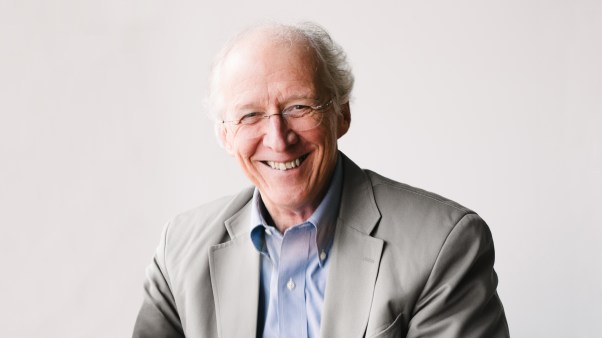
Philip Yancey is editor at large for Christianity Today. His latest book is Soul Survivor: How My Faith Survived the Church.
Copyright © 2001 Christianity Today. Click for reprint information.
Related Elsewhere:
Philip Yancey's Where is God When it Hurts, Special Edition and Soul Survivor: How My Faith Survived the Church are available on Christianbook.com
Recent Yancey columns for Christianity Today include:
Compassion Confusion | We should serve the needy even when it has bad political consequences. (August 28, 2001)
Fixing Our Weakest Link | Evangelicals should be more "needful of the minds of others." (July 13, 2001)
Replenishing the Inner Pastor | Churches should take greater interest in their shepherds' spiritual health. (May 14, 2001)
Beyond Flesh and Blood | I used to disdain biblical talk of "invisible spirits." No more. (Mar. 27, 2001)
God at Large | A look around the globe reveals a God as big as we want him to be. (Jan. 31, 2001)
Since the attacks, Gordon MacDonald has written a series of "Reflections from Ground Zero" for Christianity Today's sister publication Christian Reader.
See "A Call to Prayer," a special collection of crisis material from Christianity Today and its sister publications.
Other Christianity Today dispatches from ground zero include:
Day of Terror, Day of Grace | In the wake of fatal attacks killing thousands, Christians steer America toward prayer, service, and reconciliation. (Sept. 25, 2001)
The End of the World (Trade Center) | Dispatches from out of the dust. (Sept. 19, 2001)
'Is That Thunder?' | With metal cracking at the World Trade Center, New York pastors cry out to God. (Sept. 14, 2001)
In the Belly of the Beast | Christians, calling terrorist attack "satanically brilliant," minister at epicenter of World Trade disaster. (Sept. 12, 2001)
Previous CT essays on Christian response and what the attacks mean for the church include:
Now What? | A Christian response to religious terrorism. (Sept. 21, 2001)
To Embrace the Enemy | Is reconciliation possible in the wake of such evil? (Sept. 21, 2001)
After the Grave in the Air | True reconciliation comes not by ignoring justice nor by putting justice first, but by unconditional embrace. (Sept. 21, 2001)
Taking It Personally | What do we do with all this anger? (Sept. 14, 2001)
Reflections on Suffering | Classic and contemporary quotations for dark times. (Sept. 13, 2001)
When Sin Reigns | An event like this shows us what humans are capable of becoming—both as children of darkness and of light. (Sept. 13, 2001)
A Wake-Up Call to Become Global Christians | The deadly attacks on America will provoke many responses, but Christians are commanded to love our neighbors. (Sept. 12, 2001)
Fear and Hate | In times like this, as in all other times, Christians have a responsibility to love above all else. (Sept. 11, 2001)
God's Message in the Language of Events | In the face of evil, we must focus on keeping our hearts right. (Sept. 11, 2001)
For more Christian perspectives and responses, see various articles posted on Christianity.com, Crosswalk.com, and Beliefnet.com.
The Text This Week, a resource for pastors, has collected sermons and reflections in response to the Sept. 11 events.