In 1999 the hip question asked around movie theatres was: "What is The Matrix?" This year, after the release of two sequels, the big question appears to be "What does The Matrix mean?"
Like The Odyssey and Star Wars, The Matrix (Warner Bros.) is a case study in storytelling. In the science fiction screenplay, brothers Larry and Andy Wachowski wove into the classic hero's journey storyline psychological thought experiments, philosophical theories, and allusions to literature, film, and major world religions.
The result? An engagingly smart action movie with innumerable connections. Can't relate to the archetypal hero's quest? Then maybe you'll respond to the Christian symbolism. Or to questions about fate. Or maybe you'll just like the neat martial arts.
What exactly is the matrix? The protagonist, Neo (Keanu Reeves), discovers in the first film that the world he knows—normal life of the late 1990s—is actually a virtual reality program plugged into his brain. This computer program, or matrix, is the wool pulled over humanity's eyes. In reality, mankind is imprisoned by menacing machines that use humans for energy. Whoa.
Then a group of freedom fighters waging war on the machines take Neo into the war-ravaged real world. Many of them believe Neo is their prophesied savior.
The Matrix stands apart from other pop culture franchises because the Wachowskis embed their films with philosophical questions and theories—and then refuse to talk publicly about what they mean. Fans then rabidly discuss what The Matrix is and means. They dissect dialogue, research character names, and analyze what even a room number (303) might mean.
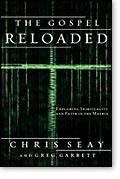
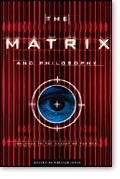
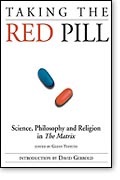
These discussions continue in Internet chat rooms, in postmodern coffee shops, and in at least three books released in the last year. Taking the Red Pill and The Matrix and Philosophy are collections of essays written by professors, philosophers, and scientists who flesh out theories, metaphysics, and theologies glimpsed in the movie. The Gospel Reloaded argues that the film not only gets viewers thinking about master's-level philosophy but also offers insight into faith.
"After decades of self-interested televangelists, it is no wonder that emerging generations yawn in the face of historic practices of faith and the authority of the church," write authors Chris Seay and Greg Garrett. "That is, until The Matrix. Neo is a savior worth considering, and his recontextualization of the gospel as a story of freeing the captives has won many new believers."
Is The Matrix a text to be pored over and analyzed so that we may glean secrets to life, especially religious ones? And should we view it as a "recontextualization of the gospel"?
Culture critic Slavoj Zizek called The Matrix a cinematic inkblot test: You will probably find in The Matrix whatever beliefs or passions you take into the film. The danger for books and essays on The Matrix is to go from reflecting on the film to treating it as a sacred text. They then extract "deep lessons" from this new canon.
Because the film's influences range from Gnosticism and Blade Runner to Plato and Buddhism, it's a stretch to say, "This is what it means." Some critics give the Wachowskis a bit too much credit. Their film does have intriguing thought experiments and an amazing web of influences, but we mustn't read too much into this as a postmodern source of the gospel. Too much ink has been spilled trying to prove the movies mean any one thing—usually something far from the gospel.
Pop culture analysis works best when attempting only to extend the discussion. In his introduction to The Matrix and Philosophy, editor William Irwin says he believes The Matrix's inkblot isn't random. It has a certain meaning.
The book's essays, however, do not attempt to prove what that meaning is. Instead, the authors explore the universal language of pop culture as a means of bringing viewers to the works of Plato, Aristotle, Descartes, and Sartre. The Matrix asks the questions, and essayists rely on works of philosophy to explore them.
Taking the Red Pill takes a similar approach. Essays debate and critique the movie's metaphysical merits, its depiction of postmodernism, and its premise.
These two essay books are heady and at times almost indecipherable to nonscholars, but they typically work. The Gospel Reloaded, on the other hand, is an exegesis that stumbles when listing comparisons and references to show how the film gives Christians "instructions about faith." Some comparisons amount to very little: one chapter can almost be boiled down to "The Bible and Matrix both have a lot about dreams."
Most Christians will have a hard time buying the argument that the movie is a Christian film because characters are named "Nebuchadnezzar" and "Trinity." (After all, the movie's savior massacres about a dozen people for little more than use of an elevator.) Parallels only go so far.
Article continues below
Nonetheless, the movie does religiously intrigue viewers. And this is where Seay and Garrett excel. The Gospel Reloaded, especially in later chapters, works well when it uses the film to dive into issues like humanity's pain, choosing how to "free our minds," and walking the path of faith.
In general, Christian analysts of pop culture would do well to acknowledge the stickiness of trying to prove meaning by poring over connection points. Otherwise, cultural studies turn into a game of "Where's Waldo?"—or more specifically, "Where's Jesus?"
The Gospel Reloaded: Exploring Spirituality and Faith in The MatrixThe Matrix and Philosophy: Welcome to the Desert of the RealTaking the Red Pill: Science, Philosophy and Religion in The Matrix
















 While we pray for peace, we need moral clarity about this war.
 As my doubts about his teachings grew, so did a secret fascination with Jesus.
 How groups like Hillsong learned to let go of the literal in favor of creative collaboration.españolPortuguês