Director Phillip Noyce is perhaps best known for his film adaptations of two Tom Clancy novels: Patriot Games and Clear and Present Danger. This past year, however, Noyce released two films that earned him greater respect amongst film critics. These films do not have the flash and dazzle of box office hits; there is no Jack Ryan to save the day in either piece. But they do offer compelling, unique, and memorable stories that will have viewers talking about them for a long time after leaving the theatre.
Both films involve the damage done when trying to shape the futures of lives one does not understand. One offers the tension of pre-war Vietnam, where a British journalist and an American official argue over who can offer a better life for a beautiful Vietnamese woman. The other takes us on a breathtaking adventure through sun-scorched Australia as Aborigine children try to escape presumptuous English bureaucrats.
Caine and Fraser shine in Graham Green’s The Quiet American
Actor Michael Caine (Hannah and Her Sisters, The Cider House Rules) gives what I believe is his most accomplished screen performance in Noyce’s adaptation of the 1955 Graham Greene novelThe Quiet American. Caine plays Thomas Fowler, a British journalist living in Vietnam in the early ’50s. Fowler is cocky and cool, even lazy, savoring the exotic sights and sounds of his new home and relaxing in the company of Phuong, his beautiful young Vietnamese girlfriend (Do Thi Hai Yen). In his arrogance and self-absorption, Fowler avoids thinking about the wife he is neglecting back home in London, but her Catholic convictions haunt him. He stifles his conscience on the matter, just as he treats his responsibilities as a journalist lightly. When another man arrives and makes a convincing case that he is the better suitor for Phuong, Fowler is shaken out of his complacency and realizes how lost he has become.
His challenger is Alden Pyle (Brendan Fraser), an American who is enthusiastic about bringing aid to the Vietnamese. (In a 1958 film version, Audie Murphy played the American, while Sir Michael Redgrave portrayed Fowler.) This handsome charismatic bachelor quickly catches Phuong’s eye. Soon, Fowler and Pyle are comparing themselves in a debate over who deserves her affections and who can offer her a better future. But their differences of opinion run deeper than that, differences brought to light as they infiltrate a violent anti-Communist resistance and develop relationships with a dangerous warlord
As we learn more and more about Fowler and Pyle, they become living metaphors of the way their two respective homelands—Britain and the U.S.—dealt with Indochina in the ’50s and ’60s. The British behaved with indifference to the internal conflicts intensifying in Vietnam, while Americans moved in with good intentions and became entangled in a messy, deadly war. It is startling to watch the story unfold if one keeps in mind that Graham Greene wrote this novel before the Vietnam War; the ominous tones of prophecy underlie several heated conversations. Noyce is well aware of this, and he concludes his film with headlines that lead us beyond the last page of Greene’s book to the late 1960s and the events that verified many of the author’s premonitions.
Just as Greene’s book was relevant to his time and place, Noyce’s movie is timely—too timely, in fact. It was slated for release in late 2001, but Miramax bigwigs decided that the story, which dares to question American foreign policy, was inappropriate for audiences in the wake of the terrorist attacks on America. They shelved it for more than a year. This was both ill-advised and unfortunate. What better time to get Americans thinking and talking about wise foreign policy than now? What better occasion to inspire conversations about the proper response to growing threats and the wisdom of exercising caution and restraint?
As a result of this fiasco, audiences have missed what should have been one of 2001’s best films, and is now appearing on many critics’ “Best of 2002” lists. With the exceptions of New York and Los Angeles, where the film is now playing in limited release, moviegoers across the country are still waiting to see it. It opens in wide release in early February. In spite of the film’s bursts of realistic violence and its context of immoral behavior, mature moviegoers will find it a stimulating drama full of important political and ethical questions.
Only a few religious press critics have responded to the film. Darrel Manson (Hollywood Jesus) is one of those celebrating Noyce’s achievement. “Certainly, at the moment, we should reflect on whether a desire for a greater good is leading us to do things that will in the end, not serve either the greater good or be good at all. Is war, in fact, a way to bring stability to the region? Is it good for us to give us civil liberties in the name of a greater good of security? Is it proper for us to support thugs … when they are convenient allies?”
Gerri Pare (Catholic News Service) writes, “Greene’s well-crafted characterizations bring out the humanity in each of the three lead players, centering the focus on them as much as on their volatile environment. The movie’s release was delayed for fear the public would not accept the unflattering depiction of the American, but regardless of his nationality the story points to how the end doesn’t justify the means.”
Marie Asner (Phantom Tollbooth) praises Caine’s performance: “When the camera centers on Michael Caine, the rest of the cast might as well pack it in and go home.”
Holly McClure (Crosswalk) thinks the film will only appeal to “fans of Caine’s or Fraser’s who enjoy a war drama.”
But most critics, both in the religious and mainstream press, argue that there is more to the film than familiar faces. Stephen Holden (New York Times) says, “Fowler may be the richest character of Mr. Caine’s screen career. Slipping into his skin with an effortless grace, this great English actor gives a performance of astonishing understatement whose tone wavers delicately between irony and sadness. The movie is ultimately more interested in the characters’ relationships than in their politics, and it does a superb job of evoking the psychological world of Graham Greene in which the truth of any situation tends to be hidden and riddled with ambiguities.” J. Hoberman (Village Voice) agrees: “In short, this new Quiet American is not only true to Greene’s novel—it has the effect of making the novel itself seem truer than it has ever been.”
A suspenseful journey along a Rabbit-Proof Fence
Noyce’s second significant film of 2002 is still playing in many arthouse theatres. This one chronicles a desperate chase through the sun-baked wilderness of Australia. No, I’m not talking about Kangaroo Jack.
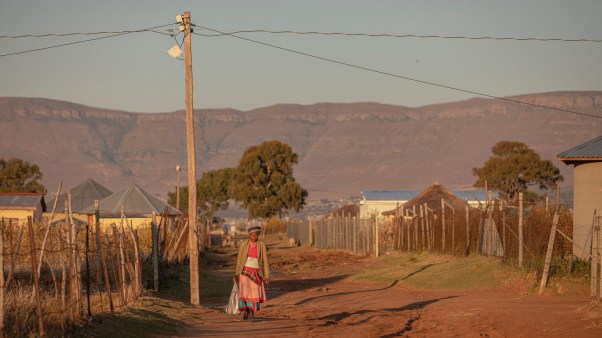
Rabbit-Proof Fence tells the true story about three Aboriginal girls who escaped the well-intentioned oppression of whites and set out on a harrowing 1,500 mile journey towards home, following the line of a fence that traversed the entire region. These persecuted children were the daughters of whites and Aborigines—”half-castes.” For many years, half-castes were forcibly removed from their families and communities, as a practice of Australian law, by government officials determined to educate them and “Christianize” them in church-run schools, marry them to whites, and “breed out” the Aboriginal genes. This practice ended only in 1970, and the Aborigine peoples remain deeply wounded by the loss of what they call “the Stolen Generations.”
Like The Quiet American, Rabbit-Proof Fence will remain a significant cinematic contribution to discussions of foreign policy, ethics, national identity, and human rights. Christopher Doyle’s cinematography captures so much heat and dust, audiences are likely to use those free soda refill coupons. Peter Gabriel’s soundtrack blends Aboriginal styles with his own distinct atmospheric sound, conjuring ghostly voices at the edges of awe-inspiring panoramic views of desert and wilderness.
An impressive cast of unknowns deserves much of the credit for their realistic portrayals and quiet emotional journeys. Kenneth Branagh, the film’s only familiar face, plays A.O. Neville, the bureaucrat overseeing the extractions. The three girls at the center of this story—Molly, Gracie, and their cousin Daisy—are played with quiet intensity by Everlyn Sampi, Laura Monaghan, and Tianna Sansbury. Sampi is especially good: her large eyes burn with anger, hope, and conviction. Scenes of the Aborigine culture are authentic, fascinating, and thus heartbreaking when we see the trucks roar up and the men dragging children from their mothers’ grasp. Neville shakes his head and mutters, “If only these people understood what we’re trying to do for them.” The grievous truth of what was indeed done to these people, rather than for them, hits viewers hard in the film’s unforgettable conclusion, when viewers are introduced to the survivors of this true-life tale.
Darrel Manson (Hollywood Jesus) comments on the film’s theme of political oppression. “Such sentiments certainly aren’t unique to Australian history. Consider American history and the abuse of Native Americans, recent immigrants in most any period, and African Americans both in the time of slavery and in the years since. Or South Africa under Apartheid. Or the British as they ‘protected’ Palestine or India. How often did people think they were doing some unappreciated good for ‘these people’? Often sin isn’t the result of malevolence. Most people don’t seek to do something evil or harmful. But often it is from the good we try to do, that we create pain—unintentional as it may be. Even when we are doing all we can to better the world, we need to be alert to the harm we may do.”
Gerri Pare (Catholic News Service) says, “Spurning sentimentality, [Noyce] delivers a riveting story of perseverance and courage. An inspirational story beautifully filmed, Rabbit-Proof Fence deserves to be submitted for foreign-film Oscar consideration by Australia.”
Steve Parish (The Church of England Newspaper) observes, “Christopher Doyle’s photography adds beauty to the sadness and hope of the girls’ story of the ‘Stolen Generations.’ This is politically-sensitive film-making at its best—without preaching.”
Confessions of another deranged television celebrity
Earlier this year, Auto Focus told the story of Bob Crane, a television celebrity whose success fueled a self-destructive plunge into sexual recklessness. As if following that film’s lead, Confessions of a Dangerous Mind arrives with the autobiographical adventures of Gong Show-host Chuck Barris. Between episodes of his crass and outrageous game show, Barris would have us believe, he was out performing assassinations for the CIA.
Confessions is the directorial debut of George Clooney, and critics are applauding his efforts as accomplished, stylish, and enormously entertaining. And it should be, with a talent list that includes Clooney, the underrated Sam Rockwell in the lead role, Drew Barrymore, Julia Roberts, Rutger Hauer, and even the briefly glimpsed Matt Damon and Brad Pitt.
Still, religious press critics have mixed feelings about the film.
J. Robert Parks (review pending at The Phantom Tollbooth) says, “One of my problems with Confessions is that it’s never clear whether we’re supposed to think Barris is crazy or just putting us on. Now I’m all for ambiguity and making an audience figure things out, but the ambiguity here makes it impossible to offer any judgments at all. We just watch this train wreck of a life, laugh at a few of the situations, and scratch our head when everything’s done.” He adds, “On the positive side, it is a great ride.”
Michael Elliott (Movie Parables) says Clooney shows “promise” but stumbles through “overambitious freshman mistakes.” Rockwell, though, shines. “As someone who grew up during the Chuck Barris years of titillating TV innuendo, I found his depiction [of Barris] uncannily accurate.”
David Bruce (Hollywood Jesus), calls it “a fun film that takes a serious look at the purpose of life. The film is not what could be described as spiritual. It is more base—just as Chuck Barris’ productions were. I must admit that I was hoping for a less explicit screenplay and a PG rating. Accepting it on its own terms, however, Confessions … explores a so-called time of innocence by stripping off the facade of nostalgia. [The film] reminds us that crassness has always been a part of entertainment industry and in popular culture … there has never been a time of innocence. Nostalgia is deceiving. There is nothing new under the sun. The world has always been in a fallen state. Humans have always been as we are.”
The film’s release has brought with it a resurgence of articles about Barris’s strange autobiography. Are his confessions about killing true? Roger Ebert (Chicago Sun-Times) says, “When I met Barris I asked him, as everyone does, if this story is true. He declined to answer. The book and the movie speak for themselves—or don’t speak for themselves, depending on your frame of mind. As for myself, I think he made it all up and never killed anybody. Having been involved in a weekly television show myself, I know for a melancholy fact that there is just not enough time between tapings to fly off to Helsinki and kill for my government.”
Darkness Falls at the top of the box office
While award-worthy films top critics’ favorites lists, the latest derivative horror flick has topped the box office. Darkness Fallstries to trouble audiences with the story of a town haunted by demonic forces that strike unsuspecting innocents in the dark.
According to religious press critics, the scariest thing about this movie is the fact that so many people are spending hard-earned money to see it.
Loren Eaton (Focus on the Family) says, “While the cinematography … is occasionally interesting, its script succumbs to cliché after cliché.”
Gerri Pare (Catholic News Service) calls the movie a “pathetically awful horror flick. Every character is one-dimensional and disposable—except, of course, the very few who survive but can’t be certain the witch is dead. Spare us the sequel, please.”
Troy Dandrea (Preview) writes, “Jonathan Liebesman’s first directing attempt has some make-you-jump scenes, but also has its share of wannabe scary scenes. Darkness Falls may frighten some viewers, but others will see it as a silly series of gory murders.”
Chicago, Max, The Hours, and more reviews of recent releases
In spite of the wave of critical acclaim for Rob Marshall’s big screen version of the musical Chicago, religious press critics continue to express grave misgivings about the film. Emily Snyder and Steven D. Greydanus (Decent Films) sum up the film: “In Chicago, the guilty live happily ever after, the innocent are neither rewarded nor even admired, and no one sits in judgment of the whole rotten system, while the audience is expected to leave not shaken and challenged but humming ‘All That Jazz.’ Chicago is cynical to the core.” Megan Basham (Christian Spotlight) also turns in a review: “Chicago succeeds in making iniquity look cool. Nobody learns any lasting lessons in this film, save, perhaps, for Zellweger’s long-suffering husband who learns that being a decent, loyal spouse makes him a chump.” David Bruce (Hollywood Jesus) is the only religious press reviewer thus far to post a rave review of Chicago.
Jeremy Lott (RazorMouth) offers a review of About Schmidt: “Despite the [film’s] reflection on the miserable and downcast and the movie’s weighty topic, all in all, the film is quite funny.
Darrel Manson (Hollywood Jesus) expresses some disappointment in the film about young Hitler entitled Maxhere, and then raves about Roman Polanski’s The Pianisthere. He writes: “The Pianist and other films of the Holocaust remind us not only of what was, but also of what still can be. It also reminds us of the gift that each life is.”
Steven Isaac (Focus on the Family) criticizes The Hours, calling it “a brilliantly austere, emotionally nuanced masterpiece riddled with suicidal musings and homosexual propaganda. It digs for answers to some of life’s most perplexing dilemmas, and then turns the dream into something of a nightmare when it comes up empty.”
“It is Finished” —in Aramaic
Holly McClure (The New York Daily News) offers a thorough report this week on Mel Gibson’s Jesus movie-in-the-making. After reviewing the actor/director’s history of hits, she claims, “Gibson’s latest project promises to be the most urgent and heartfelt—and the riskiest—of them all.”
The Passion focuses on the tormenting 12 hours leading up to Christ’s crucifixion, following him through his betrayal, trial, death, and resurrection. It’s a story that’s been told onscreen many times before. What could be so risky? McClure explains: “The movie will be spoken entirely in Aramaic and Latin, the languages spoken in Jerusalem in Jesus’ time. For those of us who haven’t mastered Aramaic but enjoy films with subtitles, we’re out of luck. There won’t be any subtitles. Whether this is a stroke of genius or an attempt to commit career suicide, it’s an eye-opening example of a major Hollywood star defying Hollywood logic.”
Gibson explains this daring choice and discusses the challenges of the project here. Describing the crew, he explains, “We have Muslims, Jews, Christians, Buddhists, even agnostics … and all are working together on this thing in perfect harmony. And they’re all getting something out of it—people have been touched. They ought to let us run the United Nations.”
Hmmm. If Gibson makes a success out of this seemingly unmarketable film, he’ll be deemed the Star Who Could Do Anything. United Nations work might be right up his alley. Who’s going to hide weapons of mass destruction when Mad Max comes knocking? I don’t see Lethal Weapon, Road Warrior, We Were Soldiers, or Braveheart on Hans Blix’s résumé.
Next week: Escaping death and depravity in the City of God.
Copyright © 2003 Christianity Today. Click for reprint information.