I bolted to my feet, still in my sleeping bag. After an eight-mile, rain-drenched solo hike on a wilderness island in Lake Superior, I had reached the deserted campground at dusk. It was early in the season, cold and buggy. Most backpackers would wait until later in June to arrive, when the weather was more favorable and the mosquitoes weren't quite so ferocious. But I was hoping for quiet and solitude, away from cell phones, e-mail, and the demands of family life. After stripping off my soaked clothing and changing into dry longjohns, I heated hot water for coffee and ate some gorp, then fell into an exhausted rest.
I reached for my pocketknife and stumbled over my gear, peering out into the foggy dark. Now, it was quiet, the deep silence of wilderness. The only sound was my adrenaline-crazed heart, thumping loudly. Clutching my knife, I pulled my sleeping bag around me and convinced myself I had been dreaming. But in moments, the screams started again. Something wet trickled down my hand --in my terror, I had cut myself. Sucking the wound, I felt pure fear. And I realized I was helpless to do anything to alleviate it.
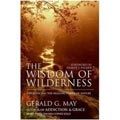
In The Wisdom of Wilderness, the final book Gerald May penned before his death, he writes about his own baptism of terror. He awakes in his tent, alone—but not alone, because a growling bear is brushing against the canvas. "For the first time in my life, I am experiencing pure fear," he writes. "I am completely present in it, in a place beyond all coping because there is nothing to do." When the bear leaves, he experiences overwhelming gratitude. "Fear, like any other strong emotion, can make you exquisitely conscious of living, perfectly aware of being in the moment."
This is what the writer Mark Buchanan—in his book The Rest of God—calls being "fully immersed in the here and now." In Buchanan's case, the impetus came from a pride of lions surrounding his jeep in Tanzania. It's not so much about fear as it is about being present to our lives, letting our senses go on full alert. It's about paying attention to what is happening in the moment rather than focusing on what we need to do or should be doing. What a concept for Christians, who can become, as the old chestnut says, "too heavenly minded to be much earthly good."
We don't like for things to be out of our control. We don't like to feel things too deeply. It hurts. It frightens us. May, a psychiatrist and theologian, writes that he spent much of his professional life helping people cope with their emotions, tame them. But he comes to believe that coping can be a bad thing. "Wild, untamed emotions are full of life-spirit, vibrant with the energy of being. They don't have to be acted out, but neither do they need to be tamed." What he's advocating here is not letting it all hang out in a hurtful way (such as screaming at our spouse) but staying in touch with our deeper self. Letting ourselves feel, and giving ourselves enough room—apart from busy schedules and demanding people—to stay in touch with our God-given inner life. For May, wilderness was where this happened.
Letting ourselves feel our emotions is only one piece of wisdom May says he learned from being outdoors, where he encounters what he calls the Power of the Slowing. He writes that he had many experiences of what he'd call Divine Presence indirectly—through the birth of his children, the love of family and friends, the beauty of sunsets and music. These he saw as evidences of God. But he yearned for more: "I could not help my desire." He feels the Power of the Slowing as a feminine presence, which, although it will trip some Christians up, is a helpful way to free us from some of our ingrained preconceptions about how God works through creation.
And perhaps nowhere does God seem so present to some of us as in nature. May went to the wilderness almost a decade and a half ago, feeling "an increasingly passionate yearning for … something. I called it my longing for God, and of course that's what all our deepest longings really are, but I could have just as well have said it was a longing for love, for union, for fully being in life, for being vitally connected with everything."The precedent is a good one. Christ had a pressing agenda, crushing demands, and a strong sense of purpose concerning what needed to be accomplished during his short time on Earth. Yet, Jesus modeled for us that these desires to do what is right and good must be balanced by times away in solitude, in wilderness.
May's writing is invitational, and his dry humor appealing. As he plans one solo camping trip, he regrets he ever saw the movie Deliverance; "I actually thought about buying a gun," he confesses. He writes with joy and awe, but also unsentimentally. Unlike many nature lovers, May isn't afraid to look at the darker side of his experiences in the outdoors, which at times become almost too painful to read (as in the story of a tortured turtle).
Article continues below
It's not always pleasant or easy to strip ourselves down to the place where we live in a state of attentiveness. Gerald May had his bear. Mark Buchanan had his lions. I had my night with the screams. Several days later into my hike, I heard them again in daylight with a Park Ranger. "Oh, that," she said. "The wolves killed a moose. The screaming is the sound of the ravens fighting over the remains." So much for the serial killer I had envisioned.
And what are we afraid of, if not of death itself? Even if we talk about our yearning for our eternal destination, we're not so happy to have a ticket dated for the next heaven-bound train. This fear of death can keep us busy coping, running, drowning out our anxieties in a welter of activities, afraid to be in touch with what we feel in any given moment. Perhaps May's book is so authentic, so vibrant, and so vulnerable because as he was writing it he was aware of his own impending death from cancer. When we "live like we are dying," as Tim McGraw sings, we are in touch with what is most important. And perhaps that is the biggest piece of wisdom that wilderness teaches us.












 While we pray for peace, we need moral clarity about this war.
 As my doubts about his teachings grew, so did a secret fascination with Jesus.
 The plan would organize UMC churches in four global regions, with each given more leeway around same-sex marriage and other theological issues.





