In recent years worship has been wrenched from the story of God and has been formed by some of the narratives of contemporary culture. Many find only a cultural manifestation of Christianity that bears no mark of spiritual nourishment or sustenance.
Me-oriented worship is the result of a culturally driven worship. When worship is situated in the culture and not in the story of God, worship becomes focused on the self. It becomes narcissistic. Christopher Lasch points to narcissism as a "metaphor of the human condition."" Certainly from a biblical perspective, sin is fundamentally a rebellion against God, a rebellion that places self at the center. Therefore, we must ask whether it is really a fact that much of our worship has shifted from a focus on God and God's story to a focus on me and my story.
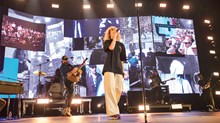
This question is answered by the research of Lester Ruth, professor of worship at Asbury Seminary. Dr. Ruth examined the seventy-two top contemporary songs over a fifteen-year period of time with his primary question being, "Are these songs rooted in the Triune nature and activity of God?" His conclusions are alarming: "None of the songs in the corpus of seventy-two explicitly refer to the Trinity or the Triune nature of God. … Only three songs refer to or name all three persons of the Trinity." While Jesus is named in thirty-two of the songs, the Holy Spirit is named in only two songs. "With so few of the songs naming or worshiping all three persons of the Trinity, it is therefore not surprising to find little remembrance of Triune activity in the corpus." This results in a "de-emphasis on commemorating God's saving activity."
By not situating worship in a recollection of the trinitarian activity to redeem and restore the world, the shift in worship, revealed in this study, is to turn God into an object of worship. Consequently the "overwhelming character of the songs" is that of the worshiper "expressing love, adoration, and praise to the direct object of their worship."
The real underlying crisis in worship goes back to the fundamental issue of the relationship between God and the world. If God is the object of worship, then worship must proceed from me, the subject, to God, who is the object. God is the being out there who needs to be loved, worshiped, and adored by me. Therefore, the true worship of God is located in me, the subject. I worship God to magnify his name, to enthrone God, to exalt him in the heavens. God is then pleased with me because I have done my duty.
If God is understood, however, as the personal God who acts as subject in the world and in worship rather than the remote God who sits in the heavens, then worship is understood not as the acts of adoration God demands of me but as the disclosure of Jesus, who has done for me what I cannot do for myself. In this way worship is the doing of God's story within me so that I live in the pattern of Jesus' death and resurrection. My worship, then, is the free choosing to do what Paul admonishes us to do: "Offer your bodies as living sacrifices, holy and pleasing to God-this is your spiritual act of worship. Do not conform any longer to the pattern of this world, but be transformed by the renewing of your mind" (Rom. 12:1-2).
Here is the shift: the biblical God, Father, Son, and Holy Spirit is not the God who sits in the heavens but the one who acts in this world. The Triune God creates, becomes involved with creation, becomes present in Israel, becomes incarnate in Jesus, dies for sin, is victorious over death, ascends to heaven, and calls the church into being by the Spirit to witness to his work of redeeming the world. This same God will restore creatures and creation and rule over all in the new heavens and the new earth. Biblical worship tells and enacts this story. Narcissistic worship, instead, names God as an object to whom we offer honor, praise, and homage. Narcissistic worship is situated in the worshiper, not in the action of God that the worshiper remembers through Word and table.
The current focus on worship originating in the self is probably a reaction against truth without passion and is what happened to me as a result of the Enlightenment and what happened to me when my learning of Scripture through the scientific method left me dry. The traditional worship of the fifties is more confessional, concerning itself with making truth statements about God. Unfortunately, these truth statements often are based on an Enlightenment method that privileges reason, science, and fact. Consequently, worship based on these truths is often dispassionate, intellectual, and dry. Contemporary worship is more characterized by passion. It has to do with the heart, with relationship, with an intimacy; it elicits feelings, emotion, tears, and intensity; it lacks substance. Worship needs both truth and passion. Truth without passion is dry. Passion without truth is empty. Where do we go to find both truth and passion? I suggest recovering worship as the proclamation and enactment of God's story.
Article continues below
Worship Proclaims and Enacts God's Story
There seems to be a great deal of confusion about the purpose of worship. I talk to many men and women who think worship arises from inside themselves. Worship, like spirituality, springs forth from the story of God. Worship does God's story. It proclaims God's story in the reading and preaching of the Word; in prayer, the church prays for the world God has reclaimed; in the Eucharist, the church ascends into the heavens and experiences the consummation of God's story in the new heavens and the new earth. There is a personal dimension to worship. Worship is the contemplation, the delight in our own heart that comes from hearing and enacting the story of how God renews the face of the earth through his Son and Spirit. The other response to worship is the choice we make to participate in purposes of God for the world that worship celebrates. This is how song, Scripture, prayer, and Eucharist nourish our spiritual life.
Scripture Nourishes the Spiritual Life
The reading and preaching of Scripture in worship nourishes our spiritual life as it interprets the whole world through the story of God's embrace. 12 This means that we cannot read the Bible through any other story. We cannot embrace the story of rationalism and science, on the one hand, and bring it to the story of the Bible as if the story of the Bible needs the story of reason and science to shore it up and make it acceptable. The whole method of making the Bible sensible through other disciplines—be they reason, science, sociology, psychology, or whatever—must be turned on its head and seen for what it is. Scripture calls us to delight in the story as true, stand inside the story, and let the story interpret science, philosophy, sociology, and all other disciplines. Scripture sees everything in life through the story.
God does not say, "Come and read the Bible through existentialism or postmodern philosophy or sociology and see if you can make it fit." No. Scripture presents the story as true and says, "Look at the world and all its structures and relationships and dysfunctions through the eyes of God." Scripture says the story of God is itself a philosophy, an anthropology, a sociology, a reason, a science. Scripture frees the Christian to see the world through the eyes of God's story as a true commentary on the origin of life, the problem of evil, the restoration of true humanity, the meaning of life, the destiny of history.
Article continues below
Reading the biblical story is not enough. To be fully nourished by Scripture, one must enter into it and participate in God's story. We must become the word, by living the Word. The Scripture as God's Word tells us how we are to live in the pattern of death and resurrection, but Jesus, who is the living Word of God, has embodied true humanity and shows us how we are to live, following the Word and doing as Jesus did for others.
The benediction at the end of the book of Hebrews, a book that urges its readers to embody the living Word, declares,
May the God of peace, who through the blood of the eternal covenant brought back from the dead our Lord Jesus, that great Shepherd of the sheep, equip you with everything good for doing his will, and may he work in us what is pleasing to him, through Jesus Christ, to whom be glory for ever and ever. Amen. — Hebrews 13:20-21
It does not get much clearer than this. The spiritual life is not nourished by faith in an abstract idea. Rather, the spiritual life is made real as we embody the written and living Word of God by dying to all that is evil and by being birthed to all that is in the service of God.
Worship as the Prayer of the Church Nourishes the Spiritual Life
In the early church the public worship of the church was a prayer of praise and thanksgiving directed not to the people but to God. Seeing worship as prayer is a paradigm shift from the current presentational notion of worship. Today worship is frequently seen as a presentation made to the people to get them to believe in the first place, to enrich and edify their faith, and to bring healing into their lives. But the ancient church did not design (a contemporary word) worship to reach people, to educate people, or to heal people. Yet in their worship, which was a prayer of praise and thanksgiving offered to God, people were indeed nourished by offering God's mighty acts of salvation as a prayer to God for the life of the world. The point is, of course, that worship as prayer shapes who we are. But how so?
First, worship as prayer focuses on historical events. God is known to us in this world, in the revelation of himself in creation, in the salvation history of Israel, and ultimately in God made visible in Jesus. Worship prayer focuses on God's self-giving love through which he recapitulates the human condition, restores our union with God, and promises a restored creation in the new heavens and the new earth. This history that we pray is not dead but alive and active, for it is God's activity, God's presence, God's reality working within history to redeem and restore the world.
Article continues below
Second, the prayer of worship is done not with the language we mortals create but with the language of God. Worship prayer does God's history in this world using the language that is particular and peculiar to the Christian story. The language of prayer is the language of creation, fall, covenant, Passover, tabernacle, prophetic utterance, incarnation, death, resurrection, church, baptism, Eucharist, eschaton. These words are necessary because they speak God's voice and presence. They are not common to the other religions of the world, and they are not generic. They are the specific words of God, and consequently, they constitute the language of worship, prayer, contemplation, and participation. There are no comparable words, no substitutes, no adaptations. The relationship between God and humanity must be articulated with these words, for they constitute the only true relationship between God and creation and, therefore, are the language of Christian prayer.
Third, the prayer that we do is situated in God's story and discloses this story. Prayer does not proceed out of an inner language that we create in the depth of our own person, as if we have the capacity to form and establish our own personal prayer detached from the story of God. No. The church prays, instead, God's story in the language of God's voice; our prayer is always anchored in the public voice of the church. Our personal prayer is dependent on the faithfulness of the church to articulate for us what we can only say in a fumbling way. The personal praying of the public prayers of the church is a necessary component of our prayer. The public prayer is the bridge to the personal prayer. There is a process through which this public prayer takes place.
Augustine refers to that process as memoria—intellectus—voluntas. First, the prayer of the church makes an impression upon our mind. We recall through memory the particular story of God and the world. The story itself grasps our intellect, envelops it, overwhelms it with wonder and astonishment (contemplation), and then produces within us the determination of the will to find our place within the prayer, to let that prayer define the meaning of the self, of human existence, of the world, of human history, of the cosmos. The prayer urges us to enter into the historical flow of God's story, to find our personal meaning within God's story of the world—especially in the climax of world history in the divine embrace of Jesus Christ—and to live in the world in the embrace of the one who shows us the fullness of human meaning. Then prayer engages the will as we act (participation) as the continuation of Jesus in the world, the affections become engaged, and we love as Jesus loved.
Article continues below
Yet one more thing: in the prayer of the church that does the saving acts of God in history, it is not the acts of God that constitute our personal prayer but the wonder and astonishment of the God who reveals his nature through this historical action culminating in the God who becomes incarnate, suffers for us, and is risen for us to reclaim us and the world to himself. We marvel in the kind of glorious God whose overwhelming love leads to these actions that reveal his very nature. And our nature, lifted .gyp into the nature of Jesus in prayer, is through him united to God and -hanged, transformed, and transfigured into the original nature created .n the image of God, for in him we are to live, to move, and to have our Being. What wondrous splendor is the prayer of the church, which we gray and through which we contemplate and participate in God.
The Eucharist Nourishes the Spiritual Life
In order to be nourished by Christ at bread and wine, most Christians I know will have to go through a paradigm shift. My circle of Christian and non-Christian friends are formed so deeply by Enlightenment rationalism that they only see bread and wine. It is as though they are looking at a snapshot photo of what Christ told us to eat and drink. They live with such a truncated and desupernaturalized faith that wants a reason to believe that Jesus is disclosed at bread and wine. In this demand they do what I have been decrying from the start of the book. They bring their Enlightenment worldview that privileges reason and science to God's story and demand that God's story be accountable to a scientific worldview rather than the other way around. To them I say, you must denounce the priority you give to a false worldview and step into the story of God and see Eucharistic bread and wine from within the story. The story says, "You do not live in a natural world explained by reason and science." God's story says, "You live in a supernatural world of wonder and mystery. Stand in this world and receive the mystery of bread and wine, disclosing to you the goodness of creation and the union of the human and divine embodied for the restoration of the whole world in Jesus, now made tangible to you and disclosed in this piece of bread and drink of wine. Be free from the constraints of reason and science and meet the true meaning of life in the mystery of these elements."
Article continues below
Now, how do bread and wine draw us into a participation in the life of God in the world? Bread and wine disclose the union we have with Jesus, which, as I have said earlier, is not a mere standing but a true and real participation that is lived out in this life as we become the story of God in this world individually in all our ways and corporately as the people of God. First, we are to ingest eucharistic bread and wine. In contemplation we look on with steadfast delight in all that bread and wine disclose, pulling back the curtain to the divine embrace. In participation we first reach out and take the whole world into our hands. We lift the Alpha and Omega to our mouth. We take God's whole story into our stomach, let it run through our bloodstream, let it then energize our entire living-our relationships, our work, our pleasure-all of life is to be lived now as Jesus lived his life for us, and for our sake, dying for us, rising for us, showing us how to live in the pattern of his dying and rising. As he took into himself the suffering of all humanity, so we are to take into ourselves the suffering of the world and do something about it. As he rose above all that is evil in the world through his resurrection, so we, too, are to rise to the new life by the Spirit of God. All our death to sin and rising to life finds its true and ultimate meaning in him who lives in us, living in our sufferings, living in our struggles with evil, living in our resurrections to new life.
So bread and wine is no abstract object out there, no thing to be observed as an object of interest, no mere ritual to be taken in a perfunctory or mechanical way. No. We move from a delightful contemplation of all that bread and wine disclose to participate in God's story by letting the Jesus who comes to us by bread and wine be given anew and poured out again to the world through our individual lives and through the community of the people of God, the church.












 While we pray for peace, we need moral clarity about this war.
 As my doubts about his teachings grew, so did a secret fascination with Jesus.
 How groups like Hillsong learned to let go of the literal in favor of creative collaboration.españolPortuguês





