



More than a century ago, Friedrich Nietzsche, the depressive and depressing German philosopher, pronounced the death of God, but most Americans have yet to hear the message. The four horsemen of the New Atheist apocalypse—Christopher Hitchens, Sam Harris, Richard Dawkins, and Daniel C. Dennett—have done their best to carry on the movement that Nietzsche heralded, but their achievement has been largely monetary. Some 90 percent of Americans are still content to believe in God.

Or gods, rather. According to Baylor University professors Paul Froese and Christopher Bader, the real war in American society is not between atheists and theists, but between people who have differing conceptions of the divine. In 1991, James Davison Hunter introduced the concept of the culture wars, which he said were grounded in different conceptions of moral authority. In America's Four Gods: What We Say about God—and What That Says about Us (Oxford University Press), Froese and Bader take the sociological examination one step further. Views of "moral authority" are notoriously difficult to study empirically. Few people, after all, are equipped to explain the differences between moral relativism and moral absolutism. So Froese and Bader examine our conception of God to determine whether and how our theological ideas matter for politics and culture.
The American religious landscape is admittedly as varied and complex as the geographical landscape. This makes any taxonomy of religious beliefs necessarily artificial, as the authors note. So they start with what American religious believers have in common: namely, the notion that God is loving. This is something some 85 percent of Americans affirm.
Beneath that superficial similarity, though, is a range of conceptions about God's character. Those conceptions dramatically alter our understanding of the shape his love takes in our world. Froese and Bader examine two questions whose answers, they contend, determine more about a person's cultural and political worldview than any other sociological factor. First, to what extent does God interact with the world? Second, to what extent does God judge the world? As the authors put it, "The answers to these questions predict the substance of our worldviews much better than the color of our skin, the size of our bank account, the political party we belong to, or whether we wear a white Stetson or faded Birkenstocks."
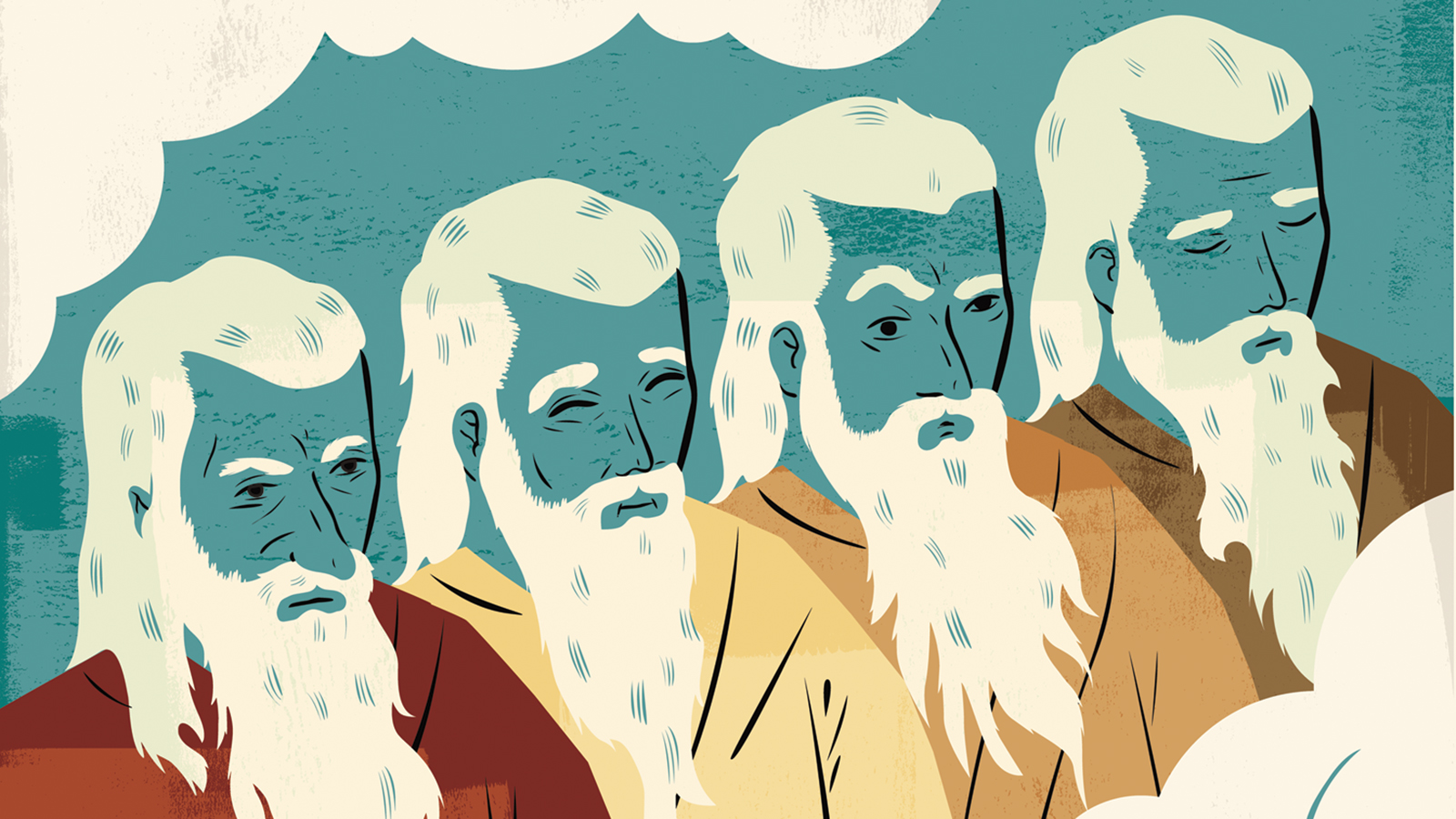
Respondents' answers lead the authors to identify four conceptions of God among the American religious public: (1) the authoritative God, who both judges and is closely engaged in the world; (2) the benevolent God, who is "engaged but nonjudgmental"; (3) the critical God, who happens to be judgmental but disengaged; and (4) the distant God, who is neither engaged nor judgmental, and could care less about how humans muck about.
The rubric is helpful. It moves beyond the binary culture-war characterizations of "Left and Right," "progressive and conservative," and so on. Our over-dependence on such characterizations became clear when black evangelicals in California voted overwhelmingly for Barack Obama, as expected, but also voted to ban homosexual marriages. The outcome reminded everyone that the culture wars aren't always fought along partisan lines.
Consider evangelicals' views on science and its relationship to the Bible. In what is probably the strongest section of the book, Froese and Bader point out that the basic question for Christians is not whether the Bible and science are ultimately reconciled, but how. For the most part, only atheists think an intrinsic conflict exists between science and religion. Everyone else is working to make sure their worldview fits with science. This includes the dissenters from Darwinian orthodoxy. They want to teach competing accounts of human origins in science classes, the authors claim, to show a firm commitment to remaining properly scientific.
Significant Differences
Despite Christians' nearly unanimous endorsement of the scientific enterprise, significant differences remain. Some argue about whose research should be trusted, others over what role science should play in society. Not surprisingly, those who believe God is highly engaged in the world—an authoritarian or benevolent God—often think he manipulates circumstances and the physical order in small and big ways. As we might expect, they registered significantly more skepticism about whether humans evolved from primates than those who believe God is critical or distant—that is, disengaged from the world.
The skepticism doesn't stop at specific claims. Believers in a benevolent or authoritarian God were far more likely to think that we rely far too much on science and not enough on faith. Additionally, twice as many believers in a distant or critical God were willing to affirm that science would eventually provide solutions to most of society's problems. The evidence, the authors conclude, suggests that "the evolutionism-creationism debate is premised not on religious faith but on differences of opinion about the role of God in the world."
The distinctions between how our competing views of God matter are less clear elsewhere. Still, interesting gems emerge. For instance, Americans in lower economic classes tend to view God as judgmental and angry. At the same time, believers in such a God tend to favor religious solutions to economic problems. For example, black communities like Greater Exodus Baptist Church in Philadelphia—where an authoritarian conception of God seems to dominate—want to use grants from the White House Office of Faith-Based and Neighborhood Partnerships for the church's social work. Those with less judgmental views of God favor more strictly secular solutions to economic problems.
The authors conclude that 'the evolutionism-creationism debate is premised not on religious faith but on diff erences of opinion about the role of God in the world.'
Bader and Froese suggest that the number of Americans who believe in a distant God will grow. This corresponds with an overall decrease in religious affiliation in America. At the same time, they see evangelicalism—with its emphasis on God's close, personal engagement with individuals—as the central bulwark against this trend.
In one chapter, Froese and Bader describe a conservative Protestant evangelical church where the pastor was surprised to discover that his congregants were happy to describe God as a "cosmic force," and yet had vastly different perspectives on whether God has a gender. The story highlights the merits of their taxonomy. On one hand, people might subscribe to similar doctrinal claims yet hold starkly different views of God. Or people might disagree about a particular doctrine, like election, yet conceive of God as intimately involved in their decisions and as one who judges them closely for their sin. Some beliefs might give them a common ethos, even where their doctrinal beliefs diverge.
The authors' work demonstrates the limitations of their taxonomy. It reminds us that the full counsel of Scripture needs to shape our conceptions. The God who is merciful is also just, and the Spirit who dwells in our hearts sometimes remains silent. Most of all, America's Four Gods is a stark reminder to Christians of the ongoing need for clear and persuasive teaching on the meaning and limitations of divine action, and the nature of God's judgment on sin. In that sense, the authors' focus on the two most important questions provides a helpful map for pastors who want to see significant life and worldview change in their congregations.
Froese and Bader have given both sociologists and the church empirical proof not only that God matters for public life, but how God matters. Their account sometimes raises more questions than it answers. And occasionally it seems to depend on particular cultural readings rather than statistical analysis. Still, it is an intricate and precise portrait of the rich texture of our American religious life.
Matthew Lee Anderson blogs at Mere Orthodoxy and is writing a book on Pope John Paul II's theology of the body.
Copyright © 2010 Christianity Today. Click for reprint information.
Related Elsewhere:
America's Four Gods: What We Say About God-and What That Says About Us is available from ChristianBook.com and other book retailers.
Mark Galli mentions America's Four Gods in this SoulWork column.
Matthew Lee Anderson blogs at Mere Orthodoxy. Previous articles by or about Anderson include:
Intellectual Blog Feast | Matthew Lee Anderson's online ruminations go deep. (Noveber 15, 2010)
Culturally Focusing on the Family | How hipster evangelicals have fallen into the same consumerist traps as their parents. (September 14, 2010)
What Is the Gospel Response to the Prop. 8 Decision? | Responses from Matthew Lee Anderson, Alan Chambers, Timothy George, Andreas Köstenberger, Dale Kuehne, Andrew Marin, Gerald McDermott, Scot McKnight, Jennifer Roback Morse, Jenell Williams Paris, Glenn Stanton, Sarah Sumner, and Mark Yarhouse. (August 9, 2010)