
Debate over the so-called Ground Zero mosque, followed by the inflammatory press attention paid to Pastor Terry Jones's threat to burn Qur'ans on September 11, has stirred an excess of angst over the Muslim presence in America. Opportunists have exploited that anxiety for political advantage. The overheated debate may be moot: while the legal standing of the planned Muslim community center is solid, its financing is reportedly shaky.
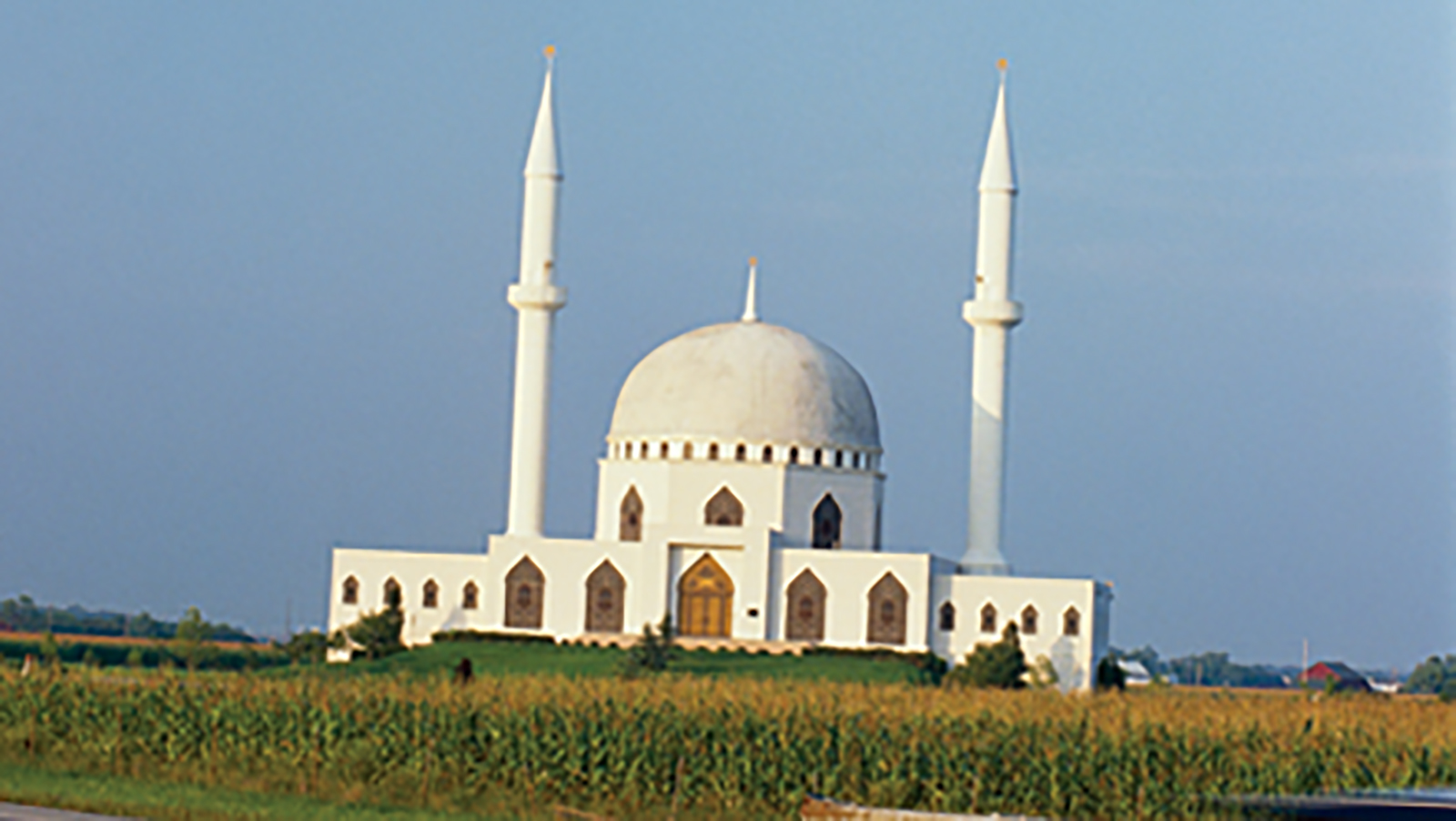
What is not settled is the place of Muslims in American society. Anxiety about Islam has spread in response to proposed mosques in Wisconsin, California, and Tennessee, where an arsonist set construction equipment ablaze. Muslims who wish to build places of prayer meet resistance, both violent and verbal. How should American Christians respond?
Twenty years ago, Terry Muck, then CT's executive editor, wrote presciently about the presence of world religions in America. In Alien Gods on American Turf, he noted that the 1980s influx of Muslims, Hindus, and Buddhists caused little concern. Nevertheless, Muck observed that "the strain of this diversity" was moving Christians who were traditionally "bedrock supporters" of religious freedom to begin questioning the limits of First Amendment guarantees. "Ten or twenty years from now," he warned, "the full force of non-Christian religions will be felt."
Just 11 years later, terrorists from Islam's Wahhabist fringe attacked the Pentagon, destroyed the World Trade Center, and created an acute awareness of Islam's adherents in the United States.
Muck did not foresee 9/11, but he was certain that the relative invisibility of non-Christian religions would evaporate. He urged American Christians to work out an understanding of their relationship to these faiths. We have not done that well.
America's founding generation faced similar questions. In the article "The Founding Fathers and Islam," the Library of Congress's James Hutson tells how Thomas Jefferson, George Washington, Benjamin Rush, and Richard Henry Lee (who made the motion in Congress that the colonies declare independence) argued for religious freedom for "Mahomitans" to make them feel welcome in the new nation.
Not everyone in that era welcomed Islam. One preacher proclaimed that the religion "breathes nothing but arms [and] is propagated by arms." Yet the president of Yale praised Islam for its strong morality. Islam, like Christianity, taught a system of future rewards and punishments. The architects of America welcomed Muslims because they deemed belief in a carrot-and-stick afterlife essential to their experiment in liberty. If the new state were to prosper, it had to attract moral citizens who worked hard, supported their families, and sacrificed for the common good.
American Christians can adopt the Founders' pragmatism. We can admire the modesty of even the most progressive Muslim women as they resist our amoral society's immodesty. We can affirm the piety that prays five times a day, gives alms, and fasts. We can applaud Muslim efforts to build strong families.
However, Christians must move beyond both fear and mere pragmatism. We must probe our own principles and ask what they lead us to do.
First, Jesus' principles of neighbor love and the Golden Rule demand that we put ourselves in the place of American Muslims. How would we want to be treated if we were nurturing new faith communities and building new churches? At the least, we would want to be known as persons. Christians in communities where new mosques are planned could, for example, create chances for Muslims and Christians to discuss best how to raise their families in an increasingly secular society. Focusing on common challenges can replace fear and division with understanding and cooperation.
Second, concern for fellow Christians living in Muslim-dominated countries should make us cautious about saying or doing things that could worsen their lives. News of anti-Muslim sentiment in the West only complicates their situation. The burden of being Christian varies in severity, but nearly all Christians in Muslim-majority countries live under significant disadvantage. To say, as Newt Gingrich has, that we should allow no more mosques in the U.S. until Saudi Arabia allows Christian churches is to be untrue to our principles. We must model religious freedom as a human right and not fashion our lives after repressive regimes.
Third, as Christ's witnesses, we consider every encounter an opportunity to show non-Christians the grace of Christ. Treating all Muslims as potential jihadists does not open opportunities for sharing the Good News. Suspicion is no foundation for evangelism. On the other hand, befriending American Muslims and defending their freedoms can tear down obstacles.
Like the apostle Paul, we no longer regard anyone from a worldly point of view. In our relationship with American Muslims, we must give concrete form to our calling as servants of reconciliation and ambassadors for Christ (2 Cor. 5:16-20).
Copyright © 2010 Christianity Today. Click for reprint information.
Related Elsewhere:
More editorials are available on our site.
Previous Christianity Today articles about Islam in America include:
Freedom? Yes! Mosque? No! | The issue isn't just freedom, say some champions of religious liberty. (August 13, 2010)
Evangelical Leaders Pan Qur'an Burn Plan | NAE issues public plea. Richard Land calls it "appalling, disgusting, and brainless." (July 30, 2010)
A Bikinied Muslim Miss USA | The backlash to Rima Fakih's win suggests mainstream America still wants their national beauties to be Christian. (Her.meneutics, May 26, 2010)
Islam, U.S.A. | Are Christians prepared for Muslims in the mainstream? (April 3, 2010)