 |
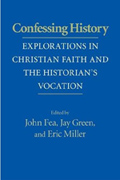
Confessing History:Explorations in Christian Faith and the Historian’s Vocation Edited by John Fea, Jay Green, and Eric Miller (University of Notre Dame Press) |
The editors dedicate this excellent collection to “John D. Woodbridge, a Christian scholar and teacher who has inspired us to think about our careers as historians in terms of the Christian understanding of ‘calling.’?” How that might play out is the burden of these essays, and—as befits a highly contested subject—the answers range widely. The contributors speak from a variety of denominational and confessional traditions; they differ in their politics and their affiliations among the academic tribes. But they are united by their conviction that the “Christian mind” matters.
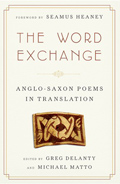 |
The Word Exchange:Anglo-Saxon Poems in Translation Edited by Greg Delanty and Michael Matto (Norton) |
“Christianity is the sea Anglo-Saxon poetry swims in,” the editors affirm at the outset, and their matter-of-fact assurance on this point is one of many virtues distinguishing their splendid anthology. The translations, contributed by more than 70 contemporary poets, face the Old English texts. Many of the poems are riddles. If you share my fondness for this form (offering a pleasure many grown-ups have long forgotten or suppressed as unbecoming of maturity), you’ll delight in the “riddle-hoards” gathered here.
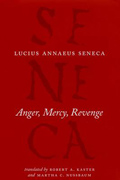 |
Anger, Mercy, Revenge:Lucius Annaeus Seneca Translated by Robert A. Kaster and Martha C. Nussbaum (University of Chicago Press) |
In the sort of project that only an outstanding university press can take on, Chicago has embarked on the Complete Works of Lucius Annaeus Seneca in English translation, with this first of eight volumes. Both as a philosopher and as a playwright, Seneca (4 B.C.-A.D. 65) was an influential figure as long as Latin was the lingua franca of the learned. “Because of his ethical writings,” the series editors remark, “Seneca fared well with the early Christians—hence the later forging of a fake correspondence with St. Paul.” Assignment: Read this volume and explain why Christians are not Stoics.
Copyright © 2011 Christianity Today. Click for reprint information.
Related Elsewhere:
Confessing History, The Word Exchange, and Anger, Mercy, Revenge are available from Amazon.com and other book retailers.
John Wilson is editor of Books & Culture, a Christianity Today sister publication.
Other Bookmarks and reviews are in our books section.