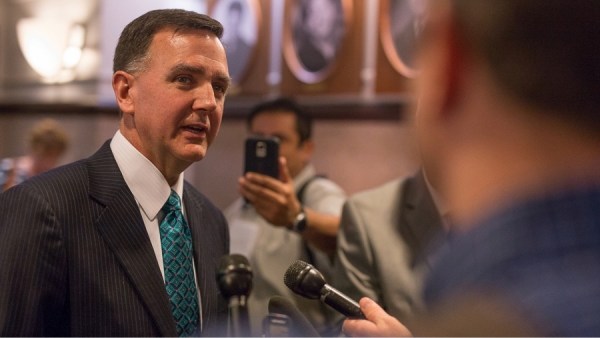
Grant Horner, an English prof at The Master’s College, specializes in the Renaissance and Reformation. But he truly comes alive when talking about movies. He teaches a popular class in film, and speaks regularly about film and popular culture.
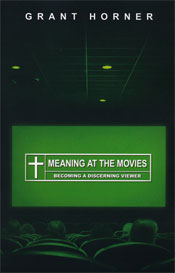
His recent book, Meaning at the Movies: Becoming a Discerning Viewer (Crossway), examines how film affects viewers. Believing that every film is essentially a different take on the Fall of Man, Horner says movies are today’s most powerful form of expression, and directors are today’s philosophers.
Christianity Today spoke to Horner in his Master’s College office in Santa Clarita, California.
Your book says that “the suppression of the truth about the fall of man” led to culture—including pop culture and movies. Please explain.
The history of human culture is the history of these suppressed truths bubbling back up; that’s what I say is the origin of culture. Why do we have culture at all? I think it’s to examine and explain the human condition. We can get along with very little: food, clothing shelter, maybe someone to hug. But we have cathedrals, opera, popular music, sports, comic books, and movies. Why do we spend so much energy on things that are not necessary for survival? I think it’s because this repressed truth keeps coming up.
Many of us see film as mere entertainment, but you see it as today’s philosophy, right?
Philosophy is the structure that you create to help you understand and live in the world. That’s what movies are. Every young man gets his ideas about how to be a man by watching action movies. Every young woman gets her ideas about what romance should be like by watching romance movies. Is a raunchy, sophomoric, toilet-mouthed movie a philosophical statement? At the very least it’s a statement that these things have no moral value, and that they’re perfectly acceptable.
Your book doesn’t list movies we should or shouldn’t watch as Christians. Why not?
Scripture tells us that our minds should be saturated with Scripture, and when you know it, then you can tell how much interaction with culture to have. Those things vary from person to person. There are some things you could watch as a mature Christian that you certainly should not watch as a baby Christian. For me to tell other people in precise instances what to watch is very problematic.
But is there a standard or a cutoff point you go by?
In 1 Thessalonians 5: 21-22 [in the KJV], Paul says to “prove,” which means to test, all things. Hold fast to that which is good. Paul also says to avoid what looks wicked. If it looks wicked, it probably is. That’s the general principal I use.
Many people limit “discernment” to avoiding the negatives: If a film doesn’t have sex, violence, or bad language, it passes the test. Anything wrong with that approach?
I don’t think there’s anything wrong with that approach. You have to be careful with what you expose yourself to, and you have to be even more careful with how you approach what you expose yourself to. Let’s say you see something you find offensive—say, blasphemous language. The real question is: Do you approve of it? Are you going to talk like that? If you can remove that temptation from yourself, that’s really good.
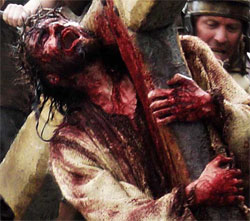
Let’s talk about violence. Was The Passion of The Christ too violent?
It had to be. Mel Gibson was saying, You don’t take the camera away when Christ’s sacred body is being tortured to death. You show it. I think he did a very good job of getting both believers and nonbelievers into the horror of the narrative. But I did make a decision not to watch it again. I’m a little concerned that I would become numbed to the violence.
Would you call It’s a Wonderful Life a Christian movie?
It’s a wonderful movie. We watch it every Christmas, and I cry every time. But the theology is an issue. It’s very interesting how little bits of pop culture can creep into your theology. There’s nothing in Scripture about a guardian angel. Angels watch over us, but they don’t show up and jump off of bridges. It presents a view of human nature that’s a little too rosy.
What’s your favorite film?
Pinocchio. He wants to be a real boy. That’s the human quest. Human beings are not what we were made to be. Every human being has a desire to be fully human. But we fill our lives with all these other things that don’t really make us satisfied or human. They separate us from God. It’s an unwitting fable about wanting to be what we were really made to be.
And Memento is one of your favorites. Why?
I see that movie and Guy Pearce’s character, Leonard Shelby, as a modern everyman, even though we don’t experience life in the scrambled way he does, in a literal sense. But in a metaphorical sense, we don’t know where we’ve come from, and we don’t know where we’re going. Everything is in the moment because we don’t have that linear narrative of lost, regenerated, saved, and moving toward a kind of final, ultimate state where we’ll be changed in the twinkling of an eye.
You have said Hollywood is working against itself. How so?
Hollywood has a built-in problem: We’re going to tell stories, stories with plots. Plots involve conflict. Conflict presupposes good and evil, but as the elite liberals of Hollywood, we don’t believe in these clean categories of good and evil. And we don’t believe in the Fall of Man. Or we believe in the fall of some men. We believe these people are evil, but we’re good.
Give an example.
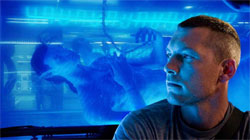
Avatar is an attempt to recreate heaven, I think—a world of peace and harmony. Who is evil in Avatar? Mankind. But the problem is that if man is bad, isn’t Hollywood made up of human beings? Ah, but they have an escape hatch—Jake Sully (a human who becomes a Na’vi). He turns into the good guy. He understands you have to preserve the environment, hate the military and fill in the blanks for the Hollywood people. Jake Sully is Hollywood.
What’s your opinion of overtly Christian films?
Most of them are just not that good. They tend to have low production values because they don’t have the money. They will never make major blockbusters, but that’s okay. Christianity is always faith in exile. What we have to say is not what the world wants. I think you’re better off to think of yourself as an artist who is a Christian rather than a Christian artist.
How do you think secular directors would react to Meaning at the Movies?
They would probably option it and to make a movie out of it if they thought they could sell enough tickets. (Laughs) I think what a lot of them would say is that it’s a nicely made argument from that perspective. For them it’s kind of like saying, I think the perspective of the Islamic terrorists was very well expressed on 9/11. It’s different from my particular commitment, but I wouldn’t want to condemn it.
Is there anything wrong with just watching movies to be entertained?
I hope the reader who just wants entertainment will understand that for the Christian, a worldly view of entertainment is one of the most dangerous things you can have. The world says, You worked hard all week. You need to go to a movie and watch cars explode or hot chicks in miniskirts. Christians have no permission in Scripture to view anything the way the world does.
Do you ever just watch movies to escape?
Yes and no. I watch movies for the same reason I read books and go down to the Getty Museum. It’s enjoyable and pleasurable. There’s nothing wrong with that as long as you’re doing it in a spirit of thankfulness to God and being careful with your time. God made food. Imagine life without food. It’s okay to enjoy in wise moderation.
Dave Berg was, until recently, a co-producer for The Tonight Show with Jay Leno, and is now writing a book about his experiences there.
Copyright © 2011 Christianity Today. Click for reprint information.