Chuck Colson, who died on April 21, wrote Christianity Today's longest-running column. His colleague Timothy George will continue Contra Mundum in our September issue, the 27th anniversary of Colson's first column. Please see our editorial and biographer Jonathan Aitken's reflection on Colson's contribution to contemporary Christianity.
* * *
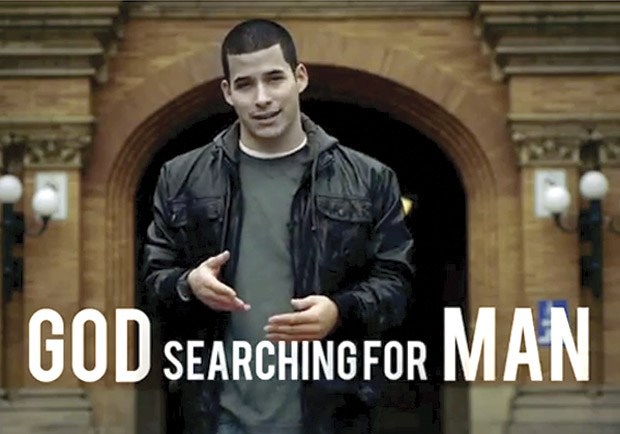
You may not be able to pick Jefferson Bethke out of a lineup, but your kids probably could. He is the creator and star of the YouTube video "Why I Hate Religion, But Love Jesus."
The video took the concept of "going viral" to an entirely new level: Just four days after it was uploaded in January, it had been viewed more than 10 million times, a number that has doubled since then.
It's easy to see why the video went viral. It's well done and clever, and Bethke's passion and sincerity are obvious. We understand why the video struck a chord. But it's a chord that's missing some important notes.
The video begins with the line, "What if I told you Jesus came to abolish religion?" Religion, Bethke tells us, is about appearances and respectability, not real transformation—a state of affairs he compares to spraying perfume on a casket. Jesus, we are told, is the "work of God," while religion is a "human invention."
There is something to be said for this critique, for religion without the gospel, ritual without conversion, is a spiritual dead end. In this sense, Jesus did not come to found a "religion." He came to establish the church.
The fastest-growing demographic in American religious life, the "nones," includes many young people who are drawn to a churchless Christianity. A better word for this group might be the "liminals," as the recent book American Grace suggests. These folks, say authors Robert D. Putnam and David E. Campbell, "seem to stand at the edge of some religious tradition, unsure whether to identify with that tradition or not."
This phenomenon is nothing new. In 1832, Ralph Waldo Emerson, the godfather of privatized religion in America, resigned from his church in Boston and moved to Concord, Massachusetts, to write essays on nature, reason, and self-reliance. Even earlier, in the age of the Reformation, spiritualists such as Sebastian Franck taught that the true visible church had ceased to exist in the world. Thus they no longer baptized, or shared Communion, or preached the audible Word of God. Instead, they focused on the inner light. Every man's hat became his own church.
But the Protestant reformers took a different approach. They protested with vigor against corruption and abuse in the church, which they aimed to reform but not abandon. They advocated a strong ecclesiology in the service of the Word of God. Calvin went so far as to claim, with Cyprian in the early church, that "outside the church there is no salvation."
It is important also to note that the New Testament speaks of the church in two distinct ways: both universal and local. Hebrews 12:22 speaks of the church as "the heavenly Jerusalem," the city of the living God, the joyful assembly of all the redeemed of all the ages. The church is an eschatological entity, the body of Christ extended through time and space.
But Hebrews also admonishes us to "not [give] up meeting together, as some are in the habit of doing, but [encourage] one another" (10:25). The local church at Fourth and Main is where the gospel is preached, sinners are saved, prayers are offered, ministers ordained, the sacraments celebrated, and a cup of cold water given in Jesus' name.
Thus in the New Testament, the universal church and the local church are distinguishable but never divorced. The two are not two species of the same genus but, rather, two predicates of the same subject. As Gregory the Great put it, "The holy church has two lives: one in time and the other in eternity." In both instances, it's the same church.
Of course, few churches live up to Christ's vision for his bride. Why should we expect otherwise? After all, we don't. Yes, the local church is usually buffeted by struggles, beset by detractors, peopled by sinners, and in countless other ways, just plain annoying. It's also the only church we have.
It is difficult not to suspect that at root, many liminals want the benefits of tradition and community without having to subordinate their desires to a larger whole.
That's a very American impulse but not a Christian one. Just ask Jefferson Bethke. After his video went viral, the talented young Bethke received a lot of criticism—and counsel—from other believers. Reflecting on his work, Bethke clarified his message. "Saying you love Jesus but hate the Church, is like a fiancé saying he loves his future bride, but hates her kids," he said.
We couldn't have said it better. We only wish it had been made clear from the start.
Charles Colson was the founder of Prison Fellowship Ministries, an outreach to convicts, victims of crime, and justice officers. Colson, who converted to Christianity before he was indicted on Watergate-related charges, became one of evangelicalism's most influential voices. His books included Born Again and How Now Shall We Live? A Christianity Today columnist since 1985, Colson died in 2012.
Timothy George is the dean of Beeson Divinity School at Samford University and a member of Christianity Today's Editorial Council. His books include Reading Scripture with the Reformers and Is the Father of Jesus the God of Muhammad? Like Colson, George has been heavily involved in the Evangelicals and Catholics Together discussions. George began cowriting "Contra Mundum" with Colson in 2011.
















 While we pray for peace, we need moral clarity about this war.
 But let’s not mistake it for calling.
 The surprising argument that Saul of Tarsus was born into bondage.