

Jump directly to the content

Feature

The Art of Loving Your Neighbor

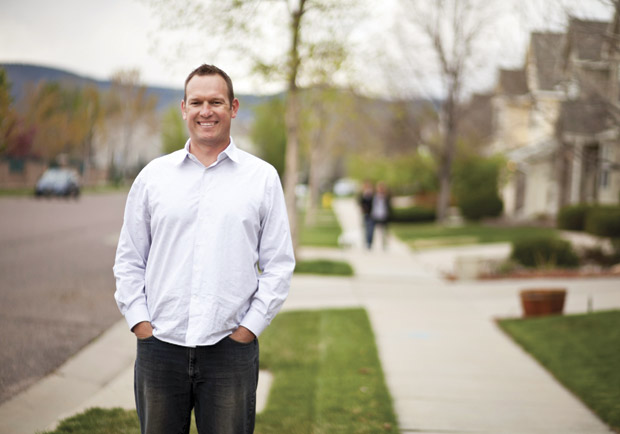
Dave Runyon puts the Great Commandment in action.
Photo by Audrey Hannah Brooks

The Art of Loving Your Neighbor

In 2006, as teaching pastor of a large church in the Denver area, Dave Runyon found himself stalled. "I would spend most of my time on the weekend services," he says, "then go out and wonder, If this is success in ministry, I have to do something else, because it feels pretty empty."

Runyon sought counsel, read Rick Rusaw and Eric Swanson's The Externally Focused Church, and was encouraged to "learn his city." He and other local pastors began attending council meetings and visiting civic leaders, all with an eye toward galvanizing churches to tackle a specific problem for the city.

Soon a church network focused on service was launched. That led to a meeting with the mayor of Arvada, Colorado, who suggested that the pastors help teach residents to be better neighbors. "I drove home that day thinking Jesus is a genius," says Runyon, co-author of The Art of Neighboring: Jesus' Call to Love Starts Right Outside Your Door (Baker), coming in August. The notion of loving God wholeheartedly and loving your neighbor as yourself was a strategic plan that could change the world. And thus was born Building Blocks, a multichurch effort to help Denver area church members and attendees engage with the eight neighbors most immediately surrounding them. More than 55 churches and 4,000 households have committed to the cause, and other cities are launching similar efforts.

Question & Answer


Please describe Building Blocks.

We focus on building relationships as opposed to evangelism. If people neighbor well, if people love other people because that's what God told us to do, we believe people will come to know Jesus. People sniff out when strings are attached. That limits effectiveness. Posture is everything. Our motives really do matter.

What makes it work?

We are simply taking Jesus at his word and challenging others to do the same. Congregations doing this together is a really big deal. When there is unity, people who don't know God will be drawn to him.

City leaders often hesitate to partner with churches for fear of proselytizing. How have you navigated that?

We had three and a half years of trust from working with city officials, showing them that we want to serve the city with them. We built up trust over time. We didn't come at them cold, and that was the key to making this work.

What challenges have you encountered?

The barrier of time. Most people live at a really unhealthy pace. When they begin to wrestle with Building Blocks, they realize doing it means saying no to other things in order to build relationships with their neighbors. Most people love the idea of this, but aren't willing to make the hard decisions that allow them to act on it.

How has Building Blocks responded to that challenge?

We keep putting the message in front of people to let them wrestle through it. As people mull on it, and realize they don't know half or more of their neighbors, that helps them make some of these hard decisions. There's a big difference between shame and conviction. We've tried to err on the side of conviction.

More: ArtofNeighboring.com


Related Elsewhere:

Learn more about Dave Runyon and Building Blocks at ArtofNeighboring.com.

Previous "Who's Next" sections featured Nikki Toyama-Szeto, Marshall Allman, Michael Patton, Bethany Hoang, Bobby Gruenewald, Julie Bell, DeVon Franklin, Shannon Sedgwick Davis, Jon Tyson,Jonathan Golden, Paul Louis Metzger, Amena Brown, David Cunningham, Timothy Dalrymple, John Sowers, Alissa Wilkinson, Jamie Tworkowski, Bryan Jennings, L. L. Barkat, Robert Gelinas, Nicole Baker Fulgham, and Gideon Strauss.



Related Topics:
From Issue:
June 2012, Vol. 56, No. 6, Pg 80, "Love Thy Neighbors"
More from Christianity Today

Streaming This Weekend, May 24, 2013

What to watch this weekend (hint: don't make a huge mistake).

Boy Scouts' Membership Change May Grow Christian Youth Clubs

Alternative organizations saw rising interest amid debate.
You Can't Think Your Way to God

You Can't Think Your Way to God

Christian formation means shaping our loves, says Jamie Smith, not just educating our minds.

Building Peace in the Heart of Darkness

Local Congolese Christians nurture new efforts to end chronic violence as UN adds new brigade.
Get Instant Access
Christianity Today Magazine
Subscribe now for a year (10 issues) at $24.95 for print, iPad, and instant web access.

International Orders

Comments

Rick Dalbey

June 29, 2012  12:45pm

Rod, Acts 2 says 3000 were converted after Peter’s first sermon. Acts 4 says 5000 heard the word and believed. Acts 19 says 12 men were baptized in the Holy Spirit and believed. Romans 10:9 says that "If you declare with your mouth, “Jesus is Lord,” and believe in your heart that God raised him from the dead, you will be saved." Belief in the heart has to be matched to public declaration...which is what Peter and Paul counted, as every evangelist in America does. Pastor Runyon says, “If people neighbor well, if people love other people because that's what God told us to do, we believe people will come to know Jesus.” It certainly is a different strategy to introducing people to Jesus. I am just asking how many of the unchurched have come to know Jesus through this program after 3.5 years, if that's the goal. If the goal is assisting city government and encouraging the people of the city to know who their neighbors are I am not sure why they are doing it. perhaps I am missing something

Report Abuse

Rod Really

June 28, 2012  11:44pm

You're really asking about how many conversions? Is that the metric? I didn't think you could actually measure that ... isn't that between God and the person?

Report Abuse

Rick Dalbey

June 27, 2012  4:32pm

So, I am curious, how many people have been converted through this effort after 3.5 years? You've said people sniff out when strings are attached. "That limits effectiveness." So I presume you don't tell them about Jesus (the attached strings). How do you measure effectiveness? The subhead says, Dave Runyon puts the Great Commandment in action. This is actually the second great commandment, to love our neighbor as ourself. If we really loved our neighbors I hope we are telling them about the plan of salvation. "For God so loved the world that He gave His only begotten son that whosever believes on Him should not perish but have everlasting life." Are our neighbors not perishing?

Report Abuse
You must be a Christianity Today subscriber to post comments
(on articles open to the public, you must at least register for a free account).
Login
or
Subscribe
or
Register

Don't Miss

Rob Bell's 'Ginormous' Mirror

Rob Bell's 'Ginormous' Mirror

To read his book is to read about our fascination with ourselves.
Losing my Edge

Losing my Edge

When your initial enthusiasm fades, you need a plan if you're going to bring your best to your calling

War and Peace

War and Peace

Pastor Tullian Tchividjian survived a leadership coup by finding rest in the liberating power of the gospel.

more | current issue

Today's Christian Woman

Ministering to Military Families

Ministering to Military Families

Five tangible ways to...

Books & Culture

A Measure of Forgiveness

A Measure of Forgiveness

Memories of a British...

Small Groups

Conflict in Small Groups

Conflict in Small Groups

Work through conflict...

Out of Ur

Review: Missio Alliance Gathering 2013

Review: Missio Alliance Gathering 2013

Reflections on mission...

Facebook

CT eBooks & Bible Studies


Shopping




