


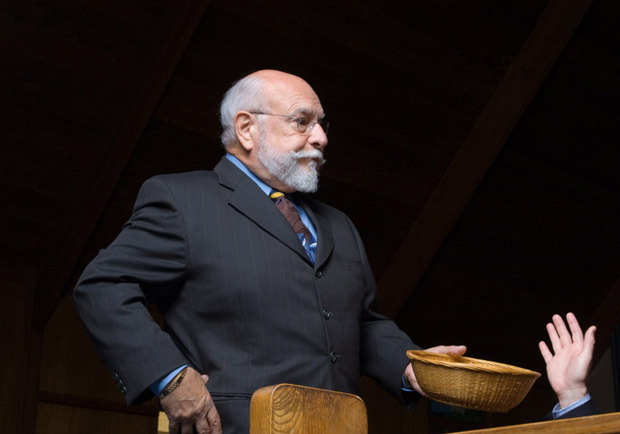
When the offering gets taken on Father’s Day at Faith Evangelical Free Church, senior pastor William Cripe knows exactly where every dollar collected will go afterward: a political action committee (PAC).
The Waterville congregation of 700 will join dozens of other Maine churches planning to send Father’s Day collections to Protect Marriage Maine (PMM), a PAC formed to defeat a same-sex marriage referendum on this November’s ballot.
“This will be a first for us,” said Cripe, who has led Faith’s congregation for nearly 22 years. “I see it as a duty, responsibility, and obligation part-and-parcel to our being salt and light in the world.”
Cripe doesn’t have to worry whether his church’s involvement will threaten its tax-exempt status. Despite public perceptions to the contrary, a limited amount of donations and lobbying efforts by churches on behalf of legislation is legal.
Expect to see churches do more of this too, observers say, as legislative measures tied to marriage, abortion, and other controversial social issues continue to go before voters on ballots across the country.
“There is a real misunderstanding about what is involved in the tax code when it concerns a church engaging in legislative efforts,” said Erik Stanley, senior legal counsel for the Alliance Defense Fund (ADF). “They can be a vital partner in this process.”
Strict language from the Internal Revenue Service (IRS) regarding what churches can and cannot do with political candidates may be one reason why church leaders assume any involvement with legislative efforts is a no-no, says Steve King, a Virginia attorney who regularly advises churches and nonprofits.
Churches are prohibited in IRS Publication 1828 from “political campaign activity,” such as making financial contributions, providing endorsements or statements of opposition, or extending an invitation for one candidate to speak while denying the other a chance.
But those rules apply only to campaigns involving candidates running for elected office.
“A ballot initiative is not a political campaign, because by definition you have to have a candidate,” King said.
Frank Sommerville, a Texas-based attorney, says some churches understand this distinction, and he expects to see more churches take action as they learn about it. He has helped churches raise funds and lobby against casino-gambling proposals and zoning laws regulating adult-entertainment businesses. “Generally these [efforts] are related to a moral issue that most churches can agree upon,” said Sommerville, an editorial advisor for Church Law and Tax Report (published by Christianity Today).
Churches are still subject to some limitations on lobbying activity, albeit not clear ones. On its website, the IRS says a congregation’s lobbying efforts must not “constitute a substantial part of its overall activities.” But “substantial” isn’t defined; the agency only says it is “determined on the basis of all the pertinent facts and circumstances in each case.”
Other 501(c)(3) organizations are subject to an IRS “expenditures” test—which uses a sliding scale based on the organization’s overall spending—to determine if the political activity is acceptable. For instance, an organization that spends $500,000 or less per year cannot spend more than 20 percent of that amount on lobbying.
Attorneys like Sommerville and Stanley say they tell churches to make sure their efforts run less than 15 percent. Stanley notes that PMM is asking churches to take up collections only on Father’s Day, and possibly a handful of other Sundays throughout the summer and fall.
“Churches would really have to spend an awful lot of money or an awful lot of time before they’re going to cross that IRS threshold,” he said. “It’s not something churches really need to worry about.”
The ADF isn’t actively involved with PMM’s effort, but it has made its own push in recent years to challenge IRS rules pertaining to churches and political candidates. Through its annual Pulpit Freedom Sunday, ADF encourages pastors to endorse or oppose specific candidates, then submit the audio of their sermons to the IRS—all with an eye toward drawing a potential legal challenge that can address the constitutional standing of those rules. The IRS has yet to take action against any churches, including the 539 which participated last year.
Carroll Conley Jr., executive director of the Augusta-based Christian Civic League, is recruiting Maine churches to fundraise for PMM. He has about 75 commitments so far, and hopes to at least double that by Election Day. “This is really our first effort to reach out and say, ‘Okay, this is our campaign and we’re counting on you [churches] to fund this campaign from the beginning,'” he said.
In 2009, Maine voters approved—by a 53 percent to 47 percent margin—a veto that overturned the state legislature’s passage of a law allowing same-sex marriages. This time around, Conley says polling suggests an even race.
In terms of fundraising, though, PMM is a sizable underdog. Mainers United for Marriage, the PAC supporting this year’s same-sex marriage referendum, raised about $465,000 between January 1 and May 29, according to the Bangor Daily News. PMM raised about $11,000 during the same period.
Related Elsewhere:
Christianity Today earlier looked at the role PACs are playing in the 2012 presidential campaigns.