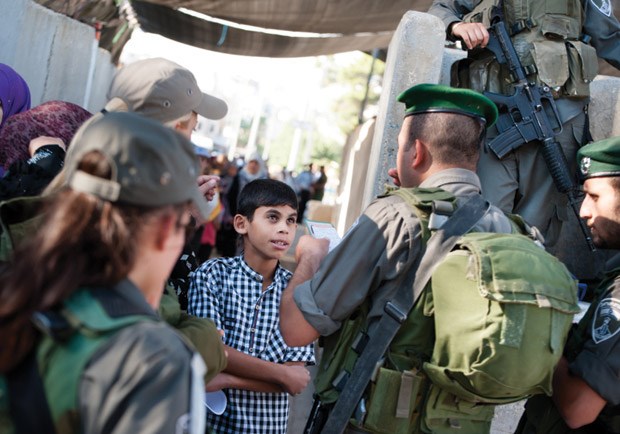
The Middle East may explode at any time. Nearly every day brings mounting tensions that are felt from the border guardhouse in the Holy Land to the White House in Washington." Israeli prime minister Benjamin Netanyahu might have spoken these words at the United Nations in September, when he warned the world about Iran's nuclear ambitions.
But that was not Netanyahu. Charles Ryrie, the renowned study Bible author, now 87, made this observation in Christianity Today in 1969. His comments have proven poignantly prescient.
In Syria, the Assad regime continues its brutal crackdown on democracy-seeking rebels. By some estimates, the death toll has exceeded 30,000 since the conflict began in March 2011. In Iran, 3,000 centrifuge machines are in continuous operation enriching uranium. Iran expects to add thousands of additional enrichment centrifuges, lending credence to Netanyahu's prediction that the Islamic state will have enough highly enriched uranium for a nuclear weapon by 2013. Throughout the region, Islamists have targeted Christians. In one recent episode in northern Sinai, nine families fled their homes after death threats.
'Secular forms of reconciliation are unsuccessful because transforming hostility into love is a supernatural thing.'—Brian Cox
There is a growing conviction that diplomacy, military intervention, regime change, free elections, foreign aid, trade accords, enhanced border security, and uncensored Internet access have not delivered lasting peace to this, the world's largest, longest-lasting hot zone.
Is there another way? Brian Cox, a California pastor and director of the Pacis Project in Faith Based Diplomacy, believes professional diplomats have all too often banished religion from the process of seeking peace. Cox said, "The basic paradigm is that religion is part of the problem."
But throughout the Middle East, there are effective, smaller ministries actively involved, not in negotiation per se, but in reconciliation. There is Andrew White, the famed vicar of Baghdad's St. George's Church. His efforts have brought Sunni and Shia leaders into new conversation to resolve their differences nonviolently. Another figure is Salim Munayer, director of Musalaha. Based in Jerusalem, this ministry of reconciliation takes Christians, Muslims, and Jews by camel on remote desert trips, where they encounter each other as persons, not stereotypes. There are other examples in Cairo, Beirut, and Iraqi Kurdistan.
These ministries fill a critical need at the grassroots. But there are certain historic moments when an opportunity for forgiveness and reconciliation opens up on a grander scale. This is one of those times.
Last month, the new Libyan head of state, Mohammed el-Megarif, a Sunni Muslim, during his own UN address, said, "I stand before you today, before the entire world, to apologize for all the harm, all the crimes committed by that despot [Moammar Gadhafi] against so many innocents." We hope Megarif's apology will be more than rhetoric and will presage lasting reform, including full religious freedom.
Cox believes Christians worldwide should see that our biblical worldview has much in common with Islam when compared to the realpolitik at work in our State Department. Realpolitik, the pragmatic use of power by a state to protect its interests, is the leading diplomatic framework among professional diplomats.
Fortunately, at State there are also competent careerists who endorse the faith community's role. State-to-state diplomacy remains vital. Cox said American policymakers would benefit from viewing religion as an asset for peacemaking. All too often, he said, policymakers sideline the faith community or bring them into the process very late.
The Pacis Project's faith-based reconciliation takes the gospel into the political realm. A central question: How do enemies problem solve together? He said, "Secular forms of reconciliation are unsuccessful because transforming hostility into love is a supernatural thing. It's the grace of God working in people's lives whether they acknowledge Jesus or not. There's no secret sauce." Cox takes the long view that "God is unfreezing the Middle East."
For many American Christians, this kind of thaw brings to mind prophecy about God's future purposes for Israel yet to be realized. In 1969, Ryrie also wrote, "The way out of the maze is to focus on people … a concern for people, more than for politics, or even prophecy."
This kind of focus on the needs of others globally is not necessarily in conflict with our government's need to defend itself from enemies, foreign and domestic. As people of faith we affirm that God's sovereignty is supreme, he is at work in peoples and nations, and the Holy Spirit can turn an otherwise hate-filled human heart toward forgiveness.
Since March 2011, 350,000 refugees of the Syrian conflict have fled into Jordan, Lebanon, Turkey, Iraq, and Armenia. In these nations, the local Christian church has played a critical role in providing care. This is more evidence of the work of the Spirit—something that the new Middle East desperately needs.
(Editor's note: An earlier version of this article incorrectly stated that Charles Ryrie was deceased. CT regrets the error.)
Have something to add about this? See something we missed? Share your feedback here.















 While we pray for peace, we need moral clarity about this war.
 We’ve got little information on Jesus’ appearance and personality. But that’s the way God designed it.españolFrançais
 The government plans to close its porous border with Myanmar to boost security, separating ethnic groups that straddle the boundary.






