Hanna Rosin noticed something curious on a recent family trip to Virginia: In the town square, amid shops and grocery stores, men had seemingly vanished. A run-in with a young mother in the grocery aisle provided some clues. Bethenny, 29, was earning her nursing degree while simultaneously running a daycare from home. When Rosin, senior editor at The Atlantic, asked Bethenny about her hopes for marriage, she rolled her eyes, saying that "there was always Calvin," the father of her daughter. Calvin, meanwhile, was struggling to find work that would cover the groceries and bills. He certainly had no plans to reenter Bethenny's life as the rightful breadwinner. Bethenny wanted to remain "queen of her castle," says Rosin, "with one less mouth to feed." And she was pretty happy about it.
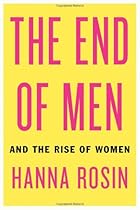
Bethenny and Calvin's story, and their respective financial and romantic trajectories, is no random blip on the line of history, argues Rosin, but the result of seismic shifts in economy and ideology, representing nothing less than "the end of two hundred thousand years of human history and the beginning of a new era." In other words, it's the end of men, and the rise of women, the name of Rosin's provocative new book (Riverhead, 2012).
The book's title is of course hyperbolic. Rosin, also the founder of Slate's DoubleX website (think a secular-left Her.meneutics), is too seasoned a journalist to suggest that all men everywhere are failing in school and eating Doritos on the couch, while all women everywhere are exceedingly bright, unflaggingly driven, and want only to reach the corner office. The traditional work-home setup between husbands and wives—a setup that some Christians believe is divinely ordained—persists throughout Western society. All of us can think of examples where this setup prevails. But something has shifted among men and women. As she did in her 2008 Atlantic essay of the same name, Rosin sets out to prove, with statistics and stories, that the something is a gender tipping point from which there's no going back.
The statistics are hard to argue with. In 2009, for the first time in U.S. history, women held about half of the nation's jobs, after a recession in which three-quarters of all jobs lost belonged to men. And these are not bottom-rung positions: women hold 51 percent of all managerial/professional jobs, up from 26 percent in 1980. Over 60 percent of accountants are women; 45 percent of law firm associates are as well. Though the top corporate jobs remain the bastion of men, with women composing just 3 to 6 percent of Fortune 500 CEOs, they are highly prized, out-earning their male counterparts by 43 percent. Such dynamics can't help affecting the household economy: Today, a married woman contributes on average 42.2 percent of her family's income, up from 4 percent in 1970. And she's not passing off the diapers to Dad: in 1965, married women reported an average of 9.3 hours of paid work each week and about 10 hours of child care. Today's married woman does an average of 23.2 hours of paid work each work, as well as more child care—13.9 hours. Steven Andrews, a stay-at-home dad interviewed by Rosin, sums up the new reality well: "I'm just the mediocre house dude." Sarah, his very-pregnant, lawyer wife, "feed[s] the family" and "make[s] big money." She's the "superstar."
But not every American man is happily assuming stay-at-home status while his wife dons a cape. Like Charles Gettys, a middle-aged Baptist who lives in Alexander City, Alabama: "For years I was the major breadwinner, and this has flipped my family around. Now she is the major breadwinner." "She," Sarah Beth Gettys, a trained nurse, has moved up the ranks at the local hospital, her corner office now sandwiched between the CEO and CFO. Charles's longstanding job at the local fabric plant withered away, and now he's "trying to be a typewriter salesman." Sarah's job covers the student loans and provides the health insurance, an uncomfortable domestic shift for Charles. "Suddenly it's us who are relying on the women," says Charles. "Suddenly, we got the women in control." In 2011, Alexander City elected its first female mayor.
Of course, the women folk didn't get control "suddenly." The manufacturing industry, in which a man with a basic education could once make up to $100,000, is now run largely by machines or workers overseas. The remaining jobs, such as those in the service sector and middle management, favor "people skills" over physical brawn, leveling the gender playing field. Over the same half-century, contraception became widespread, allowing women to delay childbearing in order to pursue degrees and corporate advancements, all the while becoming more economically independent from men. And ideology has shifted too: "Over the course of the past century, feminism has pushed women to do things once considered against their nature—first enter the workforce as singles, then continue to work while married, then work even with small children at home," notes Rosin. Whether or not we welcome or lament this ideological shift, we're hard-pressed to find large swaths of society, or even the church, arguing that women shouldn't work, before or after marriage, and should forgo all paid work while raising kids.
Article continues below
And naturally, as more women have entered professional work, fewer women have entered marriage. In 1970, 84 percent of women ages 30 to 44 were married; in 2007, 60 percent were. No doubt the ease and ubiquity of divorce plays a factor. But just as much, many women no longer need marriage—or men—in the way they once financially did, says Rosin. This plays out strikingly in the hookup culture, the topic of the first, and most disturbing, chapter of The End of Men. On Ivy League lawns and at business school parties, Rosin finds many women have no time for committed relationships, instead enjoying the sexual freedom that their male counterparts have. Contra sociologist Kathleen Bogle (Hooking Up) and journalist Laura Sessions Stepp (Unhooked: How Young Women Pursue Sex, Delay Love), Rosin sets out to show that many women are just as much exploiters as men, not starry-eyed victims who long for the courtship era. "[A]mbitious women calculate that having a relationship would be like a four-credit class, and they don't always have time for it so instead they opt for a lighter hook-up," reports Elizabeth Armstrong, a sociologist who has studied sexual abuse on college campuses. And many women Rosin interviewed are just as sexually crass as frat boys, nonplussed by acts once considered humiliating and degrading. Rosin says this is a good thing: "… over the long run, women benefit greatly from living in a world where they can have sexual adventure without commitment or all that much shame, and where they can enter into temporary relationships that don't derail their careers."
It's clear throughout The End of Men that careers and their attendant paychecks are for Rosin the central gauge for the success of today's women, and the converse decline of today's men. Instead of questioning the world men created, a world in which career and pay tell you the most important things about a person, Rosin celebrates it. And she seems to have a hard time celebrating a counternarrative. For example, in "The Top," a chapter on female CEOs and work-life flexibility, Rosin laments a survey finding that women more than men find fulfillment in aspects of work that are unrelated to promotion. And that sometimes, even, they find fulfillment outside of work. "Sometimes," Rosin reports, "women can see no greater appeal in spending their middle years climbing a corporate ladder rather than, say, being a mother, or even reading a book in a café." Instead of heralding personal choice—that foundational tenet of feminism—for a woman to figure out what success and fulfillment mean for her, Rosin seems to want every woman to carve their way up to the top—in others words, to look like her.
Article continues below
Of all the editors at Christianity Today, I actually do look the most like Rosin, one of the few female editors on a male-heavy magazine masthead. As such, I couldn't help cheering the fact that, for example, single women can now enter a professional job without raising eyebrows; that women are excelling in jobs once assumed to be "unfit" for the female sex; that married women can simultaneously raise children and still pursue paid work that uses their talents and blesses others. I generally think it's a good development in human history that women can leave abusive marriages without having to beg or become prostitutes. That women can pursue meaningful work—what we Christians might call a vocation—and can be equal creators and cultivators in the worlds of business, art, media, and education. That they, in fact, can glorify God with the work of their hands without being harassed or exploited.
But before I pull out my party hat and kazoo, I remember Charles Gettys, the gentleman from Alabama who lost his manufacturing job and is trying to carve out a semblance of manhood in this brave new post-industrial world. As it turns out, he's my brother in Christ. As much as I cheer on Sarah Gettys's enormous strides at the local hospital, I can't celebrate a new world in which one sex has to suffer for the other sex to succeed. Of course, this is how the world has been since its beginning. Of course, I directly benefit from the new gender tipping point. But until men and women can thrive together, side by side—at home, at work, in the public square—I wait with bated breath while journalists make their sweeping pronouncements about impossibly complex realities. In God's good timing, perhaps we'll welcome the rise of both women and men, and cheer the end of zero-sum calculations that center on who gets the corner office.
Katelyn Beaty is managing editor of Christianity Today magazine.

















 While we pray for peace, we need moral clarity about this war.
 We’ve got little information on Jesus’ appearance and personality. But that’s the way God designed it.españolFrançais
 The plan would organize UMC churches in four global regions, with each given more leeway around same-sex marriage and other theological issues.





