Nobody enjoys being slandered. A besmirched reputation, no less than a black eye, arouses the urge to fight back. However, thirsting for vengeance is dangerous, even when the grievance is just. A healthy desire to restore your good name can be easily upstaged by an undisciplined thrill at shaming your adversary.
For the much-maligned Family Research Council (FRC), it is hazardous to navigate these waters. The FRC is outspoken in its support for biblical marriage and sexuality. The group routinely endures scurrilous accusations of bigotry. It's not hard to fathom why FRC might wish to seize any opportunity for settling scores with ideological foes.
We believe most of the FRC's positions, policy statements, and goals are on target. But we have major reservations about FRC's methods for public engagement. Too often, its leaders traffic in flatly untrue statements. (Among FRC president Tony Perkins's claims: President Obama hates Christianity; his administration excludes Christians; and the military, under his command, bans Bibles and embraces bestiality.)
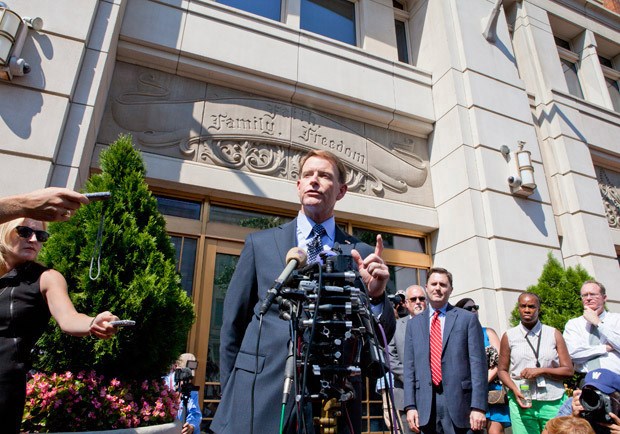
We can understand why Perkins lashed out at an obnoxious rival, the Southern Poverty Law Center (SPLC), in the wake of an attempted massacre at FRC's Washington, D.C., headquarters. Once a venerable civil-rights organization, the SPLC has disgraced itself in recent years by branding the FRC an anti-homosexual "hate group." Certainly, the SPLC deserves to have its falsehoods rebutted. But the FRC erred in eagerly claiming, so soon after the attack, that the SPLC had given the gunman "a license to shoot."
About the would-be mass murderer's motives, there can be little dispute. The suspect, 28-year-old Floyd Corkins, allegedly told an FRC security guard, "I don't like your politics"—a reference to FRC's opposition to homosexuality. During the altercation that followed, the guard took a bullet in the arm. (Heroically, the guard wrestled the gunman to the ground, almost certainly preventing further bloodshed.) Corkins had entered the FRC lobby toting a bundle of sandwiches from Chick-fil-A, the fast-food flashpoint in the national debate over same-sex marriage.
Had the campaign of vilification by SPLC eroded moral barriers to violence? Perkins very seriously entertained that possibility. At a news conference, he observed, "Corkins was given a license to shoot an unarmed man by organizations like the Southern Poverty Law Center that have been reckless in labeling organizations hate groups because they disagree with them on public policy." Appearing on Bill O'Reilly's Fox News program, Perkins blamed the SPLC for "creating the environment that led" to the gunman's murderous rage.
Perhaps this seems like a refreshing example of comeuppance. But Christians should take no delight in seeing the SPLC smeared. We abhor its moves to stamp pariah status on the moral disapproval of homosexuality. Yet both the content and the timing of the FRC's counteroffensive demonstrate poor judgment on its part.
There's no way reasonable people can judge the SPLC responsible (either directly or indirectly) for Corkins's assault. In pretending otherwise, the FRC indulges one of the nastiest habits fouling our nation's politics. It is never appropriate to lump together peaceful proponents of controversial viewpoints with extremists who pursue violent means. Conservative Christians, so often the target of malicious guilt-by-association tactics, should be ashamed to employ these tactics themselves.
Victimhood is neither a club to be brandished, nor a tool to manipulate public opinion.
FRC's suspect timing drills closer to the core of our unease. Consider the predictable patterns that unfold after episodes of ideologically freighted violence. For the victimized party, the attack opens a temporary window of sympathy. Even fierce opponents feel compelled, for a decent interval, to offer condolences instead of condemnations. These are favorable dynamics for the FRC, and the organization displayed an unseemly willingness to exploit them. Training rhetorical artillery on the SPLC in the immediate aftermath of an assault exposed FRC's determination to wring political advantage from a sudden season of victimhood.
To be clear, the FRC should not cower meekly before charges of anti-gay animus. There is a case for hanging back and letting the SPLC beclown itself. There's also a case for refusing to suffer fools gladly—or silently. But there's no case for approaching victimhood with opportunistic fervor. Victimhood is neither a club to be brandished, nor a tool to manipulate public opinion. Certainly not for people who embrace the command to love our enemies and forgive unconditionally.
Our advice to Christian organizations victimized by attacks? Go humbly about your business. Where there are wounds, bind them up. Where there are fragile spirits, nurse them back to health. Where protections prove feeble, beef up security. Above all, persevere in the important work to which you've been called. Don't get lured into cycles of recrimination. And if the press hands you a megaphone, there's no shame in politely handing it right back.
Have something to add about this? See something we missed? Share your feedback here.
















 While we pray for peace, we need moral clarity about this war.
 As my doubts about his teachings grew, so did a secret fascination with Jesus.
 The plan would organize UMC churches in four global regions, with each given more leeway around same-sex marriage and other theological issues.






