Jump directly to the content

How Should Christian Satellite Networks Evangelize Muslims?

"Innocence of Muslims" film sparks debate among broadcasters.

How Should Christian Satellite Networks Evangelize Muslims?

The stakes have been raised for Christian satellite broadcasting in the Arab world.

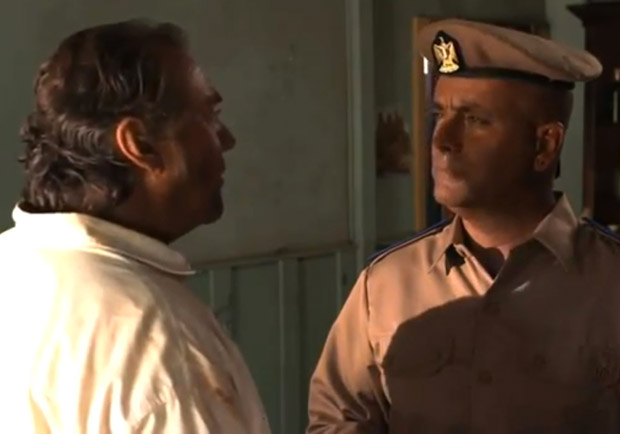
On November 28, a Cairo court sentenced to death Nakhoula Basilli Nakhoula and six other Coptic Christians—who all live outside Egypt—for their alleged roles in producing The Innocence of Muslims. The film, which mocks the Prophet Muhammad, prompted violent protests worldwide.

Nakhoula is relatively safe since he and the Way, the satellite channel that broadcasted the film, are based in the United States. But the sentence drew attention to how such channels have proliferated in recent years, seeking to present the gospel to Arab Muslims by—in part—directly criticizing Islam.

"Since satellite TV is widespread across the Middle East and is uncensorable, it is obviously a key way to make the good news of the gospel available," said Terence Ascott, CEO and founder of SAT-7.

The evangelical channel, which has broadcast from Cairo and Beirut since 1996, has a policy to never attack other faiths. "Exposing the faults of another person's belief system is best done face to face in love," said Ascott. "To do it through a broadcast can often lead to a negative reaction by viewers, and … local Christians and churches then pay the price."

"Outside Egypt, channels have freedom and use it without limits," said senior producer Sherif Wahba. "But we [Egyptian Christians] are the ones who get blamed."

This claim is rejected by newer channels that challenge Islam directly. "It is ridiculous to say this, because there has been persecution in these areas long before we did our work," said Abu Ali, director of the Life, based outside the Middle East.

He counters that established broadcasters do not preach the gospel sufficiently. "If I want to be a politician and please everybody, I can do it. But will people be saved? Of course not," he said. "Is it an attack to disagree with unbiblical teachings?"

CTV, the official channel of Egypt's Coptic Orthodox Church, was quick to condemn Innocence. "We show people what the gospel says—that we are a people of love," said director of programming Akram Beshara. "But this is indirect, not direct …. I preach Christ by presenting the religion in all of its virtue."

By contrast, the Way broadcasts programs entitled "The Contents of the Qur'an" and "How to Become Christian from Muslim." Like Innocence, arguments are frequently drawn from Islamic sources that many Muslims find dubious.

"These programs pick one text, out of context, and explain it as they want to see it," said Imed Dabbour, a Tunisian producer who has worked with both SAT-7 and more aggressive channels. "It is neither objective nor academic. They make the traditional church afraid of their job by disturbing the social peace."

To help erase such dichotomies, the Coptic diocese in Los Angeles recently launched its own channel, Logos TV.

"I will try to make the Bible known to those who have not accepted Jesus' salvation on the cross," said CEO Bishoy Aziz. "But when you attack someone, they will defend their faith. If they realize Christianity is heavenly, they will be attracted to it. Otherwise, [a hostile approach] leads to enmity."


From Issue:
January/February 2013, Vol. 57, No. 1, Pg 15, "Carrot or Stick?"
More from Christianity Today
A Fractured and Beautiful Faith

A Fractured and Beautiful Faith

How songwriter Audrey Assad transcended "positive and encouraging" to create music for the church.
A Terrifying Grace

A Terrifying Grace

Why God’s omniscience is good news for us.

Streaming This Weekend, May 24, 2013

What to watch this weekend (hint: don't make a huge mistake).
Can a Christian Family Ever Be Too Big?

Can a Christian Family Ever Be Too Big?

Experts weigh in.
Get Instant Access
Christianity Today Magazine
Subscribe now for a year (10 issues) at $24.95 for print, iPad, and instant web access.

International Orders

Comments

Displaying 1–3 of 6 comments

robert Boe

January 14, 2013  3:02pm

Its important to be respectful so that you can tell them them about the true God who lived perfectly for all people and died for all peoples sins winning all people a place in heaven with him.. so many christian today want to put strings attached to the salvation Jesus won for all. SUCH AS YOU HAVE TO BE BAPTIZED . baptism is not something we have to do.. its Gods means of grace Grace comes from God to us.. as Luther ruightly says GRACE is given to heal the spirtualy sick it is not given to decorate spirtual heroes Martin luther. There is not a word in the Bible which is extra cruem, which can be understood without reference to the cross. MARTIN LUTHER Acts 22:16 And now what are you waiting for? Get up, be baptized and wash your sins away, calling on his name.’

Report Abuse

Pop Seal

January 11, 2013  7:14pm

Just like any lost soul, the Muslim needs to first understand his sin nature like anybody else. Moving to the New Testamnet Jesus, expose the Muslim Jesus as a fiction, delicately. Follow with one's personal testimony and rush to conversion and the new life and regeneration. All cult members need to come to the end of 'their trail' before the Gospel has a chance. Conversational 'tap dances' never work.

Report Abuse

John Holmes

January 10, 2013  9:35pm

Time to include in media studies the impact of propaganda etc during the Cold war. What worked and what did not. So when broadcasting, what is most effective. Example. for many years the ABC - Australian Broadcast Commission (like the BBC, possibly better(!) for $ invested) ran a program of the life, family politics and loves of a rural family ('Blue Hills' during the Country Hour, a daily hourly program which highlighted rural needs such market reports, weather etc etc. Incorporated into that long running an quite popular serial "radio soapie' were references to changes in farming technology, or problems such as farm succession with out a will etc. This assisted in changing farming practices and improving productivity. Yet very few listeners picked that up directly. Now that it the challenge, to provide entertainment which changes. Same technique is now being used in Ethiopia for rural health.

Report Abuse
See All 6 Comments
You must be a Christianity Today subscriber to post comments
(on articles open to the public, you must at least register for a free account).
Login
or
Subscribe
or
Register

Don't Miss

Rob Bell's 'Ginormous' Mirror

Rob Bell's 'Ginormous' Mirror

To read his book is to read about our fascination with ourselves.
Losing my Edge

Losing my Edge

When your initial enthusiasm fades, you need a plan if you're going to bring your best to your calling

War and Peace

War and Peace

Pastor Tullian Tchividjian survived a leadership coup by finding rest in the liberating power of the gospel.

more | current issue

Today's Christian Woman

Ministering to Military Families

Ministering to Military Families

Five tangible ways to...

Books & Culture

A Measure of Forgiveness

A Measure of Forgiveness

Memories of a British...

Small Groups

Conflict in Small Groups

Conflict in Small Groups

Work through conflict...

Out of Ur

Review: Missio Alliance Gathering 2013

Review: Missio Alliance Gathering 2013

Reflections on mission...

Facebook

CT eBooks & Bible Studies


Shopping