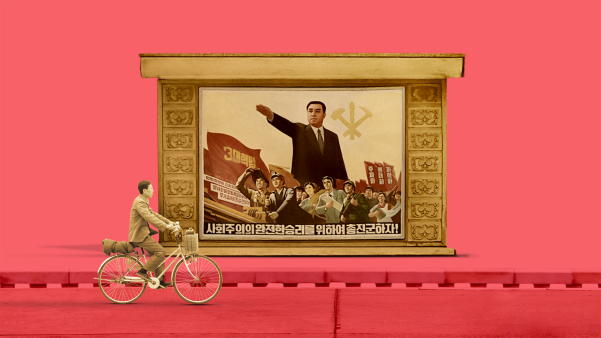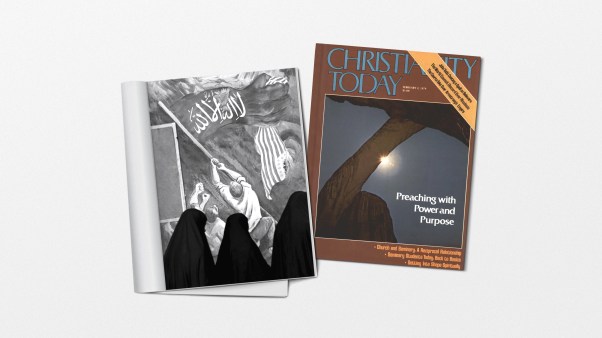

Ideas, whether true or false, are weapons. And for more than half a century the West has been infiltrated by the ideas of Marx and Lenin. Lenin in his work “What Is to Be Done?” said that the society of his day was worthless. And he went on to assert, “We must make it our business to stimulate in the minds of those who are dissatisfied only with [particular] … conditions the idea that the whole political system is worthless.”
This idea did not originate with either Marx or Lenin. Rather, it came from the “Utopian Socialists” whom they despised, among whom were many Christians and whose descendants today include many clergymen and religious leaders. Marx acknowledged that the literature of Utopian Socialists “contained most valuable materials for the enlightenment of the working class”—an attack on “every principle of existing society.” The chief difference between Marxism and Utopianism lay not in analysis of the problem but in method of treating it. The Utopians wanted to reform and improve the system, whereas the Marxists wanted to destroy it. Both prepared for a frontal attack on capitalism, the Utopians with ballots and the Marxists with bullets.
Lenin damned capitalism for its “rottenness, mendacity, and hypocrisy,” and for housing “a democracy that is curtailed, wretched, false.” The solution, he said, “cannot be the alteration of private property, but only its annihilation, not the smoothing over of class antagonisms but the abolition of classes, not the improvement of existing society but the foundation of a new one.” And he said: “The only choice is: either bourgeois or socialist ideology. There is no middle course.” “Communists should know that at all events the future belongs to them.”
These ideas inherent in both Marxism and Utopian Socialism have become controlling principles for increasing numbers of Westerners. But the Marxist goal of the destruction of present-day society has won out over the Utopian idea of reformation. Communists have been successful in spreading this view throughout the world. This ideological disease could not have spread like this had the victims not been open to infection because of declining commitment to Christian truth and the prevalence of greed and selfishness.
Reinhold Niebuhr, a socialist and a founder of Americans for Democratic Action, and certainly no apologete for capitalism, had a word to say about the threat of Communism over against democracy:
That evil [Communism] is a pretentious scheme of world salvation, a secularized religious apocalypse, which foolishly divides the world between good and evil classes and nations, predicts the final triumph of the hosts of justice against those of injustice, and destines one class, the “proletariat,” to become the masters of the whole historic process, by taking “the leap from the realm of necessity to the realm of freedom.” If this absurd religious apocalypse should ever be implemented on a large scale, and should master the destinies of all the nations, mankind would face not only totalitarian government, but a dangerous effort to press all the vitalities and forces, the hopes and aspirations of many nations, the cultural and ethical aspirations of sensitive individuals into the restrictive and confining pattern of its scheme of world salvation. The Communist danger is, in short, much more grievous and perilous than we assume it to be if we define it merely as despotism.… Communist dictatorship … is but the product and instrument of a religio-political dogmatic system with a fantastic ambition to master all the variegated processes of history and press all its themes into one mold, and which promises redemption from all social evil [© by The Columbia Forum].
Two hundred years ago Alexander Tytler discussed democracy in a book devoted to the Athenian republic. He said that because of the eventual greed of citizens, no democracy could survive:
A democracy cannot exist as a permanent form of government. It can only exist until the voters discover that they can vote themselves largesse from the public treasury. From that moment on the majority always votes for the candidates promising the most benefits from the public treasury, with the result that a democracy always collapses over a loose fiscal policy, always followed by a dictatorship.
The sickness in the soul of countries like the United States and Britain is primarily due to two conditions: the loss of national vitality and the propagation of an apostate world view. The loss of national vitality in a civilization built on the Judeo-Christian foundation is a religious problem. Had the structure been firmly established on that foundation, it could have kept Marxism out. A spiritual awakening and a turn to Judeo-Christian principles is the sole hope left to the Western world.
Marxism and Utopianism have been indigenized, and the attack both on democracy and the economic structures is even more deadly from within than from without. Of those within who are working to pull down the system it may be said, “With his mouth each speaks peaceably to his neighbor, but in his heart he plans an ambush for him” (Jer. 9:8).