
Communication requires the risk taking involved in any relationship where understanding is the goal.
We want to communicate; it is our business, our calling. We dream of holding an audience spellbound as we present the gospel. We study the “how-to’s” of sermon preparation. We spend hours researching, organizing, and developing our messages. And yet, we feel sometimes they get across and sometimes they don’t. This tension between our need to communicate effectively and our inability to do so consistently drives us to search for a communications method that really works.
But that is our problem: we search for some formula that will enable us to become master preachers. But there is none. Communication by itself is too complex a process to be squeezed into a formula or model.
If we are to increase our effectiveness we must not look for a process, but look rather at the process of communication. The question is not, “How do we communicate?” but “What is communication?”
What is the function of communication? Is it to move people to commitment? Is it a means of getting people to integrate information? Is it correct to see communication in terms of behavioral changes?
We talk about “getting the message across,” and there is the rub: too often pastors—by the very nature of their training—see communication only in terms of the message. We think communication is the process of getting our message to the people. Effective communication must therefore occur when the receivers (the people) receive 100 percent of the sender’s (preacher’s) message.
Early studies in the field of communication show this same focus on the message. The Shannon-Weaver model of communication (1949), which has dominated the direction of thinking in communications for years, focuses its study on getting the message to the receiver. Based on the technology of the Bell telephone system, it presents a logical, accurate description of what happens to a message when the “information source” encodes the message and sends it through a channel where the “receiver” decodes it.
As communicators worked with this model, they began to realize that what works with a telephone does not necessarily work with a person. Some scholars began to add to, modify, and eliminate parts of the model to make it more human. Others abandoned the model and focused almost entirely on the studies of human behavior.
Then came the studies of Marshall McLuhan. In the 1960s, he shook the foundations of communications studies with one statement: “The medium is the message.” With this single statement, McLuhan pointed to two basic facts: (1) the message is not central to the act of communication: and (2) the communicator (the medium) is.
Communication is not simply the sending and receiving of the content of a message. If it were, the process would have been mastered ages ago. Communication is nothing less than the establishment and nurturing of the relationships between the parties involved. It is the interaction between human beings—their personalities, their self images, their environment, their total being.
Communication is an event, not a content. It is more than a matter of transferring information. It is better symbolized by a handshake than a telephone. The key phrase is interaction between people
By stressing interaction, we focus on all the technological input of the science of communication, from syntax to feedback, which is symbolized in the Shannon-Weaver model. As interaction, we are looking at an act that is, by its very nature, dynamic, irreversible, and contextual.
When we stress people in the key phrase, we bring to bear the complex field of human behavior. We therefore recognize that communication involves the intrapersonal, interpersonal, and social-cultural aspects of being human.
When we stress between, we acknowledge that communication is a matter of quality, not quantity. It is not a question of how much information (message) is transmitted, but rather of the quality and depth of the interaction (medium) itself. It is not so much a matter of encoding and decoding as it is of reducing differences, becoming transparent, and creating an open environment. Effective communication is not when 100 percent of the information has been received. It is when two parties understand each other.
The best communication takes place when two parties are together. Through their interaction, they have, for one moment and on one frame of reference, come together. Together does not mean agreement, or even a sharing of the same goals, information, or convictions. In this context, together means that they understand where they themselves are, where the other party is, and what their relationship to each other is in terms of a specific frame of reference. Thus, the goal of communication is not merely to become unified in thought or action, but to understand each other, to be together.
A handshake, for example, is a dynamic interaction between people. It may be a greeting, a test of strength, a seal of agreement, or an act of love. It depends on how the two people perceive themselves, the other person, and their relationship. It is dynamic because their perceptions may change during the event itself.
That is why communication can be effective even if the particulars of the communicative act (the structure, cultural backgrounds, vocabulary, etc.) are not precise.
Communication becomes a matter of plunging in. Those who wish to communicate must be willing to plunge into an interaction between people. How deep is the initiator willing to plunge? How much of himself is he willing to risk?
When you step into the pulpit, how much of yourself are you willing to share? How deeply are you willing to interact with the hearts and souls of the people?
It is not just a matter of how deep you as the iniviator are willing to plunge. It is also a matter of how deep the people (the responders) are willing to allow you to plunge, and then to plunge into the interaction themselves. Because the interaction is dynamic, the intentions of both parties may change as the interaction takes place.
This is not to say that the message is unimportant. Christ died and rose so we would have good news to preach. And McLuhan was wrong: the message is central, but it does not occupy the center alone. With it is the interaction of speaker and listener.
The person who is absorbed in the message must think of the personal aspect of communication. The person who is absorbed in “interaction” must reconsider the message he is charged with presenting.
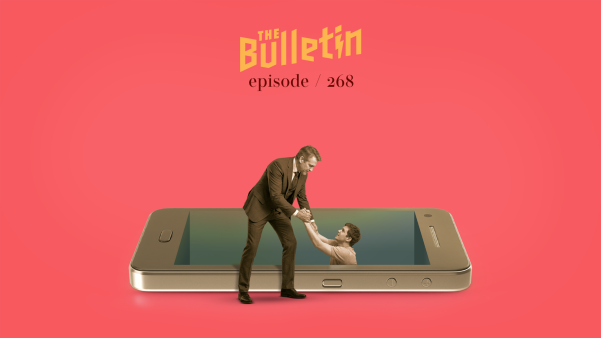
If you have been focusing simply on the message—and many of us have been trained to do just that—take the plunge. The next time you step into the pulpit, remember: communication is not just a matter of dropping the anchor of content into the sea. You must plunge into the sea yourself.
WALTER J. KIME1Mr. Kime is pastor of the United Presbyterian Church in Dalton, Ohio.