Salt

It happened in one of those countries whose leaders deny the existence of God but allow the church to exist under a secretary for church affairs. In this case, the secretary was not only a brilliant pastor, he was a medical doctor as well.

One day he was called on the carpet by the authorities. Knowing there would be a new crackdown on the Christians, he started right in: “I know you gentlemen wish to interrogate me,” he began. “But first, may I say something?”

Permission granted, he continued. “You know I am a medical doctor. As a doctor I know the importance of salt in the human body: it should be maintained at about 2 percent. If it is less, a person gets sick. If it is eliminated altogether, he will die.

“Now, Jesus Christ has said Christians are the salt of the earth.” Then he paused.

“That is all. And now, gentlemen, what is it that you wish to say to me?”

“Oh, nothing, nothing …” they agreed. And he was dismissed.

We do not know when salt was first discovered, but Numbers 18:19 refers to the “covenant of salt.” The Greeks had a saying, “Trespass not against the salt and the board.” An Arab saying went, “There is salt between us.” In Ezra 4:14, the expression “to eat the salt of the palace” is used. The modern Persian phrase, namak haram, “untrue to salt,” means to be disloyal or ungrateful. In English, “the salt of the earth” commonly describes someone who is both loved and trusted.

Salt is indispensable to man’s health and is fed to livestock for the same reason (see the Encyclopedia Britannica). It is also used as a preservative and for seasoning, as well as in curing hides and as brine for refrigeration. But there is another fact about salt that is worth considering: salt makes a person thirsty.

Do we Christians make people thirsty for the Water of Life?
Also in this issue

The CT archives are a rich treasure of biblical wisdom and insight from our past. Some things we would say differently today, and some stances we've changed. But overall, we're amazed at how relevant so much of this content is. We trust that you'll find it a helpful resource.

Our Latest

News

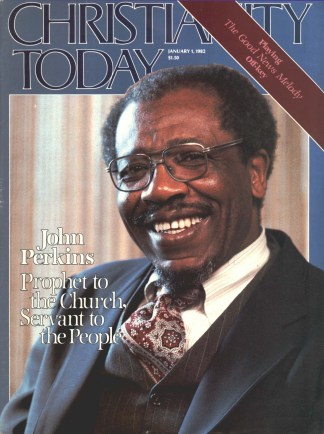
Died: John M. Perkins, Who Lived and Preached Racial Reconciliation

The civil rights leader believed in a gospel bigger than race or self-interest.

Review

Decoding the Supreme Court

Three books to read this month on politics and public life.

The Bulletin

Cost of Iran War, Quiet Southern Border, and Anglican Church Split

Mike Cosper, Clarissa Moll, Russell Moore

The financial and moral toll of war, immigration slows but ministry continues, and why denominations split.

The Year of the Evangelical

America prepared for a bicentennial, and religious identity dominated the presidential campaign.

Q&A: Eric Mason on Ministering to Men and Witnessing in Politics

Interview by Benjamin Watson

The Philadelphia-based pastor discusses how the church can engage Black men and have a biblical approach to government.

Review

‘The Secret Agent’ Explores Memory and Authoritarianism in Brazil

Mariana Albuquerque

The Oscar-nominated film reminds viewers to learn from the past—and to share our stories with the next generation.

Jan Karon Looks Back on 89 Years of God’s Faithfulness

The author of the Mitford Years series married at 14, protested segregation, and wrote her first book at 57.

The Just Life with Benjamin Watson

Michel Lusakueno: Why the World Can’t Ignore Congo

Exploring the sobering connection between modern convenience and human suffering.

Apple PodcastsDown ArrowDown ArrowDown Arrowarrow_left_altLeft ArrowLeft ArrowRight ArrowRight ArrowRight Arrowarrow_up_altUp ArrowUp ArrowAvailable at Amazoncaret-downCloseCloseEmailEmailExpandExpandExternalExternalFacebookfacebook-squareGiftGiftGooglegoogleGoogle KeephamburgerInstagraminstagram-squareLinkLinklinkedin-squareListenListenListenChristianity TodayCT Creative Studio Logologo_orgMegaphoneMenuMenupausePinterestPlayPlayPocketPodcastprintRSSRSSSaveSaveSaveSearchSearchsearchSpotifyStitcherTelegramTable of ContentsTable of Contentstwitter-squareWhatsAppXYouTubeYouTube