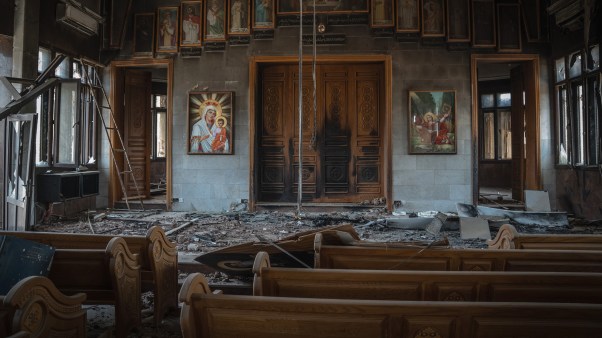




Human-rights activists have protested Romania’s heavy-handed treatment of ethnic minorities and religious believers, including the bulldozing of churches. But the Soviet-bloc country has largely ignored such criticism.
Now, Romania’s human-rights abuses are jeopardizing its status as a preferred U.S. trading partner. By the end of last month, the U.S. Senate was expected to consider suspending Romania’s Most Favored Nation (MFN) trade status for at least six months. MFN status allows Romanian products to enter the U.S. marketplace for the lowest possible tariff price.
Since 1974, favored trading status for Communist countries has been granted only by presidential decree, depending on those countries’ emigration policies and general compliance with international standards of human rights. Only a few of these countries enjoy MFN status, and Romania has been included as an exception to the rule. But according to U.S. observers, the issue is being debated once again in Washington because Romania persists in violating the religious and civil rights of its people.
In April, the House of Representatives passed legislation to suspend MFN status. Three of the bill’s cosponsors, Reps. Frank Wolf (R-Va.), Chris Smith (R-N.J.), and Tony Hall (D-Ohio), visited Romania to document instances of persecution.
“Romania has tried to cultivate a moderate image in the West,” Hall said during floor debate in the House. “But this image cannot hide the reality: Romania is a repressive Communist country which is under the thumb of the Soviet Union and which works to promote terrorism and instability around the world.”
The House legislation details specific charges against Romania, including the destruction of churches and temples, arrests of believers, and persecution of Hungarian and other ethnic minorities. Continuing to grant MFN status to Romania “can be construed as an endorsement of that nation’s abusive internal practices,” the bill states. The National Association of Evangelicals and Christian Response International, a group that monitors violations of religious and human rights, have backed proposals to revoke Romania’s MFN status.
The U.S. State Department and some groups concerned with rights, however, say the legislation may not accomplish what it intends: to pressure the Romanian government to respond with authentic reform in its human-rights actions. Ernest Gordon, president of CREED (Christian Rescue Effort for the Emancipation of Dissidents) notes that MFN status is “a very important diplomatic instrument.” By carefully monitoring a country’s compliance with MFN requirements, Gordon said, and by maintaining the threat of withdrawing MFN status, positive steps for human rights can occur. CREED, which would like to see negotiations continue, neither opposes nor supports the current legislation.
In 1986, a similar bill failed to pass in Congress. To remedy the problems seen in last year’s version, the current House bill would establish a mechanism for assuring continued Romanian compliance with basic standards of human rights if MFN status is restored after a six-month suspension. The Senate version of the legislation differs from the House bill on this procedure. The Senate bill requires reports from the President every 60 days on Romania’s compliance with human-rights expectations, whether or not MFN status is restored.