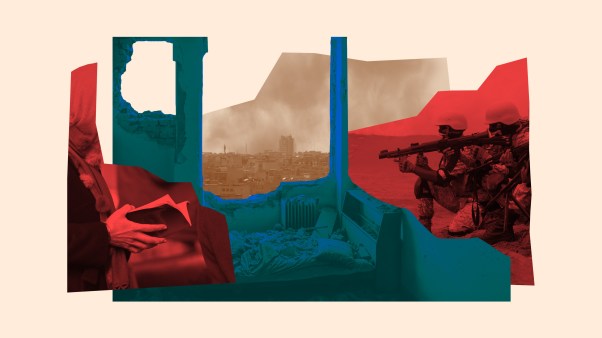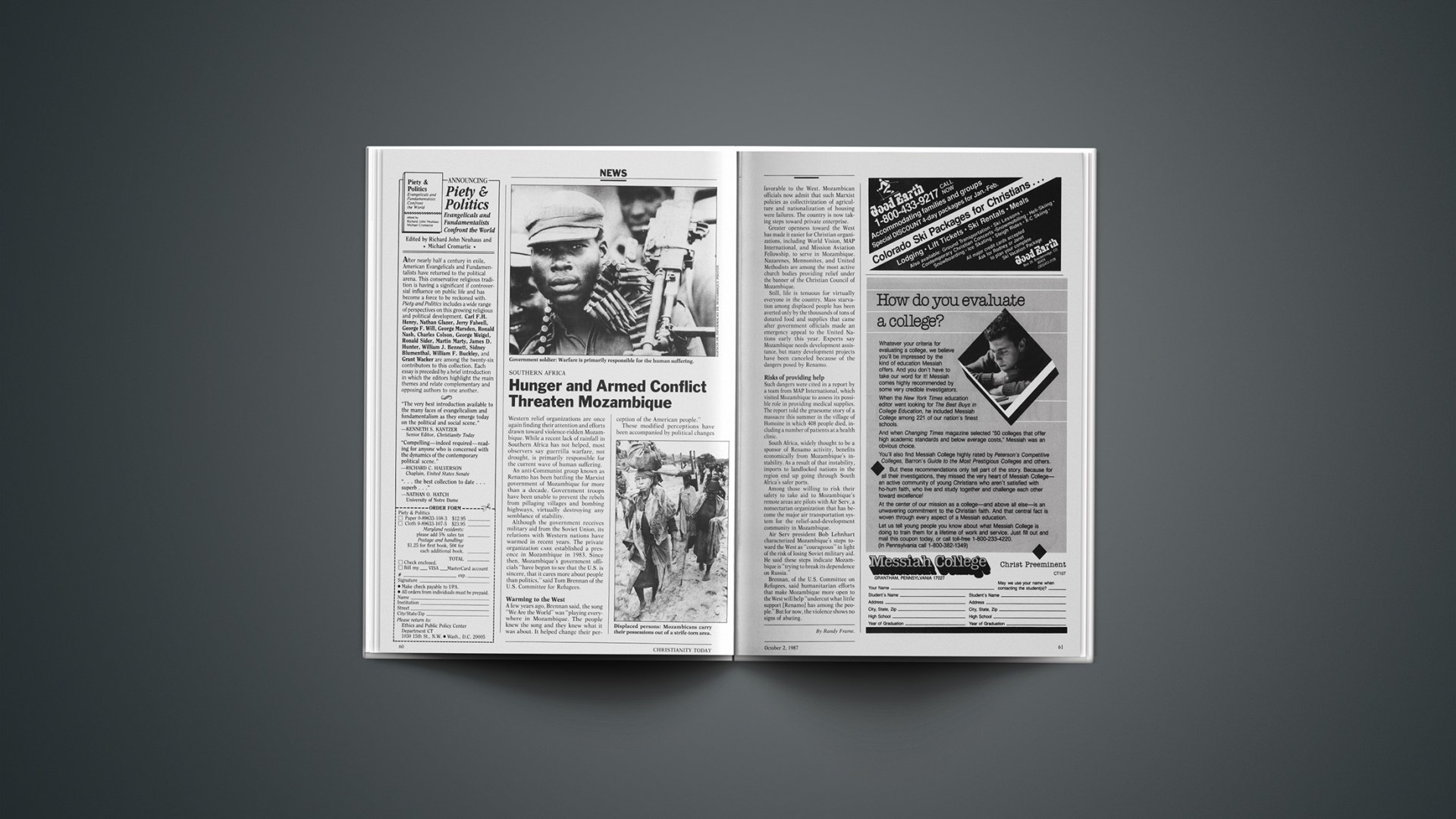

Western relief organizations are once again finding their attention and efforts drawn toward violence-ridden Mozambique. While a recent lack of rainfall in Southern Africa has not helped, most observers say guerrilla warfare, not drought, is primarily responsible for the current wave of human suffering.
An anti-Communist group known as Renamo has been battling the Marxist government of Mozambique for more than a decade. Government troops have been unable to prevent the rebels from pillaging villages and bombing highways, virtually destroying any semblance of stability.
Although the government receives military aid from the Soviet Union, its relations with Western nations have warmed in recent years. The private organization CARE established a presence in Mozambique in 1983. Since then, Mozambique’s government officials “have begun to see that the U.S. is sincere, that it cares more about people than politics,” said Tom Brennan of the U.S. Committee for Refugees.
Warming To The West
A few years ago, Brennan said, the song “We Are the World” was “playing everywhere in Mozambique. The people knew the song and they knew what it was about. It helped change their perception of the American people.”
These modified perceptions have been accompanied by political changes favorable to the West. Mozambican officials now admit that such Marxist policies as collectivization of agriculture and nationalization of housing were failures. The country is now taking steps toward private enterprise.
Greater openness toward the West has made it easier for Christian organizations, including World Vision, MAP International, and Mission Aviation Fellowship, to serve in Mozambique. Nazarenes, Mennonites, and United Methodists are among the most active church bodies providing relief under the banner of the Christian Council of Mozambique.
Still, life is tenuous for virtually everyone in the country. Mass starvation among displaced people has been averted only by the thousands of tons of donated food and supplies that came after government officials made an emergency appeal to the United Nations early this year. Experts say Mozambique needs development assistance, but many development projects have been canceled because of the dangers posed by Renamo.
Risks Of Providing Help
Such dangers were cited in a report by a team from MAP International, which visited Mozambique to assess its possible role in providing medical supplies. The report told the gruesome story of a massacre this summer in the village of Homoine in which 408 people died, including a number of patients at a health clinic.
South Africa, widely thought to be a sponsor of Renamo activity, benefits economically from Mozambique’s instability. As a result of that instability, imports to landlocked nations in the region end up going through South Africa’s safer ports.
Among those willing to risk their safety to take aid to Mozambique’s remote areas are pilots with Air Serv, a nonsectarian organization that has become the major air transportation system for the relief-and-development community in Mozambique.
Air Serv president Bob Lehnhart characterized Mozambique’s steps toward the West as “courageous” in light of the risk of losing Soviet military aid. He said these steps indicate Mozambique is “trying to break its dependence on Russia.”
Brennan, of the U.S. Committee on Refugees, said humanitarian efforts that make Mozambique more open to the West will help “undercut what little support [Renamo] has among the people.” But for now, the violence shows no signs of abating.
By Randy Frame.