MEDICAL ETHICS
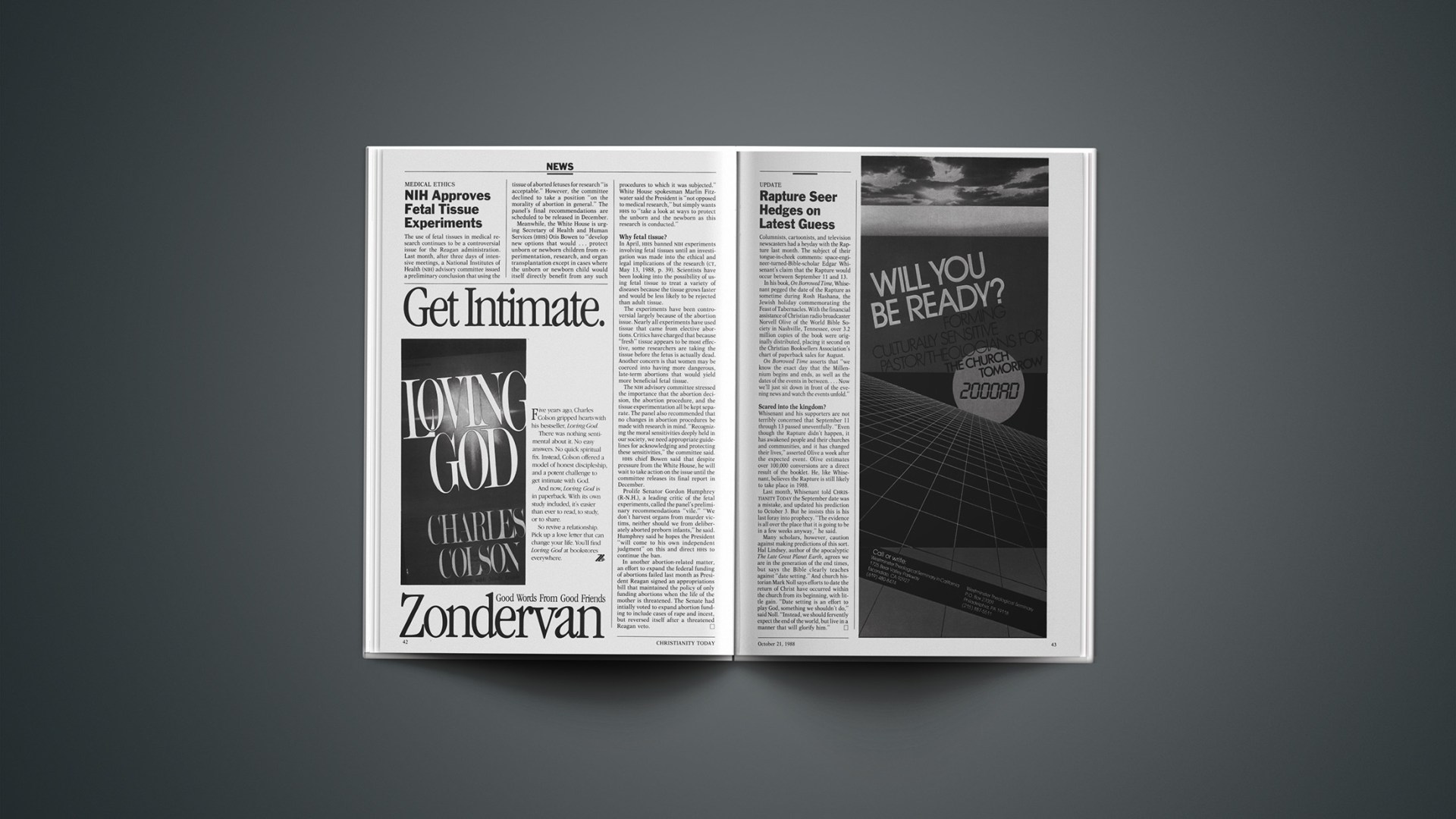
The use of fetal tissues in medical research continues to be a controversial issue for the Reagan administration. Last month, after three days of intensive meetings, a National Institutes of Health (NIH) advisory committee issued a preliminary conclusion that using the tissue of aborted fetuses for research “is acceptable.” However, the committee declined to take a position “on the morality of abortion in general.” The panel’s final recommendations are scheduled to be released in December.
Meanwhile, the White House is urging Secretary of Health and Human Services (HHS) Otis Bowen to “develop new options that would … protect unborn or newborn children from experimentation, research, and organ transplantation except in cases where the unborn or newborn child would itself directly benefit from any such procedures to which it was subjected.” White House spokesman Marlin Fitzwater said the President is “not opposed to medical research,” but simply wants HHS to “take a look at ways to protect the unborn and the newborn as this research is conducted.”
Why Fetal Tissue?
In April, HHS banned NIH experiments involving fetal tissues until an investigation was made into the ethical and legal implications of the research (CT, May 13, 1988, p. 39). Scientists have been looking into the possibility of using fetal tissue to treat a variety of diseases because the tissue grows faster and would be less likely to be rejected than adult tissue.
The experiments have been controversial largely because of the abortion issue. Nearly all experiments have used tissue that came from elective abortions. Critics have charged that because “fresh” tissue appears to be most effective, some researchers are taking the tissue before the fetus is actually dead. Another concern is that women may be coerced into having more dangerous, late-term abortions that would yield more beneficial fetal tissue.
The NIH advisory committee stressed the importance that the abortion decision, the abortion procedure, and the tissue experimentation all be kept separate. The panel also recommended that no changes in abortion procedures be made with research in mind. “Recognizing the moral sensitivities deeply held in our society, we need appropriate guidelines for acknowledging and protecting these sensitivities,” the committee said.
HHS chief Bowen said that despite pressure from the White House, he will wait to take action on the issue until the committee releases its final report in December.
Prolife Senator Gordon Humphrey (R-N.H.), a leading critic of the fetal experiments, called the panel’s preliminary recommendations “vile.” “We don’t harvest organs from murder victims, neither should we from deliberately aborted preborn infants,” he said. Humphrey said he hopes the President “will come to his own independent judgment” on this and direct HHS to continue the ban.
In another abortion-related matter, an effort to expand the federal funding of abortions failed last month as President Reagan signed an appropriations bill that maintained the policy of only funding abortions when the life of the mother is threatened. The Senate had intially voted to expand abortion funding to include cases of rape and incest, but reversed itself after a threatened Reagan veto.