“This Sinful [Communist] Party,” blared the headline over an article by Peter Kuzmic, director of the Evangelical Theological College in Osijek, Yugoslavia. Kuzmic was nonplussed. The editors of Danas, a publication considered the Time magazine of Yugoslavia, had pulled out of context one statement from the article they had asked him to write last November and emblazoned it across the top of the page. “Don’t worry,” a Western journalist assured him. “That means more people will read it.”
The fact that anyone at all would have the opportunity to read such an article was a small miracle. Until recently, Christian theologians have not been invited to write articles for the secular press.
Earlier last year, Kuzmic participated in a two-and-one-half hour national call-in television program entitled “Religion in Times of Crisis.” A panel including two Marxist scholars, an Orthodox bishop, a Roman Catholic bishop, a Muslim leader, and Kuzmic participated in a lively discussion; callers jammed the telephone lines. Afterwards, Kuzmic received hundreds of telephone calls and letters asking for more information about “this evangelical Christianity” he espoused.
Nationalistic Ties
Only a year ago, evangelical Christians were still being ridiculed in the news media. “This is a new day,” said Kuzmic. In Yugoslavia, Protestants—at a mere six-tenths of 1 percent of the population—are still an oddity. The main religions of Yugoslavia are Roman Catholic, Orthodox, and Muslim. All are closely tied to nationality. Like the Soviet Union, Yugoslavia is made up of highly nationalistic republics and autonomous regions, some of which would like to secede from the country.
The various Protestant denominations are typically found in only a few of Yugoslavia’s many ethnic or language groups. With ethnic religious histories that in some cases trace back over 100 years, the denominations feel very much like groups in diaspora.
This has limited the church’s ability to reach out to other ethnic and language groups, said Andrej Beredi, bishop of the Slovak Evangelical Lutheran Church. With nearly 50,000 members, the Lutheran church is the largest Protestant denomination in Yugoslavia. During the last 20 years, it has been slowly losing members. Only about 10 percent of its members attend church regularly.
Evangelicals form a small, slowly growing percentage of Protestants in Yugoslavia. Traditionally, evangelical churches have been clustered in the north of the country, along the Hungarian border. No churches have experienced rapid growth, but among them Pentecostal churches have been growing the fastest, said Kuzmic, who pastors a Pentecostal church.
Unprepared For Privileges
Yugoslavia has been affected only marginally by the political reform movements sweeping over Eastern European countries. A nonaligned country, Yugoslavia has had in place for years many of the more-open policies only now being implemented in the Soviet bloc. Nevertheless, the disillusionment sweeping Marxism out of many neighboring countries and an increasingly liberal atmosphere in the country have meant new opportunities for the church, opportunities for which it is largely unprepared.
“I don’t see that we are ready to use all the privileges we have today,” said Bishop Beredi. “We are so small; we don’t have the resources.”
The state of the economy presents an added difficulty. Inflation last year was a staggering 2,500 percent. “We have never before been in such a financial crisis as we have this year,” said Bishop Beredi. “Under these circumstances, it is impossible to make plans for the future.”
Protestant churches are small, averaging from 30 members to a few hundred. There is little such churches can do unless they are willing to cooperate, said Martin Hovan, superintendent of the United Methodist Church in Yugoslavia. Yet churches have been reluctant to cooperate in evangelism or discipleship of new believers, he said.
He cites materialism as a key reason for the weakness of Protestant churches in Yugoslavia. Churches lack pastors, he said, because they are unable to find young people who are willing to sacrifice material aspirations in order to train for the pastorate.
Despite these hindrances, there is hope for the future of Christianity in Yugoslavia if Christians will take advantage of new opportunities, said Kuzmic.
“Evangelicals must learn to articulate their faith effectively in the context of contemporary socialist society,” said Kuzmic. “We need nonsectarian, intelligent evangelism. We need quality literature that speaks to the modern man on the street who has never been inside a church, never read the Bible, doesn’t understand religious language. Socialist society is experiencing a serious crisis,” he said. “There is a vacuum here, which needs to be filled with the gospel of Jesus Christ.”
By Sharon E. Mumper.
How Long Will It Take Albania?
A new saying among Eastern European émigrés now living in the United States goes something like this: Poland took seven years to achieve freedom, Hungary took seven months, East Germany took seven weeks, Czechoslovakia took seven days, and Romania took seven hours. How long will Albania take?
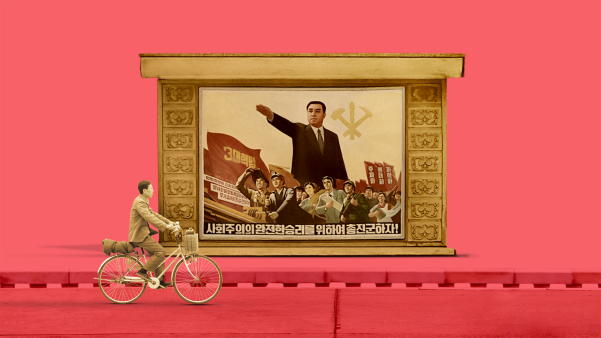
As the world’s first and only self-proclaimed atheistic nation, Albania has long isolated itself from even the most repressive of the other Eastern bloc Communists. Yet, as a movement toward freedom and democracy sweeps across neighboring countries, observers are debating whether Albania can remain immune to the dramatic changes in its region.
“There are foreigners who ask: ‘Will Albania experience such processes as those occurring in Eastern Europe?’ We answer in a clear-cut and categorical way: ‘No,’ ” Albanian leader Ramiz Alia told a trade union meeting in December, according to an official news agency report. “Albania and Eastern Europe have developed along completely different ideological, political, economic and social trends,” Alia said.
However, there have been several unconfirmed reports of small, student-led demonstrations and antigovernment protests—reports the Albanian government has roundly denied. In addition, Alia has made overtures in recent months toward establishing official relationships with other countries.
But many caution this does not signify that Albania stands on the brink of new openness. “Our 1989 [religion and human rights] report called Albania the fortress state, and that is what it still is,” said Nina Shea, president of the Puebla Institute, a human-rights monitoring group. “Miracles do happen, but I’m not optimistic that they will happen soon in Albania.”
Christian Solidarity International executive director Steven Snyder agrees that change will come slowly. “The Christian element was predominantly responsible for the prodemocracy movement throughout Eastern Europe,” Snyder said. “What there is of the Albanian church has been forced deeply underground, so the visible church is nearly nonexistent.”
However, Snyder said he believes change in Albania will come. “But it will start slower,” he said, adding that for now, “fear will keep freedom squelched in Albania.”