Christians come in all shapes and sizes, and it is fascinating to see how God works in us to make us both more like each other and more different from each other than we were before.
As we draw closer to Christ, and he draws us closer to himself, our mind-sets, value systems, character qualities, behavior patterns, perceptions, and reactions become increasingly like his. Thus we converge on each other, fulfilling Paul’s dictum that mature Christians should take the same view of things.
But knowledge that one is loved makes for the blossoming of individuality, and so every believer who basks in the love of Christ develops an increasingly distinctive flavor (what other word works?).
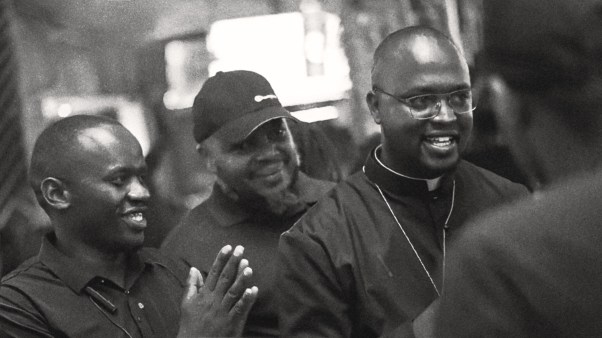
All this runs through my mind as I think of Klaus Bockmuehl, honored friend and beloved colleague at Regent College, once a CT columnist, later a section editor for CT’s The Best in Theology. Klaus died last June at 58 after a long and draining fight with cancer. Resourceful medical treatment gave him more months of life than were expected, enabling him to finish a last book that he wanted the world to have, and to speak from his wheelchair at Regent’s degree ceremony a month before he died, manifesting the triumph of a poised spirit over a ruined body in a way that those present will not forget. I found myself very close to Klaus in outlook while feeling quite different from him in human flavor, and the combination of these two facts made our friendship a delight to me.
Klaus was very much his own man in Christ. Into his making went German genes and work habits; Reformation faith, focused on forgiveness; the visionary pietism of Frank Buchman’s Moral Re-Armament; the rough-and-tumble of the London School of Economics; theological salt and pepper from Barth and Moltmann; a sweetly solid marriage; and long-term martyrdom to migraines. With his formidable learning and fastidious skill in speech went a childlike simplicity and straightforwardness that made him fascinating to know, and the intensity of his devotion to Jesus could be stunning in its impact. Students found, sometimes to their surprise, that his intellectual rigor was wedded to compassionate care. In faith-full fortitude he was a model to many—and to me.
Here are two gems from the dying professor’s last address.
“I have come to think that among the ‘multitude of God’s mercies’ (Ps. 106:7) which I have received, my recent illness was to teach me this lesson.… In the past, if someone had called me a workaholic, I would secretly have responded: ‘Of course, what else?’ A workaholic in the kingdom of God, that was a title of honor! I saw my Christian and human dignity, my self-confidence, and reason for self-respect in being a ‘worker’ in God’s vineyard.… Let us beware of the seductive glory of Christian workaholism, of the moments when we tell ourselves secretly how wonderful it feels to be exhausted in the work of the Lord.… No, it is far better to do a few inconspicuous things but to do them under God’s instruction.… Listening to the voice of God comes first and must precede all action.”
“From a practicing Christian one may expect radiation of light and warmth, giving to others both orientation and an experience of shelter. Those who listen to God promote healing instead of creating new problems. They truly become spiritual resource people, constant sources of inspiration instead of a constant source of irritation in their surroundings. This is not a matter of human endeavor and achievement. It comes from listening; it is the outcome of communion with Christ.”
Thus Klaus, being dead, yet speaks, setting before us the most basic truths about the spiritual life—that being must precede doing, listening must precede acting, receiving must precede any attempt to give. This, I believe, is wisdom that religious people in North America today need desperately to take to heart. I know that I do, and I guess that you who read this column are in the same boat with me. The only recognition Klaus ever wanted was that people should take seriously what he had to say. So—what about it? Shall we start?