
My experience as a student in four different Christian schools verifies Robert Brow’s fundamental thesis: We evangelicals view the Bible through a particular model that organizes and expresses our view of the faith. That there are several, perhaps many, models of faith in the larger circle of Christianity, and in the various subcircles of evangelicalism, is obvious. I not only believe Brow is generally correct, but I can say that I have experienced the shift from the old to the new model and seek in my work to assist those making a similar journey.
Brow is right in pointing to new-model evangelicals’ abhorrence of a Christianity shaped by the Roman forensic system of law. Protestantism has perpetuated a forensic Christianity that differs from Roman Catholic Christianity only in degree. This Romanizing influence is seen in an evangelicalism that emphasizes legalism over freedom, institution over relationship, judgment over grace, individual sin over powers of evil, and exclusiveness over inclusiveness.
A telling example is found in views of the Atonement. While the Christus Victor model, which emphasizes Christ’s victory over evil, is clearly taught in the Bible, old-model evangelicals pay it little attention. They miss what this fundamental interpretation of the work of Christ means for a dynamic understanding of the church (as people of the Event), worship (as celebration of the Event), spirituality (as living in the reality of our baptism into the Event), and eschatology (as the final overthrow of the powers of evil). I am a new-model evangelical committed to the Christus Victor view, who, without negating the substitutionary or moral theories, feels spiritually energized by this more biblical and dynamic view of the faith. I feel more evangelical in the most radical sense—Christ centered—than I did in my old, system-centered faith.
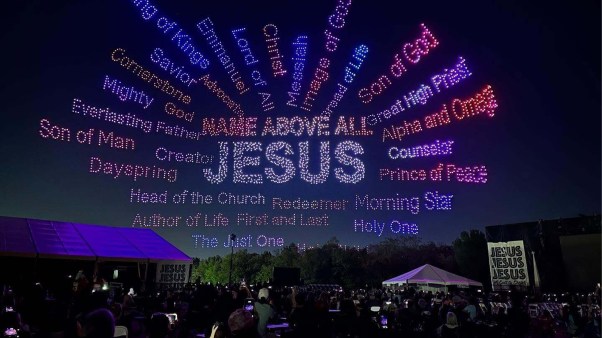
I suspect the appeal of the new model to younger evangelicals is also related to immense cultural changes, in which our society is shifting from a nearly exclusive verbal orientation to a more symbolic and visual one. A theology geared to a dynamic and imageable conception of reality will have more appeal than one shaped by a static institutional and forensic perspective.
Yet it must be remembered that theology itself is never the truth; even less is the cultural container in which theology is delivered. While I have been set free to love and serve the Lord in the context of a new-model evangelicalism, I still have affinity with old-model evangelicals, and with Christians everywhere. Theology is only thinking about truth, not truth itself.
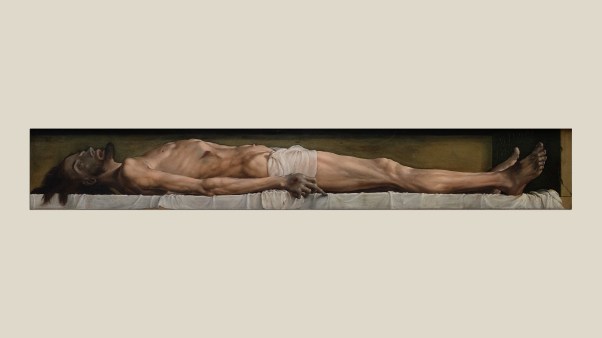
Thanks be to God that Jesus Christ is the truth, and that in him God accepts those who trust him, regardless of the interpretation they give to that trust. We are not saved by the intellectual edifice we erect, but by the One who became incarnate, dead, and risen to overthrow the power of evil and to reclaim both creature and creation as his own.
By Robert E. Webber, professor of theology at Wheaton College.