
If 1517 marks the beginning of the Protestant Reformation, then 1540 (the founding of the Jesuit order) and 1545 (the opening of the Council of Trent) mark the beginning of the Catholic Reformation, also known as the Counter-Reformation.
When Luther sounded the call for reform, not all Catholics fled their church and became Protestants. Instead, many stayed, hoping for renewal. Pleasure-loving Pope Leo X was not the right person to bring reform. But a later pope, Paul III (1534–1549), appointed a commission to examine the state of the church. The commission’s report, Concerning the Reform of the Church, was pointed: Popes and cardinals had become too worldly; bribery to gain church office was widespread; monasteries had lost their discipline; and the selling of indulgences was widely abused. (Protestants obtained a copy and published it as evidence of the church’s corruption.)
Conflicting Interests
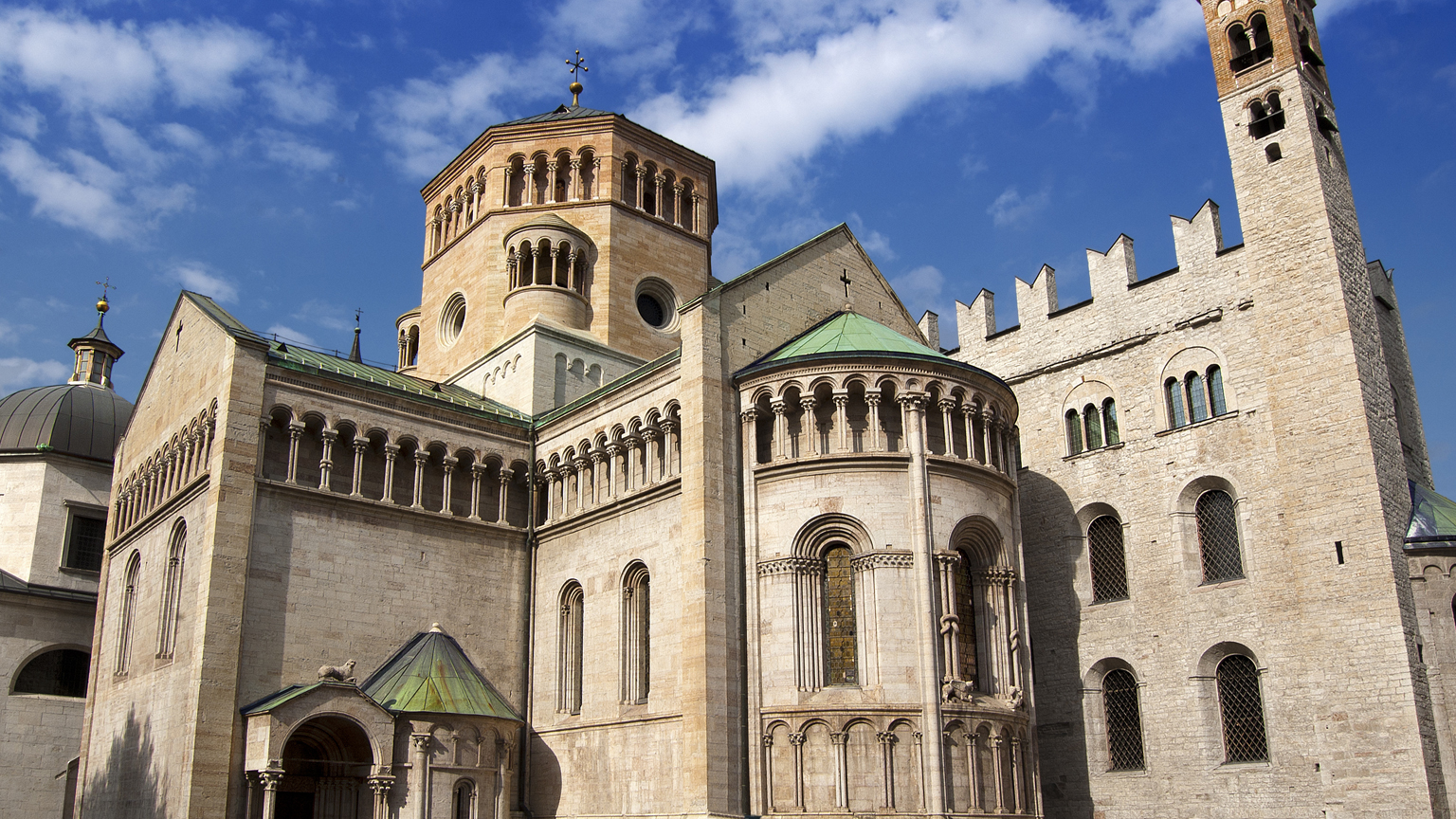
In 1537, Paul III called for a council, but political squabbles postponed its opening for eight years. The council finally began, in the northern Italian city of Trent, in 1545. The council held a number of meetings, with the three main sessions occurring in 1545–7, 1551–2, and 1562–3. The drawn-out sessions, and long delays between them, meant that representatives changed over the course of the council. And attendance was small; the opening session attracted only 34 leaders, and the largest meeting of the third session had only 255.
The council brought together a variety of competing agendas. Some churchmen, particularly members of the papal curia, resisted any reforms that would hinder their lifestyles. Bishops from Spain and France wanted a stronger, independent role. The Jesuits, on the other hand, stood firmly for papal supremacy. Some council delegates, like Emperor Charles V (who faced a Protestant challenge in his realm, the vast Holy Roman Empire), wanted Protestants and Catholics to reach a compromise. (Under his pressure, the council allowed Protestants to attend the second session, and informal talks were held. But when Protestant demands were not put on the agenda, the Protestants left, in 1552.) In a few instances, the delegates came to blows.
Resolutions
Reform was high on the agenda. On the issue that had sparked the Reformation—the selling of indulgences—the council abolished indulgence sellers and halted some of the worst abuses. In addition, the council passed numerous measures to halt clerical corruption. Acknowledging that Luther’s revolt had been prompted by the “ambition, avarice, and cupidity” of clergy, it called for leaders to avoid “even the smallest faults.” Many abuses were condemned, such as holding several cathedral churches, offering favors to relatives, and having mistresses.
The council dealt extensively not only with morality, but also with doctrine. It reaffirmed the traditional medieval understanding—and rejected contemporary Protestant teaching—on nearly every subject.
The council held that there are seven sacraments, not two as the Protestants claimed, and that these are necessary for salvation. All the Protestant interpretations of Communion were condemned, and transubstantiation (the belief that the bread and wine become in substance the body and blood of Christ) was re-affirmed. Protestants were worshiping in their own languages, but the council upheld the Latin Mass, and it defined more precisely the sacrificial understanding of the Mass.
On the critical issue of justification, the council could not support the Reformation understanding of salvation by faith alone. It affirmed that no person can know for certain he or she is justified, and that good works do contribute to a right standing with God.
On the issues of Scripture and authority, the Catholic church moved further from Protestants. Reformers such as Luther had been translating the Bible into the common language of the people. The council held instead that the only official version of the Bible was the Latin Vulgate, and that no private interpretations of Scripture could depart from the church’s teachings. It also rejected the Protestant view of “Scripture alone” and declared that along with the Scriptures, tradition as preserved by the church was a source of authority.
Results
The Council of Trent helped to bring much-needed reform to the Catholic church. It also refined the church’s structure and marshalled its forces for the years ahead.
On matters of doctrine, however, the council made the gulf between Catholics and Protestants deep and lasting. Any remaining hopes of reunion were dashed.
The Council of Trent defined what the church would be for four centuries. Not until Vatican II, in the 1960s, did a major reexamination take place.
Copyright © 1990 by the author or Christianity Today/Christian History magazine. Click here for reprint information on Christian History.