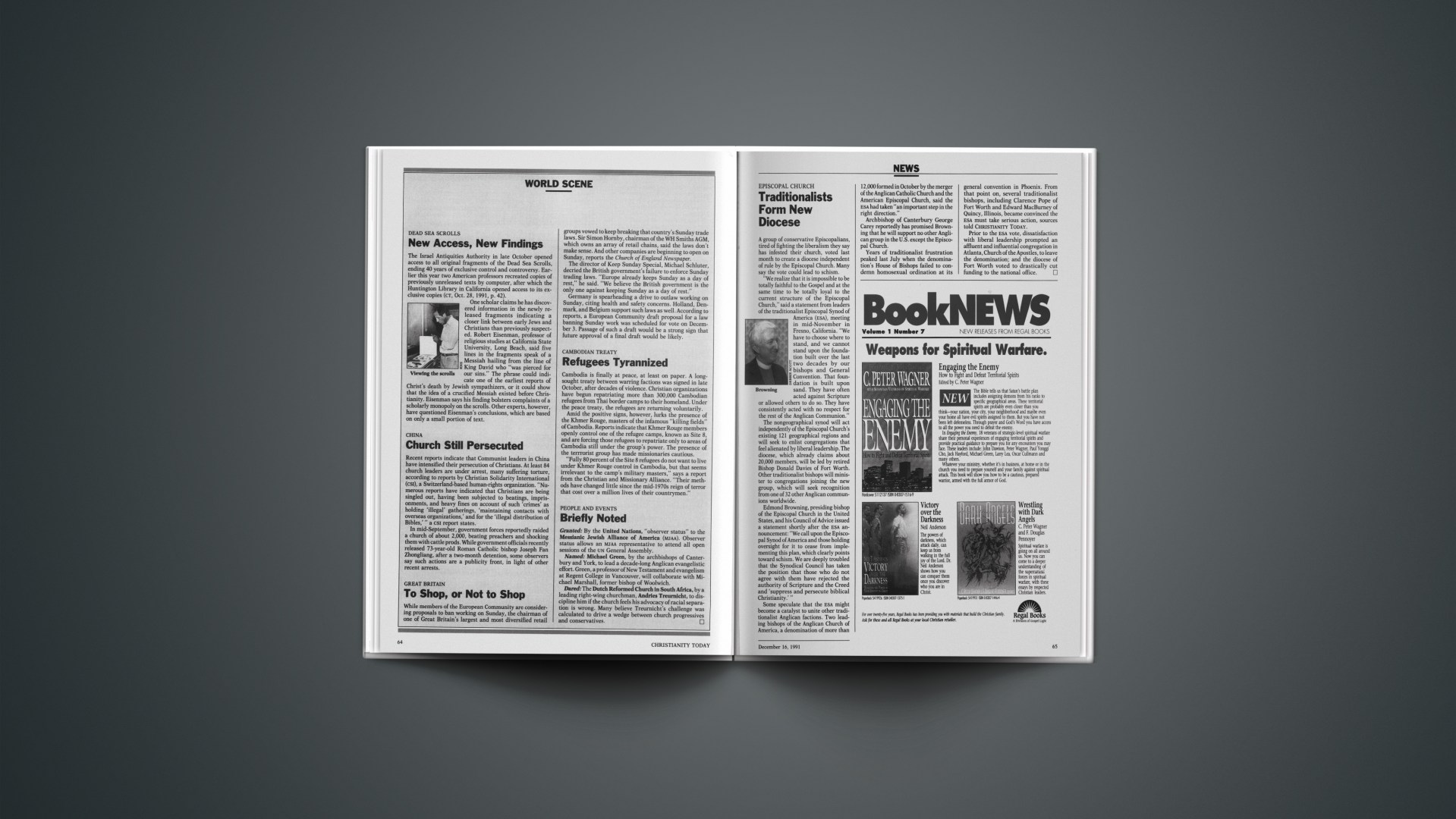
Episcopal Church: Traditionalists Form New Diocese

A group of conservative Episcopalians, tired of fighting the liberalism they say has infested their church, voted last month to create a diocese independent of rule by the Episcopal Church. Many say the vote could lead to schism.

“We realize that it is impossible to be totally faithful to the Gospel and at the same time to be totally loyal to the current structure of the Episcopal Church,” said a statement from leaders of the traditionalist Episcopal Synod of America (ESA), meeting in mid-November in Fresno, California. “We have to choose where to stand, and we cannot stand upon the foundation built over the last two decades by our bishops and General Convention. That foundation is built upon sand. They have often acted against Scripture or allowed others to do so. They have consistently acted with no respect for the rest of the Anglican Communion.”

The nongeographical synod will act independently of the Episcopal Church’s existing 121 geographical regions and will seek to enlist congregations that feel alienated by liberal leadership. The diocese, which already claims about 20,000 members, will be led by retired Bishop Donald Davies of Fort Worth. Other traditionalist bishops will minister to congregations joining the new group, which will seek recognition from one of 32 other Anglican communions worldwide.

Edmond Browning, presiding bishop of the Episcopal Church in the United States, and his Council of Advice issued a statement shortly after the ESA announcement: “We call upon the Episcopal Synod of America and those holding oversight for it to cease from implementing this plan, which clearly points toward schism. We are deeply troubled that the Synodical Council has taken the position that those who do not agree with them have rejected the authority of Scripture and the Creed and ‘suppress and persecute biblical Christianity.’ ”

Some speculate that the ESA might become a catalyst to unite other traditionalist Anglican factions. Two leading bishops of the Anglican Church of America, a denomination of more than 12,000 formed in October by the merger of the Anglican Catholic Church and the American Episcopal Church, said the ESA had taken “an important step in the right direction.”

Archbishop of Canterbury George Carey reportedly has promised Browning that he will support no other Anglican group in the U.S. except the Episcopal Church.

Years of traditionalist frustration peaked last July when the denomination’s House of Bishops failed to condemn homosexual ordination at its general convention in Phoenix. From that point on, several traditionalist bishops, including Clarence Pope of Fort Worth and Edward MacBurney of Quincy, Illinois, became convinced the ESA must take serious action, sources told CHRISTIANITY TODAY.

Prior to the ESA vote, dissatisfaction with liberal leadership prompted an affluent and influential congregation in Atlanta, Church of the Apostles, to leave the denomination; and the diocese of Fort Worth voted to drastically cut funding to the national office.

Also in this issue

The CT archives are a rich treasure of biblical wisdom and insight from our past. Some things we would say differently today, and some stances we've changed. But overall, we're amazed at how relevant so much of this content is. We trust that you'll find it a helpful resource.

Strategy: Can the West Be Won?

George G. Hunter Iii

Buried in Data

Letters

A Friend of God’s, a Friend of Mine

If Mother Teresa Were a Baptist in Houston

Editorial

Recovering the Apostles' Zeal

Recovering the Apostles’ Zeal

Behold!: Behold the Lamb of God: Calligrapher Timothy Botts Points His Pens at Handel’s Messiah and Makes the Words Sing

Interview By David Neff And Carol Thiessen

A Little Religion at Christmas

John G. Stackhouse, Jr.

‘Go Fetch Baxter’

Timothy Beougher And J. I. Packer

Where Would We Be without Staupitz?: Behind the Great Leaders of the Church Stood Others Who, through Their Lives and Teaching, Provided Inspiration. Here Is a Look at Five Unsung Heroes Church History Could Not Have Done Without

Bruce L. Shelley

Evangelism in the ’90s: There’s a Wideness in Our Witness

CT Survey Report: Who’s Really Doing Evangelism?

James F. Engel

Bible Study: Saint John’s Four Laws

Christopher Hancock

Take It to the Streets

Big Nanny Is Watching You

Classic & Contemporary Excerpts from December 16, 1991

The Doctor as Executioner

1991 In Review: Enter the New World Order

In the News: 1991’s Top Ten Stories

News from the North American Scene: December 16, 1991

Church/State: Court Hears Prayer Case

Election Update: Prolifers Claim Gains in Midst of Voter Turmoil

World Scene: December 16, 1991

Church and Law: Zoned Out

Evangelical Wins Peaceful Election

Gypsy Church Thrives in Europe, Worldwide

Hostages Released

Why 1989 Happened

View issue

Our Latest

News

Displaced Ukrainian Pastor Ministers to the War’s Lost Teens

“Almost everybody has lost somebody, and quite a few people have lost very much.”

So What If the Bible Doesn’t Mention Embryo Screening?

Silence from Scripture on new technologies and the ethical questions they raise is no excuse for silence from the church.

The Chinese Evangelicals Turning to Orthodoxy

Yinxuan Huang

More believers from China and Taiwan are finding Eastern Christianity appealing. I sought to uncover why.

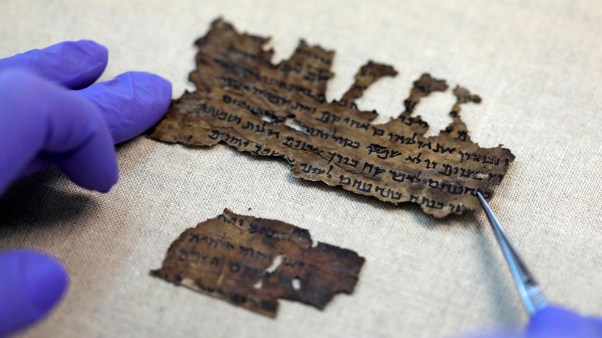
Archaeology in the City of David Yields New Treasures

Gordon Govier

Controversial excavation in Jerusalem reveals new links to the biblical record.

Public Theology Project

Why Christians Ignore What the Bible Says About Immigrants

Believers can disagree on migration policies—but the Word of God should shape how we minister to vulnerable people.

Review

Apologetics Can Be a Balm—or Bludgeon

Daryn Henry

A new history of American apologetics from Daniel K. Williams offers careful detail, worthwhile lessons, and an ambitious, sprawling, rollicking narrative.

Hold the Phone?

Anna Mares

Faced with encouragement to lessen technology use, younger Christians with far-flung families wonder how to stay connected.

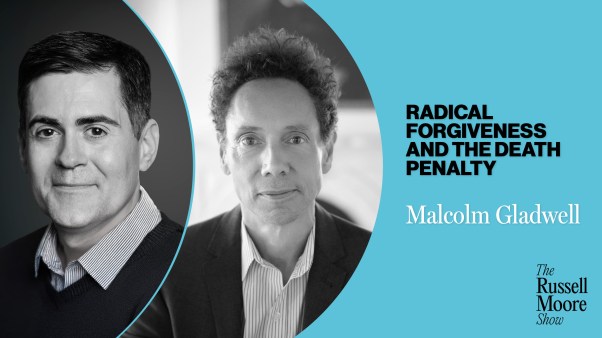
The Russell Moore Show

Joseph Loconte on the War for Middle-Earth

What if the most decisive battles in our time aren’t fought with ballots or bombs—but with the imagination?

Apple PodcastsDown ArrowDown ArrowDown Arrowarrow_left_altLeft ArrowLeft ArrowRight ArrowRight ArrowRight Arrowarrow_up_altUp ArrowUp ArrowAvailable at Amazoncaret-downCloseCloseEmailEmailExpandExpandExternalExternalFacebookfacebook-squareGiftGiftGooglegoogleGoogle KeephamburgerInstagraminstagram-squareLinkLinklinkedin-squareListenListenListenChristianity TodayCT Creative Studio Logologo_orgMegaphoneMenuMenupausePinterestPlayPlayPocketPodcastRSSRSSSaveSaveSaveSearchSearchsearchSpotifyStitcherTelegramTable of ContentsTable of Contentstwitter-squareWhatsAppXYouTubeYouTube